1. Why Woodstock Is a High-Risk Radon Area
Woodstock is located in Cherokee County, which carries the EPA's highest radon risk designation: Zone 1. This means the predicted average indoor radon level for the county exceeds 4 pCi/L, the EPA's recommended action level. For context, most of Metro Atlanta falls in Zone 2 (moderate). Cherokee County's Zone 1 status puts Woodstock in a distinctly higher risk category.
The elevated risk comes from geology. Woodstock sits on the Piedmont geological province where granite bedrock contains uranium that decays into radium and then radon gas. In Cherokee County, this granite tends to be closer to the surface than in counties further south, which means radon has a shorter path from bedrock to your foundation.
Woodstock has grown rapidly over the past two decades, with neighborhoods, townhome communities, and mixed-use developments spreading across the area. Whether your home is brand new or decades old, the underlying geology produces radon. The only way to know your home's level is to order a professional radon test.
2. Neighborhood Radon Risk Areas
Radon levels vary across Woodstock, but the entire area carries elevated risk due to Cherokee County's Zone 1 designation. Here are patterns from local testing data:
Check your specific risk using our look up radon levels near you.
For broader county-level data, see our Cherokee County radon guide.
3. Foundation Types and Radon Entry
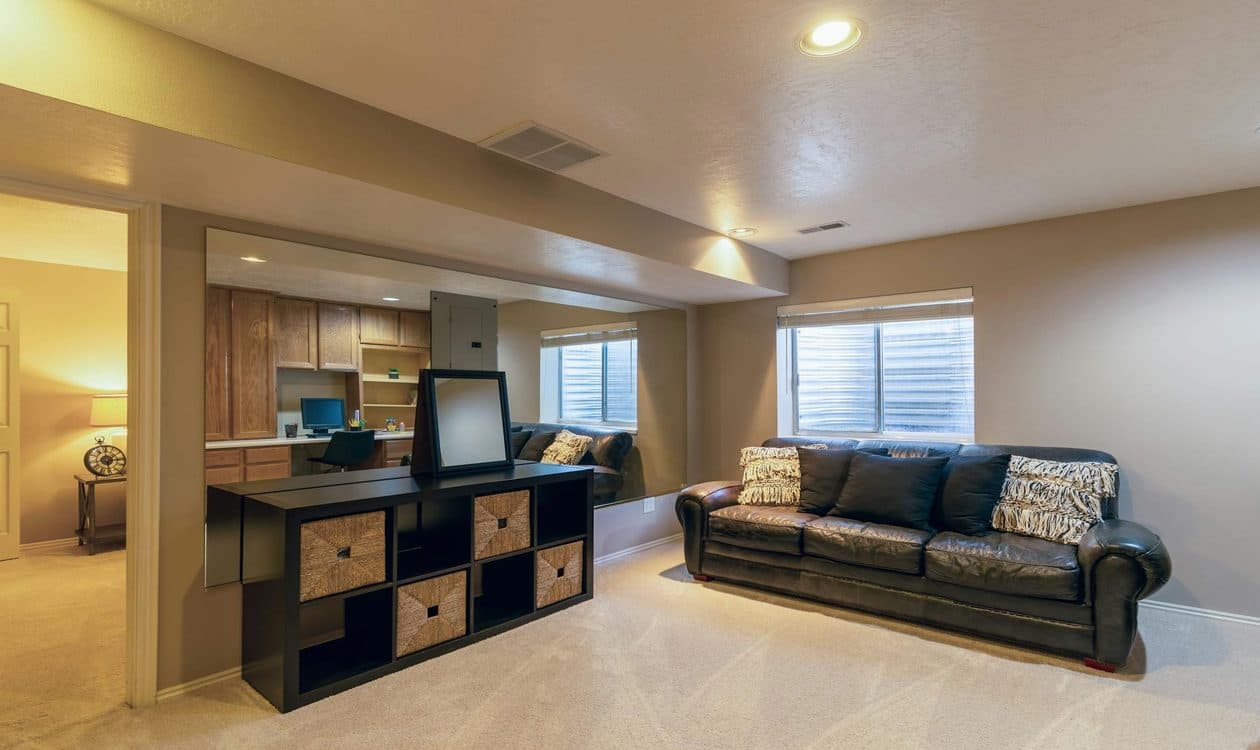
Woodstock's hilly terrain means a large percentage of homes have basements or partially below-grade spaces. Here is how different foundations interact with radon:
Zone 1 Means Every Home Needs Testing
Cherokee County's EPA Zone 1 designation means the radon risk is high enough that every home should be tested regardless of foundation type, age, or construction method. Do not assume your home is safe based on your neighbor's results. Two homes on the same street can have dramatically different radon levels.
4. Testing Your Woodstock Home
Given Woodstock's high-risk designation, testing should be a priority for every homeowner. Here is how to do it: Neighboring cities like Canton, Kennesaw, and Acworth show similar radon patterns due to shared geology.
Choose Your Test Type
A short-term test (48 hours minimum) is good for initial screening. Professional CRM testing ($125-250) is the standard for real estate transactions. DIY kits ($15-40 plus lab fees) work for general screening.
Place the Test Correctly
Test in the lowest livable area of your home. In Woodstock, that is usually the basement. Keep the device away from windows, drafts, and exterior walls. Maintain closed-house conditions during the test period.
Understand Your Results
Below 2 pCi/L: Low risk, retest every 2 years. Between 2-4 pCi/L: Consider a long-term follow-up test. Above 4 pCi/L: The EPA recommends a professional mitigation system. Above 8 pCi/L: Prioritize mitigation promptly.
Remember that radon levels are typically 40-60% higher in winter months. If you test in summer and get a borderline result, retest in winter for a more accurate picture.
5. Radon Mitigation Options
If your Woodstock home tests above 4 pCi/L, mitigation is effective and usually completed in one day. The approach depends on your foundation:
Slab or Basement
$1,200-$2,500
Sub-slab depressurization: a suction point drilled through the foundation, connected to PVC pipe and a fan that exhausts radon above the roofline.
Crawl Space
$2,500-$5,000
Sub-membrane depressurization: a sealed vapor barrier over the soil with active suction pulling radon from beneath the barrier and venting it outside.
Both systems reduce radon by 90-99%. Use our get a personalized cost estimate for a more specific estimate for your Woodstock home.
For more information, read our first-time homebuyer radon checklist.
Woodstock Homeowners
Living in an EPA Zone 1 county means radon testing is not optional. With 30-40% of homes testing above the action level, there is a strong chance your home is affected. A 48-hour test gives you a clear answer, and if mitigation is needed, it is a one-day installation that permanently solves the problem.
6. New Construction and Radon
Woodstock has experienced rapid growth, with new subdivisions and townhome communities going up throughout the area. Many homeowners assume that a brand-new home will not have radon problems. That assumption is wrong.
New homes in Woodstock are built on the same granite geology that produces radon in older homes. While some builders include passive radon-resistant features (gravel sub-base, sealed vapor barrier, and a capped PVC pipe through the roof), these features alone do not guarantee low radon levels. They are designed to make future mitigation easier and cheaper, not to eliminate radon entirely.
If your new Woodstock home has a passive radon pipe, it can be converted to an active system by adding a fan for $300-800. But you will not know whether activation is needed unless you test first. The EPA recommends testing every new home after construction is complete, regardless of whether radon-resistant features were installed.