1. Why Cherokee County Has a Serious Radon Problem
Cherokee County is one of the highest-risk counties for radon in all of Georgia. Unlike most Metro Atlanta counties that fall in EPA Zone 2 (moderate risk), Cherokee County is designated Zone 1, meaning the predicted average indoor radon level exceeds the EPA action level of 4 pCi/L. This is not a borderline situation. Cherokee County has a genuine, well-documented radon problem.
The county sits at the geological transition between the Piedmont province and the Blue Ridge foothills. This zone features granite and metamorphic rock with higher uranium concentrations than the typical Metro Atlanta geology. Uranium decays into radium, which decays into radon gas. That gas migrates upward through soil and enters homes through foundation cracks, gaps around pipes, and other openings. The process is invisible and odorless. The only way to know your home's radon level is to book a radon test.
Cherokee County has experienced explosive growth over the past two decades. Cities like Woodstock, Canton, and Holly Springs have added thousands of new homes. Every one of those homes sits on radon-producing geology, and new construction is just as vulnerable as older homes. The county's population now exceeds 280,000, and a significant portion of those families have never tested their homes.
Use our radon risk lookup by zip code to check the risk level for your specific area in Cherokee County.
2. EPA Zone 1 Designation and What It Means
The EPA classifies every U.S. county into one of three radon zones based on predicted average indoor radon levels:
| Zone | Predicted Avg | Risk Level |
|---|---|---|
| Zone 1 (Cherokee County) | Above 4 pCi/L | High |
| Zone 2 (Moderate) | 2-4 pCi/L | Moderate |
| Zone 3 (Lowest) | Below 2 pCi/L | Low |
Cherokee County's Zone 1 designation is the highest risk category the EPA assigns. The predicted average indoor radon level is above 4 pCi/L, which is the level at which the EPA recommends taking action to reduce radon. This means the average home in Cherokee County is expected to be at or above the action level. Many individual homes test well above it, with readings of 8, 10, or even 20+ pCi/L not uncommon.
Zone 1 Means Testing Is Essential
Cherokee County's Zone 1 designation means radon testing is not optional. The probability that your home has elevated radon is significantly higher here than in surrounding Zone 2 counties. If you have not tested your Cherokee County home, you should do so as soon as possible. This applies to every home in the county, regardless of age, foundation type, or neighborhood.
3. High-Risk Areas Across the County
Unlike Zone 2 counties where risk varies significantly between neighborhoods, all of Cherokee County is considered high risk. That said, testing data shows that some areas tend to produce even higher readings than others:
Ball Ground and Waleska (Highest Risk)
Canton (High Risk)
Woodstock and Holly Springs (High Risk)
Every Part of Cherokee County Is High Risk
Unlike counties where we can point to specific neighborhoods as higher or lower risk, Cherokee County's Zone 1 designation means the entire county has elevated radon potential. There is no "safe" area within the county where testing can be skipped. Every home, in every city, in every neighborhood needs to be tested.
4. The Geology Behind Cherokee County Radon
Cherokee County's extreme radon risk comes from its position at the boundary between two geological provinces. The southern part of the county is in the Piedmont province, while the northern portion transitions into the Blue Ridge province. This transition zone features some of the most radon-productive geology in Georgia.
The key rock types include:
The Etowah River, which runs through the county, has carved through these rock formations and exposed additional radon-producing surfaces. Homes near river valleys and creek beds may see higher radon levels due to the fractured rock and increased soil permeability in these areas. For a broader view of how Cherokee compares to other counties, see our Georgia radon map by county.
5. Local Testing Data and Trends
Based on aggregated testing data from radon professionals working in Cherokee County, the numbers confirm the Zone 1 designation:
| Area | Avg Test Result | % Above 4 pCi/L |
|---|---|---|
| Ball Ground / Waleska | 5.0-8.0 pCi/L | 45-60% |
| Canton / North Cherokee | 4.5-6.5 pCi/L | 35-50% |
| Woodstock | 4.0-6.0 pCi/L | 30-45% |
| Holly Springs / South Cherokee | 3.5-5.5 pCi/L | 25-40% |
These numbers tell a clear story: every area of Cherokee County has a significant percentage of homes above the EPA action level. Even the "lowest" area, South Cherokee, has 25-40% of homes testing above 4 pCi/L. Your zip code's risk level can be checked using our radon risk lookup tool.
Seasonal variation matters in Cherokee County. Homes tested in winter months (December through February) typically show levels 40-60% higher than the same homes tested in summer. Given that Cherokee County already has high baseline levels, winter testing can reveal extremely elevated concentrations.
6. How to Test Your Cherokee County Home
Testing for radon is straightforward. Given Cherokee County's Zone 1 status, testing is especially important. Here is the recommended approach:
Choose Your Test Type
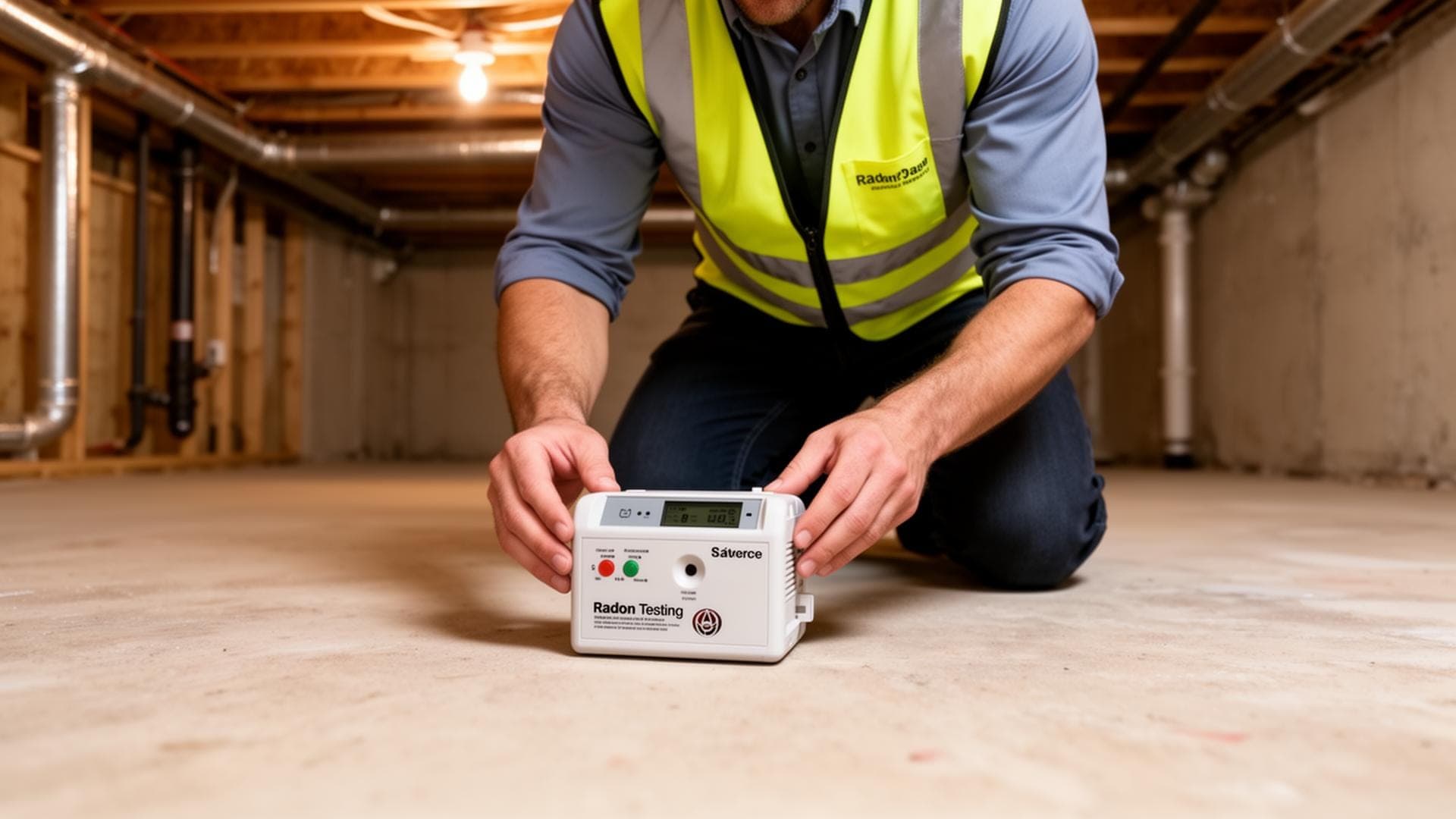
For initial screening, a short-term test (48 hours minimum) is appropriate. For real estate transactions, professional CRM testing is the standard. Given Cherokee County's high risk, we recommend professional testing over DIY kits for the most accurate results.
Place the Test Correctly
Test in the lowest livable area of your home. For homes with basements (common in Cherokee County due to the hilly terrain), that means the basement. For slab-on-grade homes, test on the main floor. Keep the test away from drafts, windows, and exterior walls. Maintain closed-house conditions during the test.
Interpret Your Results
Below 2 pCi/L: Low risk, retest every 2 years. Between 2-4 pCi/L: Consider a follow-up long-term test or mitigation. Above 4 pCi/L: The EPA recommends professional radon mitigation. Above 8 pCi/L: Prioritize mitigation promptly. In Cherokee County, results above 4 pCi/L are common and should not be alarming, but they do require action.
Learn more about how long radon testing takes and what to expect from the process.
7. Mitigation for Cherokee County Homes
If your Cherokee County home tests above 4 pCi/L, mitigation is straightforward and effective. The standard approach depends on your foundation type:
Slab or Basement
$1,200-$2,500
Sub-slab depressurization: a suction point, PVC pipe, and fan that pulls radon from under the foundation and vents it above the roofline.
Crawl Space
$2,500-$5,000
Sub-membrane depressurization: a sealed vapor barrier over the soil with active suction pulling radon from beneath.
Both systems achieve 90-99% radon reduction and are installed in one day. Even homes with very high radon levels (10+ pCi/L) can be effectively mitigated. Use our radon mitigation pricing guide to get a more specific estimate for your home.
Cherokee County Homeowners
If you are in Cherokee County and have never tested, this should be a priority. The Zone 1 designation means there is a very high probability that your home has elevated radon. Testing takes 48 hours and gives you a definitive answer. If mitigation is needed, it is a one-day installation that solves the problem permanently. Do not wait on this one.