1. The Geology-Radon Connection
Radon does not come from the air, from water, or from building materials in any meaningful quantity. It comes from the ground. Specifically, it comes from the natural radioactive decay of uranium that exists in bedrock and soil. The type of bedrock under your home determines how much radon the soil produces.
North Georgia sits on some of the most radon-productive geology in the southeastern United States. The Piedmont geological province and the Blue Ridge province contain ancient igneous and metamorphic rocks, including granite, gneiss, and schist, that have measurable uranium concentrations. This uranium has been producing radon for billions of years and will continue to do so indefinitely.
For a deeper dive into the nuclear physics, see our complete science of radon in Georgia.
2. The Uranium Decay Chain
The path from uranium in rock to radon in your home follows a specific decay chain:
Uranium-238 in Bedrock
Present in granite and other igneous rocks at concentrations of 1-5 parts per million. Half-life: 4.5 billion years. The uranium is not going anywhere.
Radium-226 in Soil
Uranium decays through several intermediate steps into Radium-226. Radium is present in soil particles and continues decaying. Half-life: 1,600 years.
Radon-222 Gas
Radium decays into Radon-222, a noble gas that is invisible, odorless, and mobile. Unlike its solid predecessors, radon can migrate through soil and enter buildings. Half-life: 3.8 days.
Radon Decay Products (in Your Lungs)
When inhaled, radon decays into solid radioactive particles (polonium-218, lead-214, bismuth-214, polonium-214) that lodge in lung tissue and emit alpha radiation. This radiation damages DNA and can cause lung cancer.
3. North Georgia's Geological Provinces
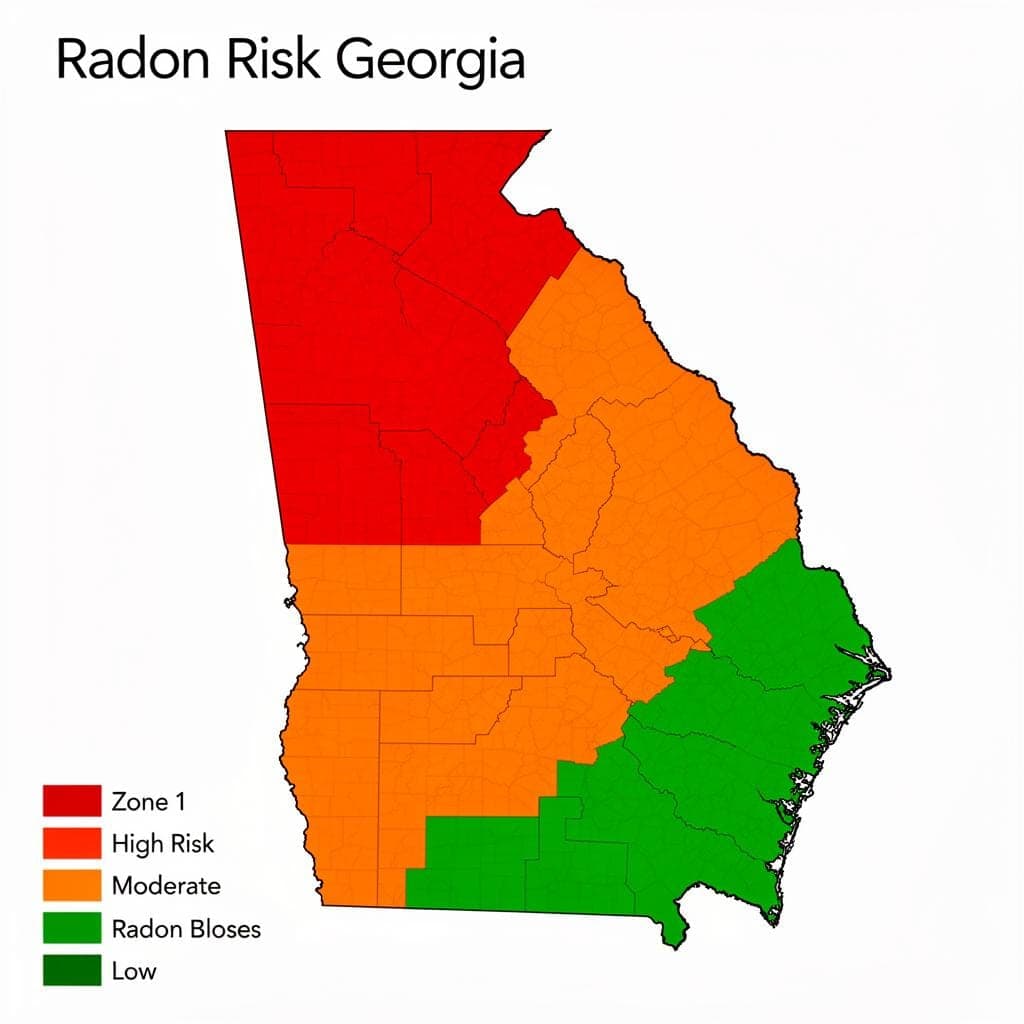
Georgia spans three distinct geological provinces, each with different radon characteristics:
| Province | Location | Rock Type | Radon Potential |
|---|---|---|---|
| Blue Ridge | North Georgia mountains | Metamorphic, some granite | High (EPA Zone 1) |
| Piedmont | Metro Atlanta, central GA | Granite, gneiss, schist | Moderate to High (Zone 1-2) |
| Coastal Plain | South Georgia | Sedimentary (sand, clay) | Low (Zone 2-3) |
The Fall Line, running roughly from Columbus through Macon to Augusta, marks the boundary between the Piedmont and Coastal Plain. North of this line, radon risk is significantly higher. For county-level data, see our complete guide to Georgia radon levels.
4. Why Piedmont Granite Produces More Radon
Not all rock produces radon equally. Piedmont granite is particularly productive for several reasons:
5. County-by-County: Where the Risk Is Highest
Based on EPA zone designations and available testing data, here is the radon risk landscape for North Georgia:
EPA Zone 1 (Highest Risk) Counties
Lumpkin, Union, Towns, Rabun, White, Habersham, and several other mountain counties. Predicted average indoor levels above 4 pCi/L. Testing is critical.
EPA Zone 2 (Moderate Risk) Metro Atlanta Counties
Fulton, Gwinnett, DeKalb, Cobb, Cherokee, Forsyth, Hall, and most Metro Atlanta counties. Predicted averages of 2-4 pCi/L, with 15-30% of homes above the action level.
Transitional Areas
Counties along the Fall Line (Bibb, Houston, Richmond) show moderate risk as the geology transitions from Piedmont to Coastal Plain. South of the Fall Line, risk drops significantly but is not zero.
Check your specific county or zip code with our find radon levels near you.
6. How Geology Affects Your Specific Home
Understanding the geology gives you context, but it cannot predict your individual home's radon level. Several factors mediate between bedrock uranium and indoor radon:
The Only Way to Know
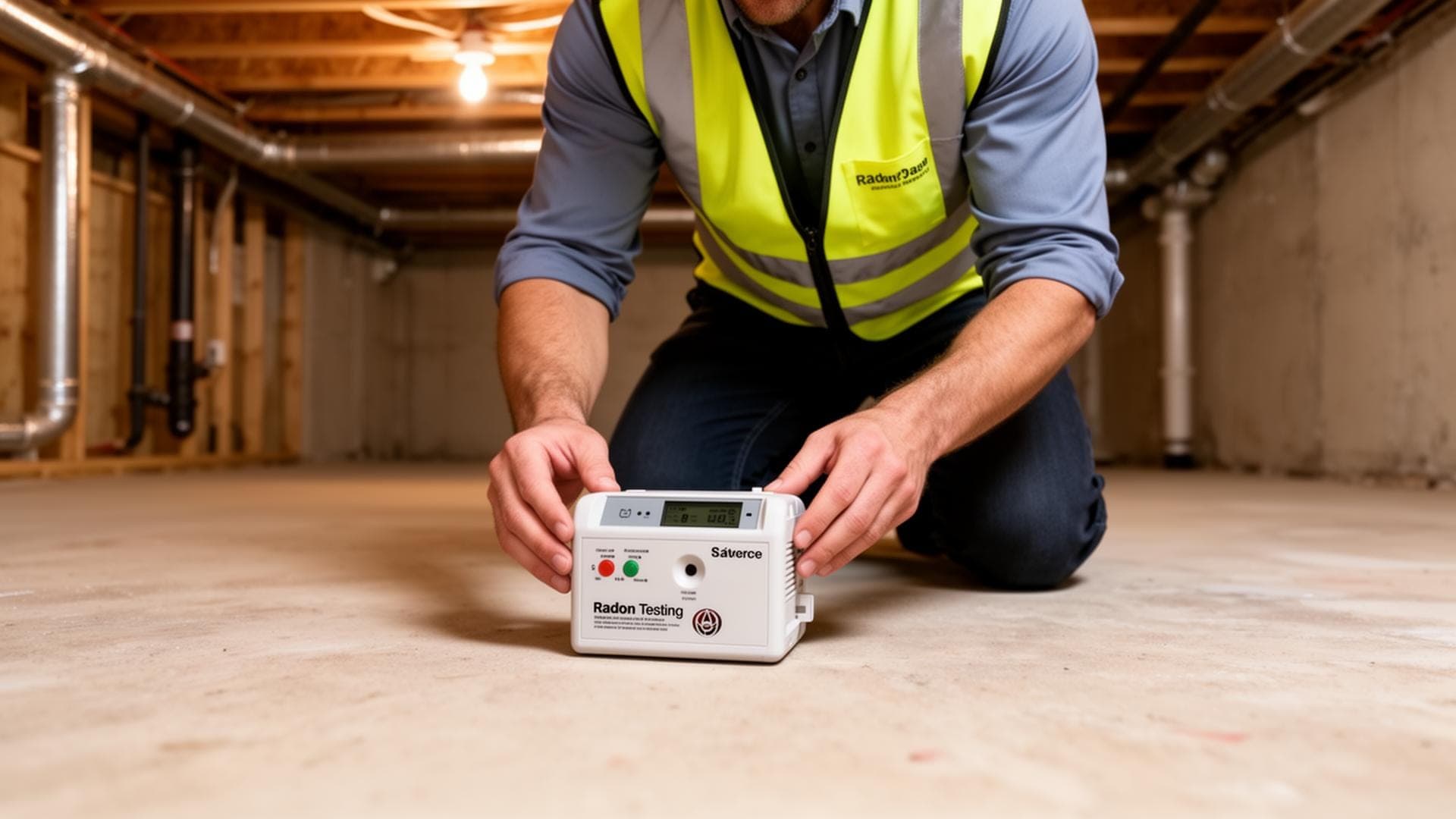
Geology tells you that you are in a radon-prone area. Testing tells you whether your specific home has a problem. There is no substitute for actual testing. Start by checking your zip code with our radon risk lookup, then test your home.
7. Testing Recommendations for North Georgia
Given the geological risk profile of North Georgia, here are specific testing recommendations:
If your home tests above 4 pCi/L, professional radon reduction reduces radon by 90-99%. Use our radon mitigation pricing tool to see what it would cost for your home.
For city-specific data in North Georgia, see our guides for Alpharetta, Canton, and Milton. Visit our common radon questions answered page, or check out our radon resources for homeowners.