Radon is not just another indoor air quality concern, it's a naturally occurring radioactive gas that causes approximately 21,000 lung cancer deaths in the United States every year. To truly understand radon and make informed decisions about testing and mitigation, you need to understand the science behind it.
This guide explains radon from multiple scientific perspectives: the nuclear physics that creates it, the geological factors that make Georgia particularly vulnerable, the biological mechanisms by which it causes cancer, and the engineering principles that make mitigation so effective. Armed with this knowledge, you'll understand why radon testing isn't optional, it's essential.
Why This Matters for Georgia Homeowners
Georgia's Piedmont region, which includes Metro Atlanta, has some of the highest radon potential in the southeastern United States. The combination of uranium-rich granite bedrock and permeable decomposed granite soils creates ideal conditions for radon to accumulate in homes. Understanding the science helps you protect your family.
1. The Nuclear Physics of Radon: Understanding Radioactive Decay
To understand radon, we must first understand where it comes from. Radon is not manufactured or released by human activity, it's a natural product of radioactive decay that has been occurring since the Earth formed 4.5 billion years ago.
The Uranium Decay Chain
Radon-222, the isotope we're most concerned with, is created through a long chain of radioactive decay that begins with Uranium-238:
Why Radon-222 Is Uniquely Dangerous
Several characteristics make radon-222 particularly hazardous:
It's a Noble Gas
Radon doesn't react with other elements, allowing it to travel through soil and enter homes unchanged. It doesn't bind to soil particles or get filtered out.
Invisible & Odorless
You cannot see, smell, or taste radon. Without testing, there's no way to know it's present, making it a silent threat.
Optimal Half-Life
At 3.8 days, radon has enough time to migrate from soil into homes, but decays quickly enough to produce alpha-emitting daughters inside your lungs.
Alpha Radiation
Radon and its decay products emit alpha particles, the most damaging form of radiation to biological tissue when inhaled.
2. Georgia's Unique Geology: Why Our State Has Elevated Radon
Georgia's radon risk is directly tied to our geological history. The rocks beneath Metro Atlanta are among the oldest on the continent, and they contain naturally elevated concentrations of uranium.

Georgia's Piedmont region contains ancient granite and metamorphic rock with elevated uranium concentrations
The Piedmont Region
Metro Atlanta sits in the Piedmont physiographic province, a region characterized by:
- Ancient Granite Bedrock: Formed 300-400 million years ago, this granite contains naturally elevated uranium levels.
- Metamorphic Rocks: Gneiss and schist formations also contain uranium and contribute to radon generation.
- Decomposed Granite Soils: The weathered granite creates highly permeable soils that allow radon to migrate easily toward home foundations.
- EPA Zone 1 Classification: Most of Metro Atlanta is designated as high-risk for radon by the EPA.
County-Specific Risk Factors
While all of Metro Atlanta faces radon risk, some areas have higher potential due to local geology:
| County | EPA Zone | Key Geological Factors |
|---|---|---|
| DeKalb County | Zone 1 | Granite and gneiss bedrock; highly variable soil permeability |
| Gwinnett County | Zone 1 | Biotite gneiss formations; elevated uranium in weathered rock |
| Cobb County | Zone 1/2 | Mixed geology; granite intrusions create localized high-risk areas |
| Fulton County | Zone 1 | North Fulton: granite-rich; South Fulton: more variable |
3. The Medical Science: How Radon Causes Lung Cancer
Understanding how radon causes cancer explains why it's taken so seriously by health organizations worldwide. The mechanism is well-documented through decades of research on uranium miners and residential studies.
The Biological Mechanism
When you breathe radon-contaminated air, the damage happens inside your lungs:
Inhalation
Radon gas enters your lungs with normal breathing. Being a noble gas, it can penetrate deep into lung tissue.
Decay Inside Lungs
Radon decays into polonium-218 and polonium-214, which are solid particles that lodge in lung tissue.
Alpha Radiation Damage
These polonium isotopes emit alpha particles that travel only 50 micrometers, but that's enough to damage the DNA of nearby cells.
DNA Mutations
Alpha particles cause double-strand breaks in DNA. While cells can repair some damage, repeated exposure leads to mutations that can cause uncontrolled cell growth, cancer.
The Numbers Tell the Story
- 21,000 Americans die from radon-related lung cancer annually
- #1 cause of lung cancer among non-smokers
- #2 cause of lung cancer overall (after smoking)
- 6x higher risk for smokers exposed to radon
4. Vulnerable Populations: Children, Elderly, and Pets
While radon poses a risk to everyone, certain groups face heightened vulnerability due to biological and behavioral factors.
Children
- • Faster breathing rates mean more radon inhaled per body weight
- • Developing lungs are more susceptible to damage
- • Longer lifetime exposure potential
- • Cells dividing more rapidly = more mutation opportunities
Elderly
- • Accumulated lifetime exposure adds to risk
- • Reduced lung capacity affects clearance
- • Pre-existing lung conditions compound effects
- • Weaker immune response to cellular damage
Pets
- • Spend more time at floor level where radon concentrates
- • Dogs and cats have documented radon-related cancers
- • Smaller bodies = proportionally higher exposure
- • Cannot communicate symptoms early
5. The Science of Radon Measurement
Radon testing technology has advanced significantly, providing accurate, reliable measurements that inform mitigation decisions.
Testing Methods
Continuous Radon Monitors (CRM)
Professional-grade devices that measure radon hourly, providing detailed data on level fluctuations. Results in 48-96 hours.
- ✓ Highest accuracy (±5%)
- ✓ Tamper-evident
- ✓ Used for real estate transactions
- ✓ Shows temporal patterns
Charcoal Canister Tests
Passive devices that absorb radon over 2-7 days. Less expensive but provides only average reading.
- ✓ Lower cost
- ✓ Suitable for screening
- ✓ Available for DIY testing
- ○ Less precise (±25%)
Understanding pCi/L
Radon is measured in picocuries per liter (pCi/L). One picocurie equals 2.22 radioactive decays per minute. Here's what the numbers mean:
| Level (pCi/L) | Risk Assessment | Recommended Action |
|---|---|---|
| <2.0 | Low risk | Retest every 2-5 years |
| 2.0 - 3.9 | Moderate risk | Consider mitigation; retest annually |
| 4.0 - 7.9 | EPA action level | Mitigation strongly recommended |
| 8.0+ | High risk | Immediate mitigation required |
6. Radon Mitigation Technology Explained
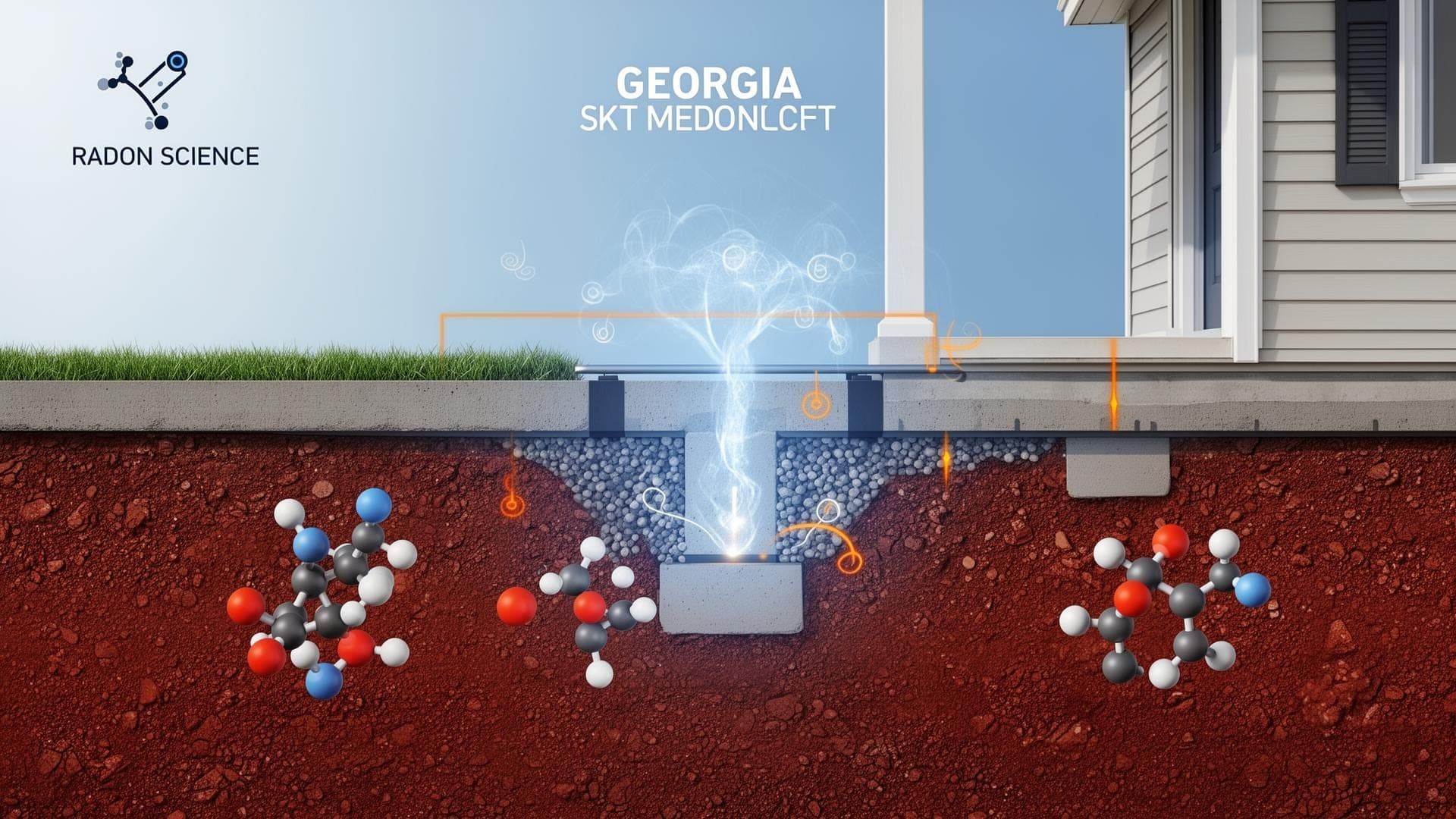
Radon mitigation works by using the same physics that draws radon into homes, but reversing it. Understanding how mitigation systems function helps you appreciate their remarkable 95-99% effectiveness.
Active Soil Depressurization (ASD)
The most common and effective mitigation method, ASD systems:
1. Create Sub-Slab Vacuum
A specialized fan creates negative pressure beneath the foundation, stronger than the natural draw that pulls radon into your home.
2. Intercept Radon at Source
Before radon can enter through cracks, it's drawn into the mitigation system's suction point instead.
3. Vent Above Roofline
The collected radon is safely discharged above the roof where it disperses harmlessly into the atmosphere.
4. Continuous Protection
The fan runs 24/7, providing constant protection regardless of weather, season, or home occupancy patterns.
Why It Works So Well
The physics are straightforward: radon follows the path of least resistance. By creating a more attractive exit route (the suction point) than entry into your home, you redirect virtually all radon away from living spaces. Learn more about radon mitigation services.
7. Building Science and Radon Entry
Understanding how radon enters buildings requires knowledge of building science, including the physics of air movement, pressure differentials, and construction practices. This knowledge explains why some homes have high radon levels while neighbors don't.
Radon enters through any opening where the building contacts soil: cracks, joints, pipes, sumps, and porous concrete.
The Stack Effect
The "stack effect" is the primary driver of radon entry. When indoor air is warmer than outdoor air (most of the year in Georgia), it rises and exits through upper-level leaks. This creates negative pressure at the lower levels, drawing soil gas through foundation openings.
Stack Effect Formula
ΔP = C × h × (1/T_outdoor - 1/T_indoor)
Where C is a constant, h is building height, and T is absolute temperature. A 20°F temperature differential in a two-story home creates approximately 4 Pascals of negative pressure at the basement, enough to draw significant soil gas.
Common Radon Entry Points
- Floor-wall joints: The interface between slab and foundation walls is rarely perfectly sealed
- Cracks in slabs: Concrete shrinks as it cures, creating cracks that become pathways for soil gas
- Sump pits: Open or poorly sealed sumps provide direct connection to sub-slab
- Utility penetrations: Pipes, conduits, and drains create openings through foundations
- Hollow block walls: CMU blocks have hollow cores that can accumulate and channel radon
- Porous concrete: Concrete is not airtight, radon can diffuse directly through intact slabs
New Construction Considerations
New homes in Georgia should incorporate radon-resistant construction (RRC) features, though Georgia building code doesn't require them:
- •4-inch aggregate layer beneath slab for soil gas collection
- •6-mil polyethylene vapor barrier over aggregate
- •Sealed slab penetrations and floor-wall joints
- •Passive radon stack (PVC pipe from aggregate through roof)
- •Electrical outlet in attic for future fan installation if needed
8. Research Studies: Georgia-Specific Data
Several research studies have examined radon levels and related health outcomes specifically in Georgia. This localized data provides important context for understanding radon risks in our state.
Georgia State University Environmental Health Studies
GSU researchers have conducted multiple studies examining radon awareness, testing disparities, and geological correlations in Georgia. Key findings include significant disparities in radon testing rates across socioeconomic groups and strong correlation between granite bedrock exposure and elevated indoor radon.
Read GSU research summary →University of Georgia Extension Radon Program
UGA's Cooperative Extension has distributed thousands of test kits and compiled testing data across Georgia counties. Their outreach efforts have significantly increased radon awareness in rural Georgia communities.
Read UGA program overview →Metro Atlanta Radon Mitigation Grants
EPA-funded programs have provided radon testing and mitigation assistance to low-income households in Metro Atlanta. Data from these programs reveals that many underserved communities have elevated radon levels but limited resources for mitigation.
Read grant program results →Georgia Department of Public Health Radon Data
Georgia DPH maintains county-level radon testing statistics and works with the EPA on Zone designations. Their Radon Program provides educational resources and maintains a list of certified radon professionals.
Read DPH guidelines →Key Georgia Statistics
- • 35 Georgia counties classified as EPA Zone 1 (highest risk)
- • 35 Georgia counties classified as EPA Zone 2 (moderate risk)
- • 1 in 5 Georgia homes estimated to exceed 4.0 pCi/L EPA action level
- • 500+ lung cancer deaths annually in Georgia attributed to radon
- • <20% of Georgia homes have ever been tested for radon
9. Regulations, Standards, and Guidelines
Understanding the regulatory landscape helps homeowners navigate radon testing, mitigation, and real estate transactions. Georgia's approach differs from some states with more stringent radon requirements.
Federal Guidelines
EPA Action Level: 4.0 pCi/L
The EPA recommends mitigation when average radon levels equal or exceed 4.0 pCi/L. The EPA also suggests "considering" mitigation between 2.0-4.0 pCi/L, noting there is no safe level of radon exposure.
World Health Organization: 2.7 pCi/L
The WHO recommends a lower action level of 100 Bq/m³ (approximately 2.7 pCi/L), based on epidemiological evidence of cancer risk at levels below the EPA threshold.
Georgia State Regulations
Georgia has relatively limited radon-specific regulations compared to states like Colorado, Minnesota, or New Jersey:
- No mandatory radon testing for home sales (though strongly recommended)
- No state licensing for radon professionals (look for NRPP or NRSB certification)
- No radon-resistant new construction requirement in building code
- Georgia DPH Radon Program provides education and professional listings
- Real estate disclosure laws require known material defects to be disclosed
Certification Standards
Without state licensing, third-party certification is the primary quality indicator for Georgia radon professionals:
NRPP (National Radon Proficiency Program)
This certification program requires passing exams, documented experience, and continuing education. Certifications include Measurement Technician, Mitigation Specialist, and Analytical Laboratory.
NRSB (National Radon Safety Board)
An independent certification body with similar standards to NRPP. Requires exams, experience documentation, and ongoing education. Either certification indicates professional competence.
10. Your Comprehensive Action Plan
Armed with this scientific understanding, here is a practical action plan for protecting your Georgia home and family from radon. For more context, see our common radon questions answered or visit the homeowner radon guide.
Step 1: Test Your Home
Every Georgia home should be tested for radon, regardless of construction date, foundation type, or EPA Zone designation. Professional testing with continuous radon monitors provides the most accurate results.
Schedule Professional TestingStep 2: Understand Your Results
- Below 2.0 pCi/L: Low risk. Retest every 5 years or after major renovations.
- 2.0-3.9 pCi/L: Consider mitigation. WHO recommends action above 2.7 pCi/L.
- 4.0+ pCi/L: Mitigation strongly recommended. Contact us for consultation.
- Above 10 pCi/L: Immediate mitigation advised. Health risk is significant.
Step 3: Mitigate If Needed
If radon levels exceed 4.0 pCi/L, contact a experienced mitigator. Most systems can be installed in one day and reduce radon by 95-99%.
Learn About MitigationStep 4: Maintain and Retest
- • Check your mitigation system manometer monthly
- • Retest radon levels every 2 years after mitigation
- • Retest after major renovations or foundation work
- • Replace fan if system becomes noisy or manometer shows low suction
Frequently Asked Questions
Apply the Science: Protect Your Georgia Home
Now that you understand the science, take action. Our professionals use this knowledge every day to test and mitigate homes throughout Metro Atlanta.