The Story That Broke the Internet (Well, r/OneOrangeBraincell)
If you spend any time on Reddit, you've probably come across r/OneOrangeBraincell, a wildly popular community built around the idea that all orange cats share a single brain cell. It's mostly adorable photos of ginger cats doing hilariously questionable things.
But one post stood out from the usual orange cat chaos. A Reddit user named u/Sum1udontkno posted with the title "This Old Guy Was Trying To Save Me From Radon Gas", and the story they told was anything but typical orange cat nonsense.
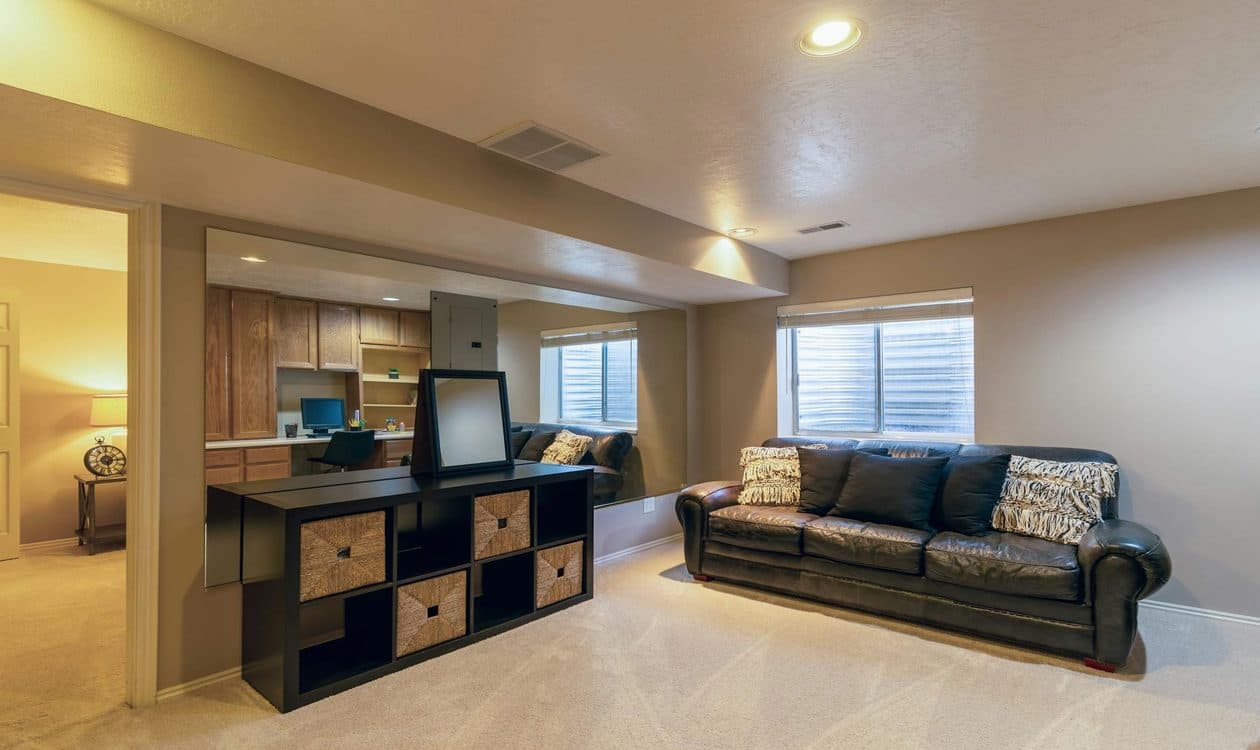
During COVID lockdowns, the poster had built a basement bar. You know, as one does when you're stuck at home. Great project, great hangout spot. One problem: their 13-year-old orange tabby, who had arthritis, would lose his absolute mind every time anyone went downstairs. We're talking bouncing off the walls, climbing shelves, screaming at full volume, and obsessively scratching and digging at the bottom of the laundry room door. You know, the door to the room with the sump pump.
Here's the kicker: his calico sister never batted an eye down there. She was perfectly calm. So the owner chalked it up to standard orange cat behavior. The whole point of the subreddit is that these cats are "special," right?
They even joked that maybe the basement was haunted. Checked for mice. Checked for termites. Nothing.
Then some friends came over for drinks, watched the cat have his usual meltdown, and one friend who had recently installed a radon mitigation system in an old house she was renovating casually suggested: "Have you tried a radon detector?"

The "old guy" himself, finally relaxed on the basement couch after radon mitigation. Photo: u/Sum1udontkno via Reddit
The Reading: 600 Bq/m³
When the radon detector was placed at the base of that laundry room door, it registered levels as high as 600 Bq/m³. That's roughly 16.2 pCi/L in U.S. measurements. For context, the EPA recommends taking action at just 4.0 pCi/L. This reading was 4 times the EPA action level, 3 times Health Canada's threshold, and 6 times what the World Health Organization considers acceptable.
The radon was seeping in through the sump pump well, a common entry point that most homeowners don't think about. Professionals were called in and installed piping and a fan to vent the gas from the sump pump well to outside the house.
The post-mitigation reading? 20 Bq/m³. Down from 600. That's a 97% reduction.
And the cat? The same arthritic 13-year-old who had been losing his mind near that door for years was spotted cuddled up next to his owner on the basement couch, purring and calm for the first time ever down there. No more wall-bouncing. No more screaming. No more digging at the door. Just a senior orange cat, finally at peace in the basement bar his human built during lockdown.
The post racked up over 36,000 upvotes and hundreds of comments.
36K+
Reddit Upvotes
600
Bq/m³ Before
20
Bq/m³ After
97%
Radon Reduction
What Reddit Had to Say
The comments section was exactly what you'd expect from a community dedicated to the proposition that orange cats share a single brain cell:
"That brain cell was working overtime."
"He wasn't using the one brain cell - he was using all of ours."
"Canary in the coal mine, but make it orange."
"Give that cat a medal. And some tuna."
Beyond the jokes, many commenters shared their own radon testing stories, and more than a few admitted the post was what finally convinced them to buy a radon detector. Several commenters pointed out the "canary in the coal mine" parallel, noting that pets have historically been early warning systems for environmental hazards. The calico sister's chill attitude also became a running joke, with people debating whether she simply didn't care or whether orange cats have some kind of sixth sense the rest of the cat kingdom lacks.
OK, But Can Cats Actually Detect Radon?
Let's get this out of the way: cats can't "smell" radon. Radon is a noble gas: colorless, odorless, and tasteless. No animal can detect it with their senses any more than we can. So what was actually going on with this cat?
There are a few plausible explanations, and they all point to the same conclusion: animals are more sensitive to their environment than we give them credit for.
Theory 1: Airflow and Pressure Changes
Radon enters homes through cracks, gaps, and openings in the foundation, including sump pump pits. These entry points often create subtle drafts and pressure differentials. Cats are extremely sensitive to air currents (it's how they navigate in the dark using their whiskers). The cat may have been reacting to unusual airflow patterns near the door that humans couldn't perceive.
Theory 2: Physical Discomfort
At 600 Bq/m³, the radon concentration near that door was extremely high. Radon decay produces alpha particles and radioactive daughter products. While we don't fully understand pet sensitivity to ionizing radiation at low doses, it's possible the cat experienced some form of physical discomfort in the high-concentration zone, similar to how some animals react before earthquakes or storms.
Theory 3: Associated Symptoms
Chronic radon exposure causes respiratory irritation. If the cat spent time near the highest-concentration area and experienced breathing difficulty or discomfort, it may have developed an anxious association with that spot, which would explain the agitated behavior. The "bouncing off walls" could have been respiratory distress showing up as restlessness.
Whatever the exact mechanism, the result speaks for itself: the cat's behavior changed dramatically once the radon was mitigated. That's not a coincidence. Learn more about how radon affects pets and specifically radon risks for cats on our resource pages.
The Sump Pump Connection (This Is Important)
One detail from this story that every homeowner should pay attention to: the radon was coming from the sump pump.
Sump pump pits are one of the most common and most overlooked radon entry points. The pit creates a direct opening to the soil beneath your foundation, giving radon an easy path into your home. Many sump pits have loose-fitting or no covers at all, essentially creating an open pipeline for soil gases.
Common Radon Entry Points in Homes
- •Sump pump pits - open or poorly sealed pits are major entry points
- •Foundation cracks - even hairline cracks allow radon seepage
- •Pipe penetrations - gaps around plumbing and utility lines
- •Floor-wall joints - the seam where the basement floor meets the wall
- •Drain tiles - interior drainage systems connected to soil
In this case, the fix was straightforward: professionals installed a vent pipe and fan system to draw radon from the sump pump well and exhaust it safely outside. This is a standard sub-slab depressurization system, the same type of mitigation we install throughout Metro Atlanta every day.
Why This Story Matters for Georgia Homeowners
The Reddit post was from Canada, but the same scenario plays out in Georgia homes every day. Just without the viral cat video.
Metro Atlanta sits on the Piedmont geological province, a region of uranium-rich granite bedrock that produces significant amounts of radon. Counties like Cobb, Gwinnett, Cherokee, and Forsyth are all classified as EPA Zone 1 (highest risk).
We regularly test homes in Atlanta, Marietta, Roswell, and surrounding cities that come back with readings well above 4.0 pCi/L. Some homes in North Georgia have tested above 20 pCi/L, even higher than what that Canadian cat was dealing with.
The Difference? Most People Don't Have an Orange Cat Warning System.
Radon is invisible, odorless, and tasteless. Without testing, there is literally no way to know if your home has dangerous levels. That Reddit cat's owner got lucky. Someone noticed the behavior and connected the dots. Most families breathe elevated radon for years without any idea.
Pets and Radon: The Risks Are Real
The viral cat story is funny and heartwarming, but there's a serious side to it: pets are at significant risk from radon exposure. In many cases, they're at higher risk than their owners.
Why Pets Face Higher Risk
- •Floor-level living: Radon is heavier than air and concentrates near the ground, right where pets spend their lives
- •Faster breathing: Cats take 20-30 breaths per minute vs. 12-20 for humans, inhaling more contaminated air
- •24/7 indoor exposure: Indoor cats never leave the house. They get zero "fresh air" breaks
- •Smaller body size: Higher radiation dose per pound of body weight
Documented Health Effects
- •Lung cancer in cats and dogs correlated with geographic radon levels
- •Nasal cancer in long-nosed dog breeds linked to radon exposure
- •Chronic respiratory issues in pets living in high-radon homes
- •Behavioral changes (restlessness, avoidance of certain areas) observed in pets
For the full breakdown, see our guide on radon and pets. It covers dogs, cats, birds, and small animals.
What You Should Actually Do (No Cat Required)
You shouldn't need a frantic orange cat to tell you to test your home. Radon is the second leading cause of lung cancer, and your pets face even higher risk because they breathe at floor level. Here's the straightforward plan:
Test Your Home
Professional radon testing takes 48 hours and gives you an accurate reading for your home. Place the test in the lowest lived-in level, especially if that's where your pets hang out.
Understand Your Results
Below 2.0 pCi/L? You're in good shape. Between 2.0 and 4.0? Consider mitigation. Above 4.0 pCi/L? The EPA recommends taking action. Above 16 pCi/L like the Reddit cat's home? That's urgent.
Mitigate If Needed
A radon mitigation system typically reduces levels by 90-99%. It's installed in a single day, costs between $800-$2,500 for most homes, and runs quietly 24/7. If a sump pump is involved (like in the Reddit story), the system vents gas from the pit directly outside.
Retest and Maintain
After mitigation, retest to confirm levels dropped. Then retest every 2-5 years to make sure the system is still doing its job. Your cat (and lungs) will thank you.
The Takeaway
That orange cat on Reddit wasn't just being weird. He was trying to tell his owner something important, and it turns out he may have saved their lives. The post went viral because it's funny and wholesome, but the underlying message is critical:
Radon is the second leading cause of lung cancer in the United States. It kills over 21,000 Americans every year. It's in homes across Georgia. And unlike an orange cat having a meltdown by the laundry room door, it gives you absolutely zero warning signs.
Test your home. It takes 48 hours and could save your life and your cat's.
About EraseRadon
EraseRadon provides professional radon testing and mitigation services throughout Metro Atlanta and all of Georgia, protecting families and their pets from radon gas exposure. Schedule your test today.