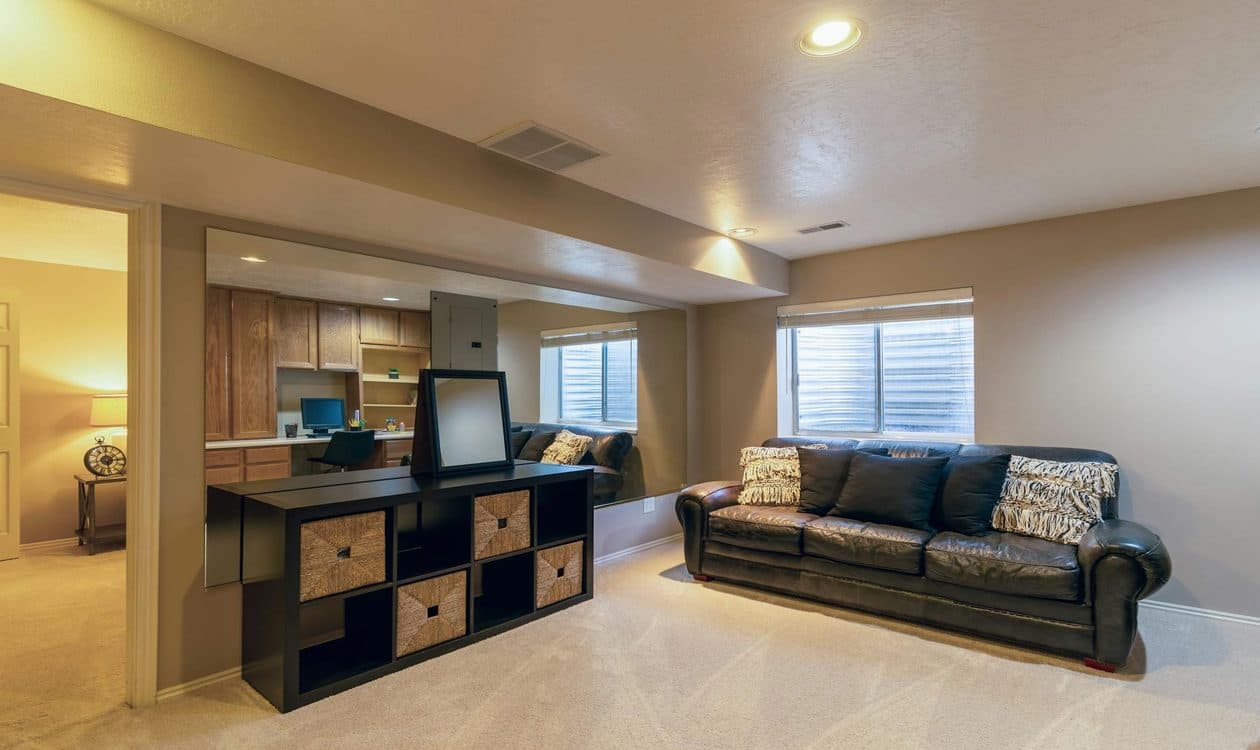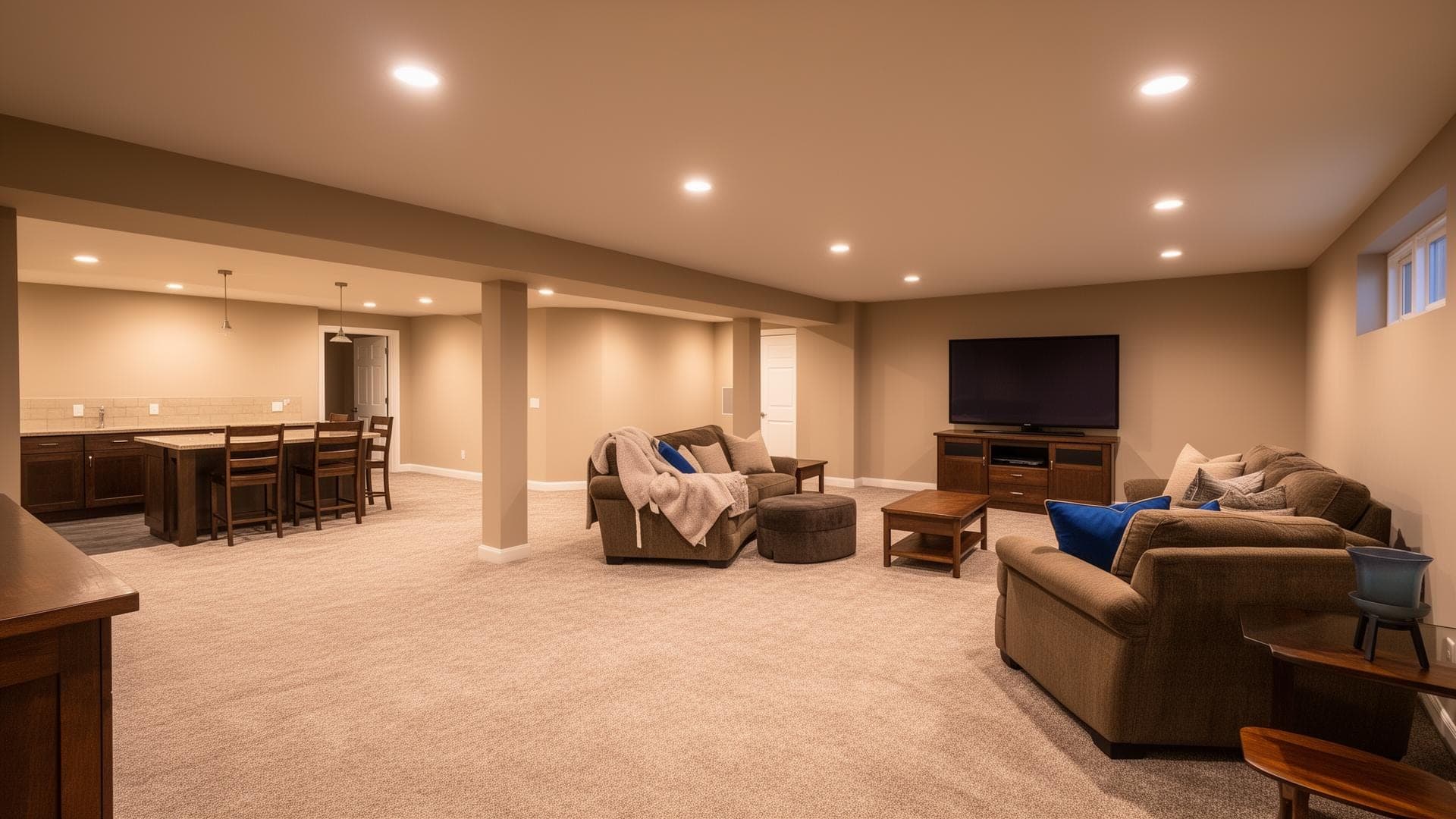
If you own a home with a basement, this article contains the most important information you'll ever read about radon. Multiple peer-reviewed studies have confirmed what radon professionals have long observed: the presence of a basement is the single strongest predictive factor for elevated indoor radon levels, more significant than soil type, geographic location, or home age.
This guide will explain exactly why basements concentrate radon, how the risk varies by basement type, and what you can do to protect your family. Whether your basement is a finished living space, storage area, or rarely-entered utility space, understanding basement radon is critical for your family's long-term health.
Critical Finding from Research
A comprehensive study analyzing over 200,000 radon measurements found that homes with basements had average radon levels 2.3 times higher than homes with slab-on-grade foundations. This difference was more significant than any other architectural or geographic variable studied, including EPA zone classification.
1. Why Basements Are the #1 Predictor of High Radon
Understanding why basements have such a profound impact on radon levels requires examining multiple intersecting factors. No single reason explains the correlation, instead, basements create a perfect confluence of conditions that maximize radon entry and accumulation.
The Research Evidence
The connection between basements and elevated radon isn't speculation, it's been rigorously documented across numerous studies:
EPA National Residential Radon Survey
Found basement/lowest-level living areas had significantly higher radon than first-floor levels
University of Pittsburgh Study (2019)
Basement presence was the strongest predictor of radon >4 pCi/L in multivariate analysis
Canadian National Radon Program
Homes with basements were 3.2x more likely to require mitigation
Georgia DPH Data Analysis
Basement homes in Metro Atlanta averaged 4.8 pCi/L vs. 2.1 pCi/L for slab homes
Five Reasons Basements Concentrate Radon
1. Maximum Soil Contact
Unlike slab foundations that only contact soil on one surface (bottom), basements are surrounded by soil on the bottom and all four sides. This dramatically increases the potential entry area for radon. A typical basement has 3-4 times more soil-contact surface area than a slab foundation.
2. Deeper Soil Penetration
Basements extend 6-10 feet into the ground, reaching soil layers that are often more radon-rich. Deeper soils have less atmospheric dilution and greater uranium/radium concentrations. The basement essentially "reaches down" into high-radon soil zones.
3. More Entry Points
Basements have numerous potential radon entry points: floor-wall joints (cove joints), floor cracks, wall cracks, sump pits, floor drains, utility penetrations, exposed soil, and block wall pores. Each opening is a potential radon pathway.
4. The Stack Effect (Pressure Differential)
Basements are under negative pressure relative to surrounding soil. This pressure differential actively "sucks" soil gases including radon into the home. The effect is strongest in basements due to their below-grade position.
5. Limited Ventilation
Basements typically have fewer windows, less air exchange, and are often closed off from the rest of the home. Radon that enters has nowhere to go and accumulates to higher concentrations.
2. The Science: How Radon Enters Basements
Understanding the mechanics of radon entry is essential for effective testing and mitigation. Radon doesn't seep through solid concrete, it enters through specific pathways created by the inherent nature of basement construction.
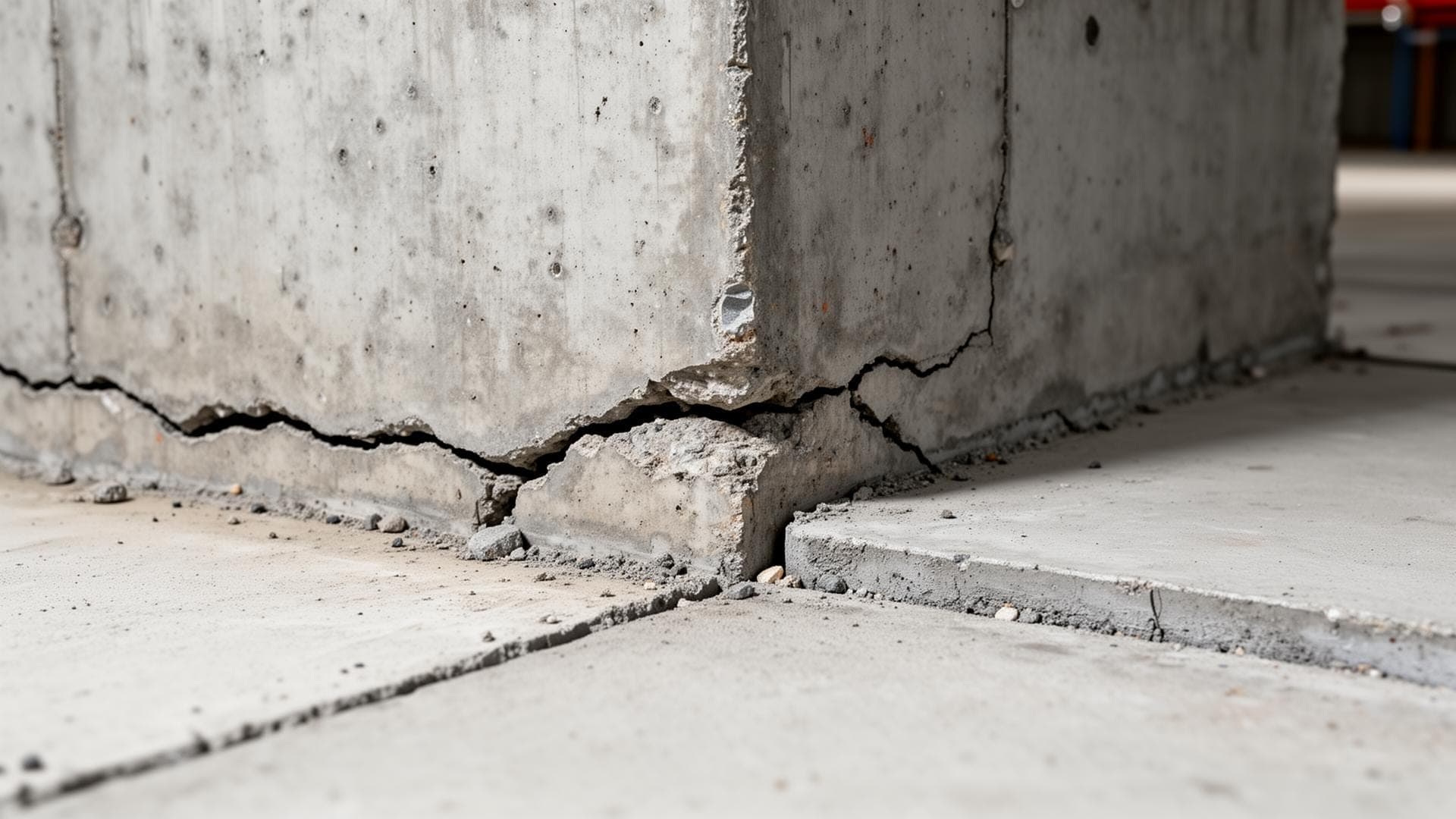
Radon enters basements through multiple pathways including floor-wall joints, foundation cracks, sump pits, and utility penetrations
Primary Radon Entry Points in Basements
| Entry Point | % of Total Entry | Why It Matters |
|---|---|---|
| Floor-Wall Joint (Cove Joint) | 30-40% | Natural gap where floor meets wall; impossible to completely seal |
| Floor Cracks | 15-25% | Shrinkage and settling cracks create direct pathways |
| Sump Pit/Pump | 10-20% | Open connection to sub-slab soil; often uncovered |
| Wall Cracks | 10-15% | Especially in poured concrete walls below grade |
| Block Wall Pores | 5-15% | Hollow block cores connect to soil; porous material |
| Floor Drains | 5-10% | Dry P-traps allow soil gas entry |
| Utility Penetrations | 3-5% | Pipe and wire entries rarely sealed properly |
3. Basement Types and Their Radon Risk Levels
Not all basements carry identical radon risk. The type of basement construction, materials, and configuration significantly influence radon accumulation potential. Understanding your basement type helps prioritize testing and mitigation approaches.
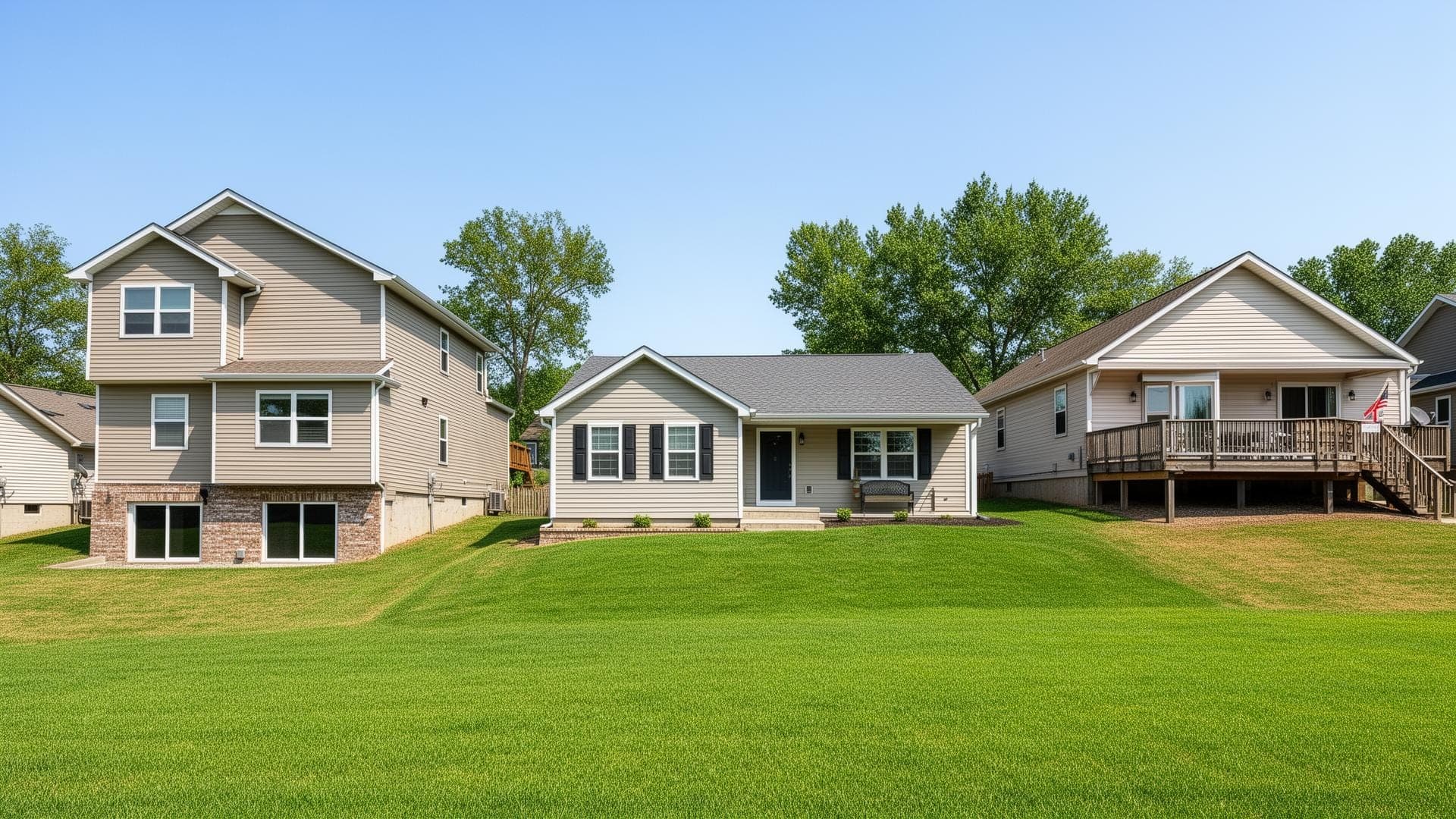
Different basement and foundation types present varying levels of radon risk
Full Basement (Highest Risk)
Full basements present the highest radon risk due to maximum soil contact, greatest below-grade depth, and largest volume for radon accumulation.
Risk Factors:
- • Maximum soil contact surface area
- • Deepest foundation penetration
- • Largest enclosed volume below grade
- • Multiple entry point types
Typical Levels:
- • Average: 4.5-6.0 pCi/L in Georgia
- • 60-70% exceed EPA action level
- • Peak levels: 15-50+ pCi/L observed
Daylight/Walkout Basement (High Risk)
Slightly lower risk than full basements due to partial above-grade exposure, but still significant risk on below-grade portions.
Risk Factors:
- • 2-3 sides below grade
- • Some natural ventilation possible
- • Often finished as living space
- • May have more windows
Typical Levels:
- • Average: 3.5-5.0 pCi/L in Georgia
- • 50-60% exceed EPA action level
- • Better ventilation helps somewhat
Partial Basement/Crawl Space Combo (Moderate-High Risk)
Homes with both basement and crawl space sections present complex mitigation challenges as both areas require attention.
Risk Factors:
- • Multiple foundation types
- • Exposed soil in crawl space
- • Air communication between zones
- • Complex mitigation requirements
Typical Levels:
- • Highly variable: 2.5-6.0+ pCi/L
- • Depends on relative proportions
- • Crawl space often higher than basement
Crawl Space Only (Moderate Risk)
Crawl spaces with exposed earth floors can have very high radon, but levels in living space above depend on sealing and ventilation.
Risk Factors:
- • Direct soil exposure common
- • Air may or may not reach living space
- • Encapsulation affects risk
- • Ventilation design matters
Typical Levels:
- • In crawl: 5-15+ pCi/L common
- • In living space: 2-4 pCi/L average
- • Encapsulated: significantly lower
Slab-on-Grade (Lowest Risk)
Slab homes have the lowest average radon levels but are NOT radon-proof. Testing is still essential, especially in Zone 1 areas.
Risk Factors:
- • Single surface soil contact
- • Typically 4-6" thick
- • Cracks still allow entry
- • Utility penetrations still matter
Typical Levels:
- • Average: 1.5-2.5 pCi/L in Georgia
- • 20-30% exceed EPA action level
- • Still requires testing!
4. Georgia-Specific Basement Considerations
Georgia's unique geological and construction characteristics create specific basement radon patterns that homeowners should understand. The combination of granite bedrock, regional construction practices, and climate creates distinct radon dynamics.
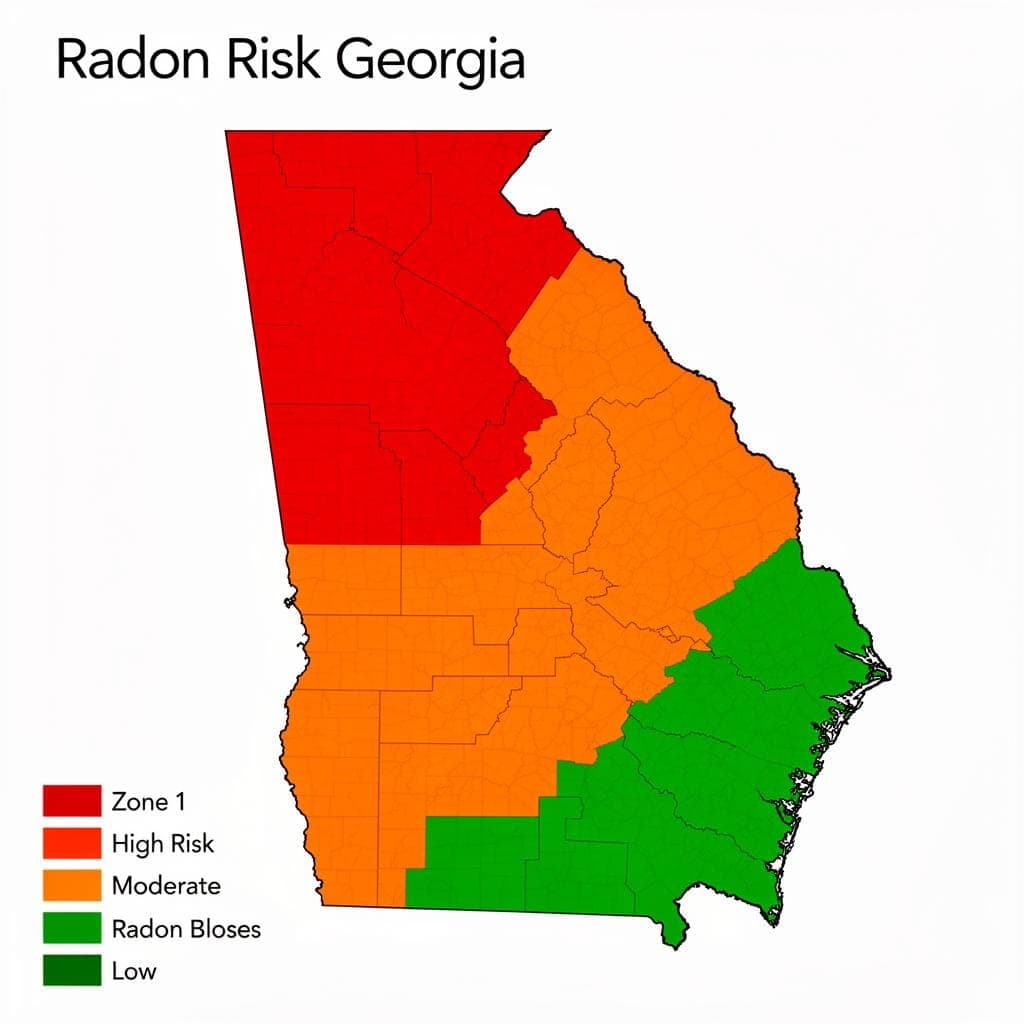
Georgia EPA Radon Zone Map - most of Metro Atlanta is in Zone 1 (highest risk)
Why Georgia Basements Are Different
Granite Bedrock Foundation
Georgia's Piedmont region sits on ancient granite formations with some of the highest natural uranium concentrations in the southeastern U.S. This uranium-rich bedrock continuously generates radon that migrates upward into basements. Homes built on granite have 40-60% higher radon levels than those on sedimentary rock.
Basement Construction Trends
Georgia has experienced a basement construction surge since the 1990s, particularly in North Metro Atlanta. Many of these newer basements are finished living spaces with HVAC integration, increasing occupant exposure. Older homes often have unfinished basements with exposed entry points.
Climate Considerations
Georgia's hot summers and mild winters create year-round conditions that favor radon accumulation. Summer AC use keeps homes sealed, increasing radon buildup. Winter heating creates strong stack effect. Spring/fall temperature swings cause daily radon fluctuations.
Topography Effects
Georgia's hilly terrain means many homes have daylight or walkout basements. These sloped-lot configurations often have varying soil depths around the foundation, creating uneven radon entry patterns. Testing should occur in the lowest, most enclosed basement section.
High-Risk Metro Atlanta Areas for Basement Homes
The following Metro Atlanta areas combine high basement prevalence with elevated geological radon risk:
5. The Stack Effect: Why Basements Trap Radon
The "stack effect" (also called chimney effect) is the primary driving force pulling radon into basements. Understanding this phenomenon explains why basements consistently have the highest radon levels and why certain conditions worsen the problem.
How the Stack Effect Works
- 1
Warm air rises inside the home
Heated indoor air is less dense than outdoor air and naturally moves upward through the house
- 2
Air escapes at upper levels
Rising air exits through attic, roof vents, upper windows, and other openings
- 3
Replacement air must enter at lower levels
As air exits the top, the home "pulls" replacement air from the lowest available sources
- 4
Soil gas is drawn through basement openings
The easiest source of makeup air is soil gas entering through basement cracks and openings
- 5
Radon-laden soil gas accumulates in basement
The basement becomes a collection zone for radon before it disperses upward
Factors That Increase Stack Effect
Worse Stack Effect:
- Taller homes (2-3 stories above basement)
- Greater indoor-outdoor temperature difference
- Leaky attics and upper-floor air leaks
- Multiple exhaust fans operating
- Combustion appliances in basement
Reduced Stack Effect:
- Well-sealed attic and roof
- Balanced HVAC system
- Make-up air for exhaust fans
- Sealed combustion appliances
- Moderate indoor temperatures
Seasonal Variations
In Georgia, the stack effect is strongest during winter heating season (December-February) when indoor-outdoor temperature differentials are greatest. However, summer air conditioning also creates significant negative pressure. Spring and fall, with more windows open and less temperature differential, often show the lowest basement radon levels, but this doesn't mean the problem is solved.
6. How to Test for Radon in Your Basement
Proper basement radon testing requires understanding specific protocols designed for below-grade spaces. The EPA provides clear guidelines, but basement testing has unique considerations that affect accuracy.
Where to Place the Radon Test
EPA Basement Testing Guidelines:
- Lowest livable level: Test in the basement if it's used or could be used as living space
- 2-3 feet off the floor: Place monitor on a table or shelf, not on the floor
- Away from walls: Keep at least 12 inches from exterior walls
- Away from HVAC: Not near vents, ducts, or return air grilles
- Away from exterior doors/windows: At least 10 feet from openings
- Representative location: In a typically occupied area, not a closet
Testing Requirements (Closed-House Conditions)
Closed-House Conditions Required:
- • Close all windows and exterior doors at least 12 hours before test begins
- • Keep closed during entire test period (48-96 hours minimum)
- • Normal entry/exit is acceptable
- • HVAC can operate normally (except whole-house fans)
- • Do not operate fireplaces, wood stoves, or whole-house fans
Professional vs. DIY Testing
Professional Testing (Recommended)
- Continuous radon monitors (CRMs) - most accurate
- Tamper-detection for real estate transactions
- Hourly readings show radon patterns
- Temperature/humidity/pressure logged
- Experienced, calibrated equipment
DIY Charcoal Test Kits
- Inexpensive screening option ($15-30)
- Less accurate than CRMs
- No tamper protection
- Single average reading only
- Not accepted for real estate transactions
DIY kits are acceptable for initial screening but should be followed by professional testing if elevated levels are detected.
7. Basement Radon Mitigation Systems
When basement radon levels exceed the EPA action level of 4.0 pCi/L (or the 2.0 pCi/L at which EPA recommends considering mitigation), active soil depressurization is the gold-standard solution. These systems can reduce radon levels by 80-99% in most basement homes.
A well-installed basement mitigation system also delivers a side benefit most homeowners do not anticipate. The negative pressure beneath the slab pulls water vapor out of the soil along with radon, which is why EPA research found statistically significant reductions in basement dampness after mitigation. For a deeper look at how radon systems reduce basement humidity, see our dedicated guide on the topic. That drier air also starves basement mold of the moisture it needs to grow.
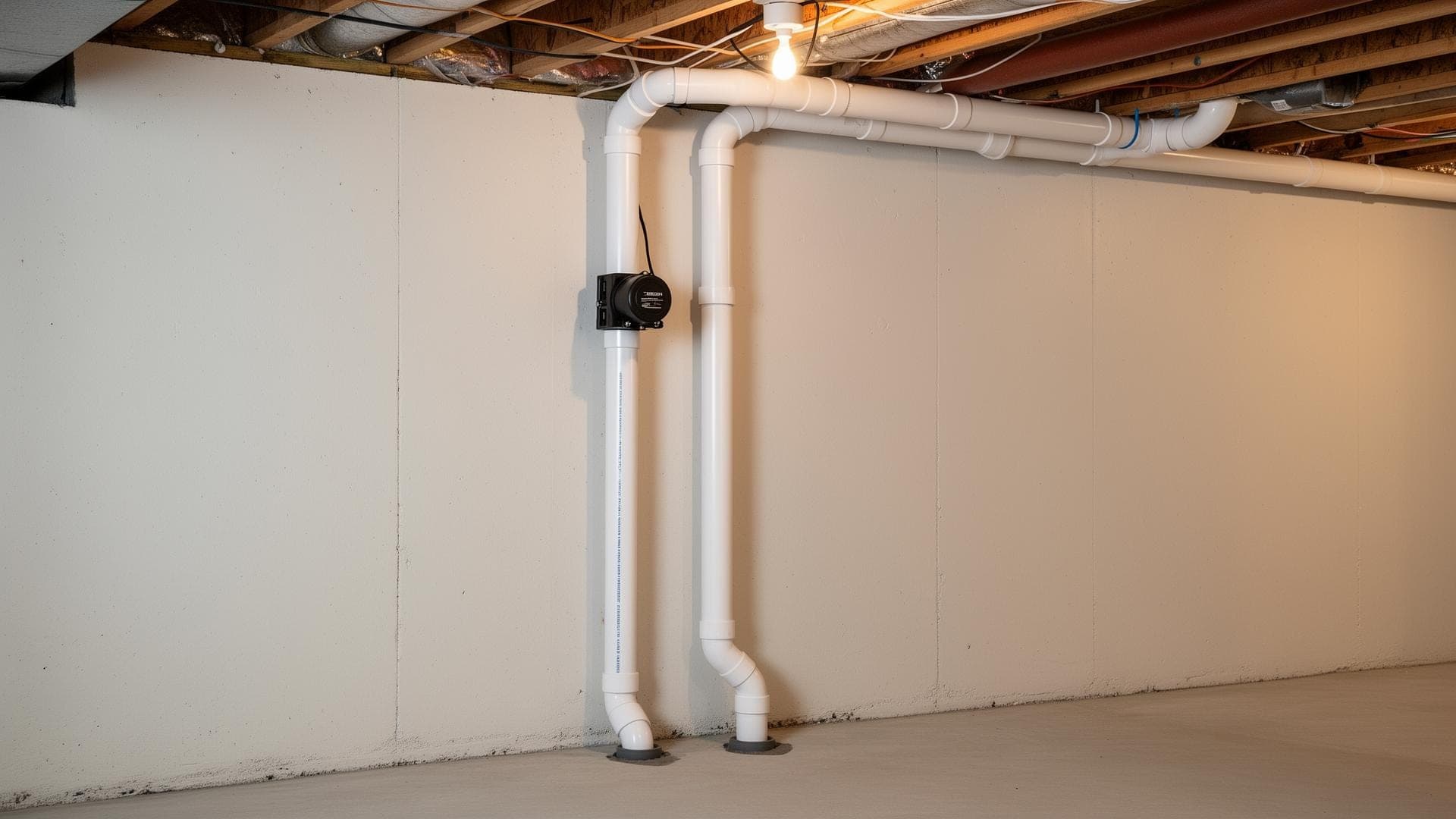
A sub-slab depressurization system creates negative pressure beneath the basement floor, preventing radon entry
Sub-Slab Depressurization (SSD) - Primary Method
How SSD Works:
- 1A 4" diameter hole is drilled through the basement floor slab
- 2A suction pit is created beneath the slab in the sub-slab material
- 3PVC piping connects the suction pit to an inline radon fan
- 4The fan creates negative pressure beneath the entire slab
- 5Radon-laden soil gas is vented safely above the roofline
- 6Negative pressure prevents radon from entering through any basement opening
Mitigation Options by Basement Type
| Basement Type | Primary System | Suction Points | Special Considerations |
|---|---|---|---|
| Full Basement (Slab Floor) | Sub-slab depressurization | 1-3 points typical | Most straightforward installation |
| Full Basement (Dirt Floor) | Submembrane + SSD | 1-2 points | Membrane must be sealed to walls |
| Walkout Basement | Sub-slab depressurization | 1-2 points | May need exterior pipe routing |
| Block Wall Basement | SSD + Block wall suction | 2-4 points | Must address hollow block cores |
| Basement + Crawl Combo | SSD + Submembrane | 2-3 points | Both areas must be addressed |
8. Finished vs. Unfinished Basements: Different Challenges
Whether your basement is finished living space or unfinished storage affects both the health risk and mitigation approach. Each presents unique considerations.
Finished Basements
Higher Health Risk:
- • Extended occupancy increases exposure
- • Bedrooms = 8+ hours/night exposure
- • Children often play in finished basements
- • Home offices mean all-day exposure
Mitigation Considerations:
- • May require drywall removal for sealing
- • Aesthetics of pipe routing matter
- • Interior vs. exterior venting preferences
- • May need multiple suction points
Unfinished Basements
Still Significant Risk:
- • Radon migrates to upper floors
- • HVAC ducts spread radon throughout home
- • Laundry activities expose occupants
- • Future finishing plans should be considered
Mitigation Advantages:
- • Easier access for installation
- • Entry points visible for sealing
- • Pipe routing more flexible
- • Lower installation costs typically
9. Basements as Living Spaces: Special Concerns
Using your basement as living space, whether a bedroom, home office, family room, or gym, significantly increases radon exposure risk. Time spent in high-radon areas directly correlates with health risk.
Basement Bedroom Warning
Basement bedrooms represent the highest-risk scenario. Sleeping 8 hours nightly in a basement with 8 pCi/L radon provides equivalent radiation exposure to 200 chest X-rays per year. Children sleeping in basement bedrooms are at particular risk due to their developing lungs and longer potential lifetime exposure.
If anyone sleeps in your basement, radon testing is urgent, not optional.
Exposure by Basement Use
| Basement Use | Hours/Week | Relative Risk | Testing Priority |
|---|---|---|---|
| Basement Bedroom | 56+ hours | Highest | Urgent |
| Home Office | 40+ hours | Very High | Urgent |
| Playroom/Family Room | 15-30 hours | High | High Priority |
| Home Gym | 5-15 hours | Moderate-High | High Priority |
| Media Room | 10-20 hours | Moderate | Standard |
| Storage/Utility Only | 1-3 hours | Lower | Standard (still test!) |
10. Your Basement Action Plan
Based on everything covered in this guide, here's your clear action plan for protecting your family from basement radon.
1Test Your Basement NOW
If you have a basement and have never tested for radon, this is your most important action. Every day without testing is a day of unknown exposure for your family.
Schedule Professional Testing2Understand Your Results
- Below 2 pCi/L: Low risk, retest every 2-5 years
- 2-4 pCi/L: EPA recommends considering mitigation; retest every 2 years
- Above 4 pCi/L: EPA action level - mitigation recommended
- Above 8 pCi/L: High priority - expedite mitigation
3If Elevated, Mitigate
Professional mitigation can reduce radon levels by 80-99%. Most basement systems can be installed in one day with minimal disruption. Learn about how radon enters your home and our home radon testing and mitigation options.
Explore Mitigation Options4Verify and Maintain
- • Post-mitigation testing confirms system effectiveness
- • Annual retest recommended for peace of mind
- • Check manometer monthly to verify fan operation (maintenance guide)
- • Replace fan every 7-12 years as needed
Frequently Asked Questions
Protect Your Basement. Protect Your Family.
If you have a basement, radon testing is essential. Our professionals have tested and mitigated thousands of Georgia basements. Get the answers you need today.