1. Why DeKalb County Has a Radon Problem
DeKalb County sits on some of the most visible granite geology in Georgia. Stone Mountain, the massive exposed granite monadnock on the county's eastern side, is just the most obvious example of what lies beneath the entire region. The same ancient igneous and metamorphic rock extends underground across most of the county, and that rock contains uranium.
Uranium in bedrock decays into radium, which then decays into radon gas. This gas migrates upward through soil and enters homes through foundation cracks, gaps around pipes, and other openings. The process is invisible and odorless. The only way to know whether your DeKalb County home has elevated radon is to get your home tested.
DeKalb County's housing stock ranges from 1920s Decatur bungalows to modern high-rises in Brookhaven and Dunwoody. The county includes established neighborhoods like Druid Hills, growing cities like Tucker, and suburban communities near Stone Mountain. Every foundation type is represented: slabs, basements, crawl spaces, and combinations. All of them can have radon problems.
Use our check radon levels for your area tool for your specific zip code in DeKalb County.
2. EPA Zone Designation and What It Means
The EPA classifies every U.S. county into one of three radon zones based on predicted average indoor radon levels:
| Zone | Predicted Avg | Risk Level |
|---|---|---|
| Zone 1 (Highest) | Above 4 pCi/L | High |
| Zone 2 (DeKalb County) | 2-4 pCi/L | Moderate |
| Zone 3 (Lowest) | Below 2 pCi/L | Low |
DeKalb County falls in Zone 2, meaning the predicted average indoor radon level is between 2 and 4 pCi/L. This is labeled a moderate risk zone, but that label is misleading. A predicted average of 2-4 pCi/L means that a substantial percentage of homes will test above the EPA action level of 4 pCi/L. North DeKalb areas like Dunwoody and Brookhaven often test considerably higher than the county average.
Zone Averages Do Not Predict Individual Homes
The EPA zone map is a county-level generalization. Within DeKalb County, individual homes can test anywhere from less than 1 pCi/L to over 20 pCi/L. Two houses on the same street can have dramatically different levels depending on foundation type, soil conditions, and construction details. Testing is the only way to know your home's actual level.
3. High-Risk Neighborhoods and Areas
While every home needs individual testing, certain parts of DeKalb County tend to produce higher radon readings based on local testing data and geological patterns:
North DeKalb (Higher Risk)
Druid Hills and Decatur (Higher Risk)
Tucker and Stone Mountain Area (Moderate to High Risk)
South DeKalb (Lower but Not Zero)
South DeKalb areas generally show lower average radon levels than North DeKalb. The geology transitions away from the densest granite formations. However, isolated pockets of elevated radon still occur. The only safe assumption is that your home has not been tested until it has.
4. The Geology Behind DeKalb County Radon
DeKalb County's radon story is written in its granite. The county sits on the Piedmont geological province, and two massive granite exposures provide visible evidence of what lies beneath: Stone Mountain and Arabia Mountain.
The key rock types include:
The depth of bedrock matters significantly in DeKalb County. Near Stone Mountain and Arabia Mountain, granite can be at or near the surface, giving radon a very short path to travel before reaching foundations. In other areas, deeper weathering provides more dilution. But soil permeability, moisture content, and seasonal conditions all influence how much radon actually enters a home. For more details, see our DeKalb County radon case study and our Georgia radon map by county.
5. Local Testing Data and Trends
Based on aggregated testing data from radon professionals working in DeKalb County, several patterns emerge:
| Area | Avg Test Result | % Above 4 pCi/L |
|---|---|---|
| North DeKalb (Dunwoody, Brookhaven) | 3.5-5.0 pCi/L | 25-35% |
| Druid Hills / Decatur | 3.0-4.5 pCi/L | 20-30% |
| Tucker / Stone Mountain area | 2.5-4.0 pCi/L | 15-25% |
| South DeKalb / Lithonia | 1.5-3.0 pCi/L | 5-15% |
These are general ranges based on available data, not guarantees for any specific home. Your zip code's risk level can be checked using our radon risk lookup tool.
Seasonal variation matters in DeKalb County. Homes tested in winter months (December through February) typically show levels 40-60% higher than the same homes tested in summer. If you tested in summer and got a borderline result, consider retesting in winter.
6. How to Test Your DeKalb County Home
Testing for radon is straightforward. Here is the recommended approach for DeKalb County homeowners:
Choose Your Test Type
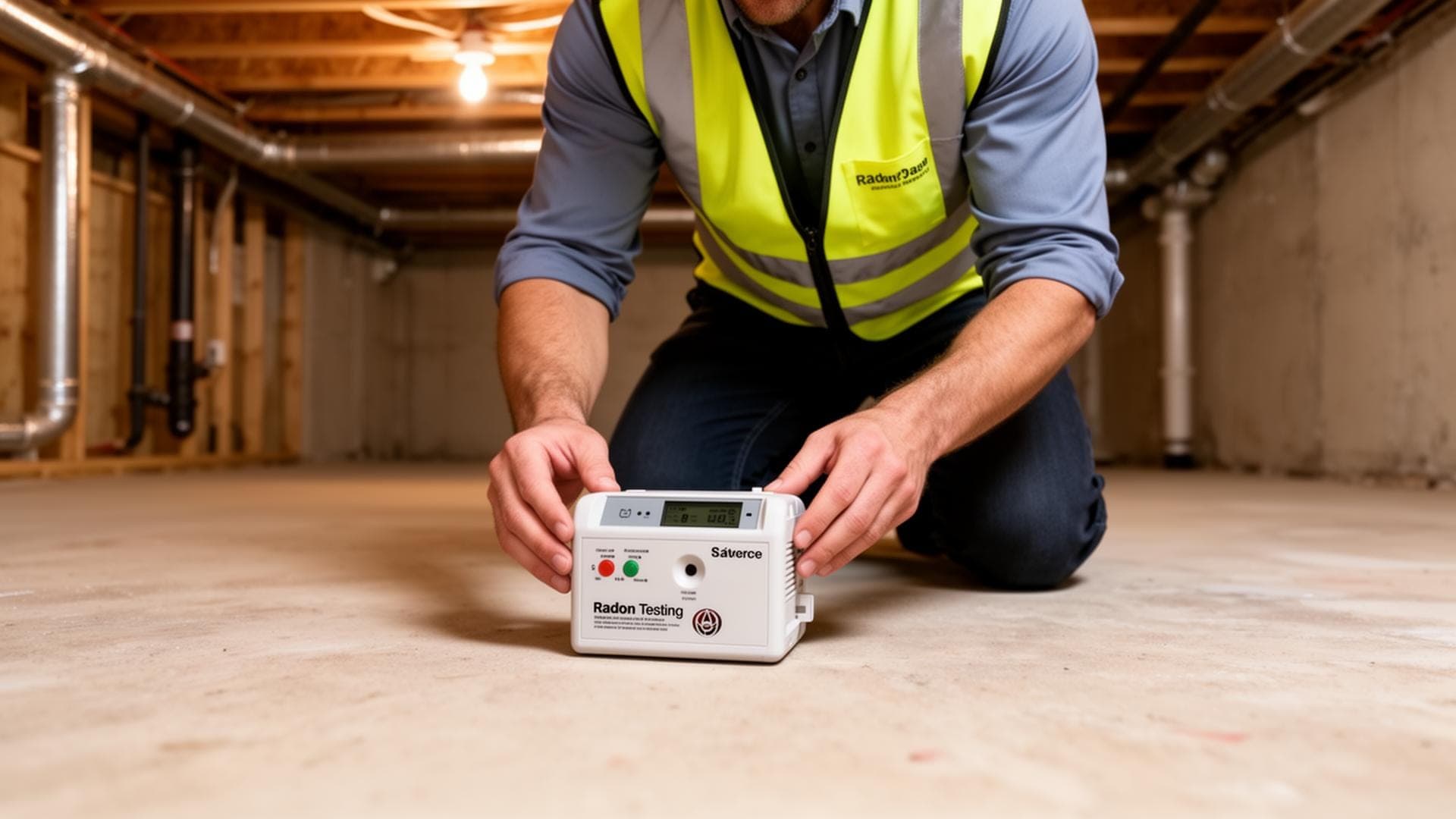
For initial screening, a short-term test (48 hours minimum) is appropriate. For real estate transactions, professional CRM testing is the standard. A DIY kit works for general screening.
Place the Test Correctly
Test in the lowest livable area of your home. For homes with basements (common in North DeKalb and Decatur), that means the basement. For slab-on-grade homes, test on the main floor. Keep the test away from drafts, windows, and exterior walls. Maintain closed-house conditions during the test.
Interpret Your Results
Below 2 pCi/L: Low risk, retest every 2 years. Between 2-4 pCi/L: Consider a follow-up long-term test or mitigation. Above 4 pCi/L: The EPA recommends active soil depressurization systems. Above 8 pCi/L: Prioritize mitigation promptly.
Learn more about how long radon testing takes and what to expect from the process.
7. Mitigation for DeKalb County Homes
If your DeKalb County home tests above 4 pCi/L, mitigation is straightforward and effective. The standard approach depends on your foundation type:
Slab or Basement
$1,200-$2,500
Sub-slab depressurization: a suction point, PVC pipe, and fan that pulls radon from under the foundation and vents it above the roofline.
Crawl Space
$2,500-$5,000
Sub-membrane depressurization: a sealed vapor barrier over the soil with active suction pulling radon from beneath.
Both systems achieve 90-99% radon reduction and are installed in one day. Use our see mitigation costs by home type tool for a more specific estimate. DeKalb County homes with basements are among the most common installations we perform, since basement foundations are prevalent in North DeKalb.
DeKalb County Homeowners
If you are in DeKalb County and have never tested, do it now. The granite geology beneath your home produces radon continuously, and the moderate EPA zone rating means your home could easily be above the action level. Testing takes 48 hours and gives you a definitive answer. If mitigation is needed, it is a one-day installation that solves the problem permanently.