1. Where Radon Comes From
Radon originates from the natural radioactive decay of uranium, which is present in virtually all soil and rock. Uranium decays through a chain of elements (thorium, radium) and eventually produces radon-222, a radioactive gas with a half-life of 3.8 days. This gas migrates through soil pores and can accumulate beneath and around your home's foundation.
In Georgia, the Piedmont geological region contains granite and metamorphic rock with above-average uranium concentrations. This is why Georgia radon levels tend to be elevated compared to many other states. Check your specific area with our look up your address for radon risk tool.
Outdoors, radon disperses into the atmosphere and poses no threat. The problem arises when it enters an enclosed space like your home, where it accumulates and reaches concentrations high enough to cause health effects. For more on the science, see our science of radon in Georgia guide.
2. The Forces That Pull Radon Inside
Radon does not randomly drift into your home. Specific forces actively draw it in:
The Stack Effect
Warm air rises inside your home and exits through upper levels (attic bypasses, vents, gaps). This creates negative pressure at the foundation level. The home acts like a chimney, constantly pulling in replacement air from the lowest level, including soil gas containing radon. The stack effect is strongest in winter when the indoor-outdoor temperature difference is greatest.
Wind Loading
Wind blowing against one side of a home creates positive pressure on the windward side and negative pressure on the leeward side. This pressure differential can drive soil gas into the home through the foundation on the low-pressure side.
HVAC Operation
Exhaust fans (bathroom, kitchen, dryer) remove air from the home, creating negative pressure. If return air is not properly balanced, the air handler itself can depressurize the lowest level. Ductwork leaks in unconditioned spaces add to the problem.
Soil Moisture
Saturated soil acts as a cap. After heavy rain, water fills soil pores and prevents radon from escaping upward through the soil surface. The gas instead follows the path of least resistance: through your foundation and into the home. This is why radon can spike during and after rain events.
3. Common Entry Points by Foundation Type
| Entry Point | Slab | Basement | Crawl Space |
|---|---|---|---|
| Slab cracks | Yes | Yes (floor) | N/A |
| Floor-wall joint | Yes | Yes | N/A |
| Plumbing penetrations | Yes | Yes | Yes |
| Sump pit | Rare | Yes | N/A |
| Exposed soil | No | Partial | Yes (primary) |
| Block wall cores | Sometimes | Yes | Yes |
| HVAC duct leaks | Possible | Possible | Yes |
4. Radon Entry in Slab Homes
Slab-on-grade foundations are common throughout Georgia. The concrete slab provides a partial barrier, but every slab has potential entry points:
The fix for slab homes is sub-slab depressurization, which creates negative pressure beneath the slab to intercept soil gas before it enters.
5. Radon Entry in Basement Homes
Basements are the highest-risk foundation type for radon because they have the most ground contact. The basement floor slab has the same entry points as a slab-on-grade foundation, plus the below-grade walls add more.
Basement walls extend below the soil surface, creating additional contact area. Block walls have hollow cores that can channel soil gas upward. Poured concrete walls can develop cracks, especially at the floor-to-wall joint. Sump pits in basements are a direct opening to the sub-slab soil.
Finished Basements
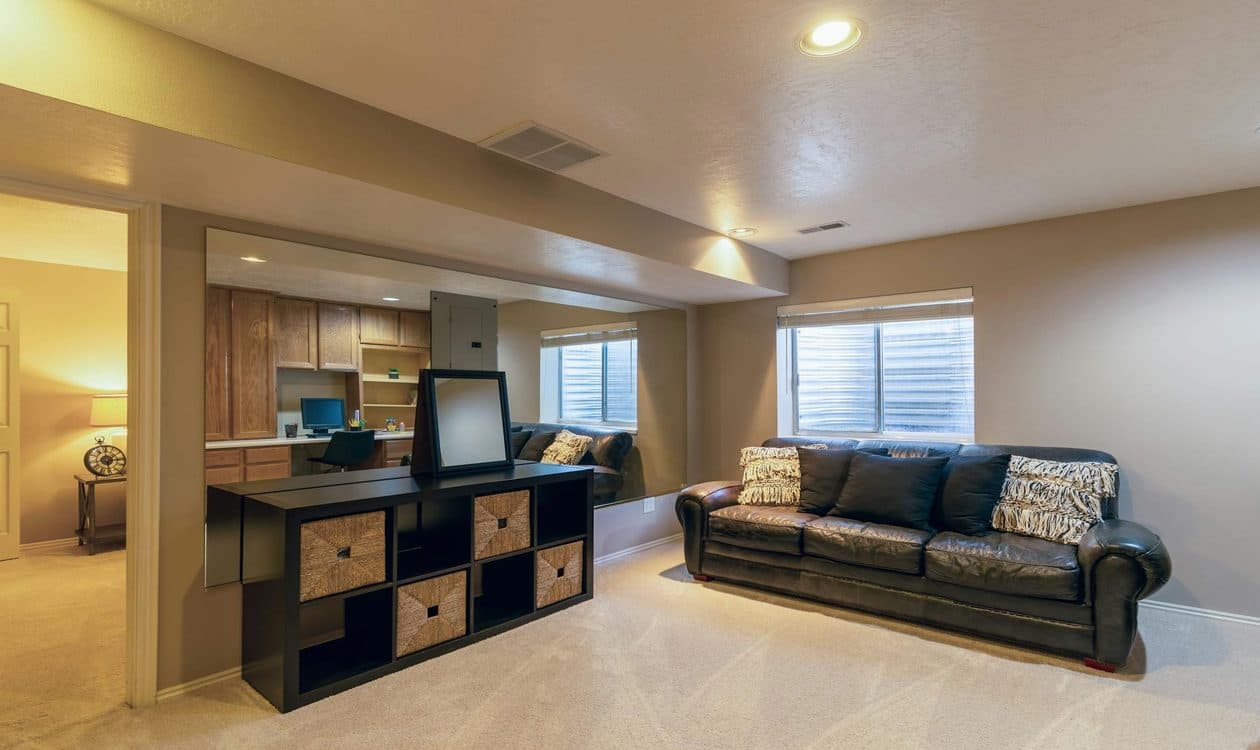
Finishing a basement does not solve a radon problem. Drywall over block walls does not stop radon. Carpet over a cracked slab does not stop radon. In fact, a finished basement can mask the entry points while you spend more time in the space, increasing your exposure. If you plan to finish your basement, test for radon first.
6. Radon Entry in Crawl Space Homes
Crawl space homes have a fundamentally different radon entry dynamic. Instead of a concrete barrier, there is often just exposed soil beneath the living space. The entire crawl space floor acts as a radon source.
Radon accumulates in the crawl space and enters the living area through gaps in the floor system: plumbing penetrations, HVAC ductwork, electrical chases, and gaps between the subfloor and band joist. In homes with HVAC ductwork running through the crawl space, duct leaks can actively pull radon-rich air into the supply system and distribute it throughout the home.
Crawl space vents provide some dilution but are not a reliable radon solution. The fix is sub-membrane depressurization: sealing a vapor barrier over the soil and applying active suction beneath it.
7. How to Stop Radon from Entering
There are two approaches to reducing radon entry: passive (sealing) and active (depressurization). Active methods are far more effective.
Sealing (Passive)
Sealing cracks, gaps, and penetrations can reduce radon somewhat, but it is not reliable as a standalone solution. There are too many potential entry points, new cracks develop over time, and it is impossible to seal a concrete slab perfectly. Sealing is useful as a complement to active mitigation.
Active Soil Depressurization (Recommended)
The proven solution is active soil depressurization. A fan creates negative pressure beneath the slab or crawl space membrane, intercepting soil gas before it can enter the home. This approach works regardless of the number of entry points because it addresses the driving force (pressure) rather than trying to seal every opening. Our sub-slab depressurization service handles slab and basement homes, while residential radon services cover all foundation types. Once installed, regular radon system maintenance keeps the system performing at peak efficiency.
First Step: Test
Before worrying about entry points and prevention, test your home. A 48-hour professional test tells you exactly where you stand. If your home is below 4 pCi/L, no action is needed. If it is above, a radon professional can assess entry points and design the right system. Use our zip code lookup to check your area's risk level, then schedule a test.