1. Rental Properties Are at Risk Too
There is a common misconception that radon is only a concern for homeowners. In reality, radon does not care whether you own or rent. The gas seeps into any building that sits on soil containing uranium, regardless of who holds the deed.
Apartments, townhomes, duplexes, and rental houses all face the same radon entry pathways as owner-occupied homes. Foundation cracks, gaps around utility penetrations, sump pits, and crawl space vents allow radon to enter the building from the soil below. The EPA's action level of 4 pCi/L applies to all occupied spaces, not just owner-occupied homes.
The challenge for renters is that they typically do not control the building structure. You cannot install a mitigation system in a property you do not own. And many landlords either are not aware of radon risk or have not tested their properties. This creates a gap where millions of renters across the country may be exposed to elevated radon without knowing it.
In Georgia, where approximately 1 in 5 homes test above 4 pCi/L, the probability of renting a unit with elevated radon is significant, especially in the Metro Atlanta area and north Georgia counties with granite bedrock. For apartment-specific testing advice, see our guide to radon testing for apartment renters. If you own a home, visit our homeowner radon guide.
2. Which Floors Are Most Affected?
If you live in a multi-story apartment building, your floor level matters significantly for radon exposure.
Basement and Ground Floor Units: Highest Risk
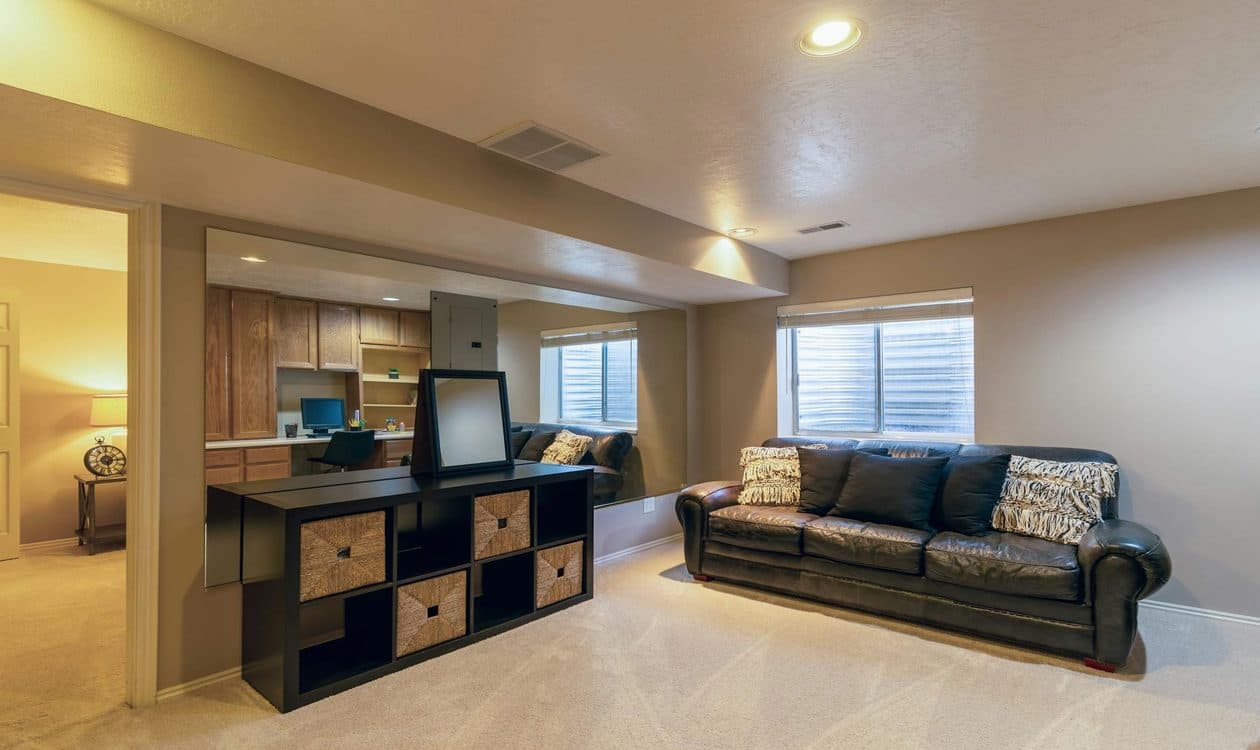
Units at or below ground level have the most direct contact with the soil where radon originates. Basement apartments are particularly vulnerable because they are surrounded by soil on multiple sides, not just beneath the floor. Ground floor units on a slab foundation are similarly at risk. If you live on the ground floor or in a garden-level apartment, radon testing is strongly recommended.
Second and Third Floors: Moderate Risk
Radon levels generally decrease with each floor above ground. Second and third floor units typically have lower levels than ground floor units, but they are not necessarily safe. Shared stairwells, elevator shafts, and utility chases can act as conduits for radon to travel upward. Buildings with centralized HVAC systems may distribute radon-laden air from lower levels to upper floors.
Fourth Floor and Above: Lower Risk
Upper floors in multi-story buildings generally have the lowest radon levels. The distance from the soil source, combined with natural dilution, usually keeps radon well below action levels. However, unusual building designs or poorly sealed mechanical systems can occasionally result in elevated levels even on upper floors. Testing is still the only way to be sure.
The type of rental matters too. If you are renting a single-family house, the radon dynamics are identical to an owner-occupied home. Ground-level living spaces, basements, and crawl space foundations all present the same risks regardless of rental status.
3. Landlord Responsibilities in Georgia
Georgia does not have a specific law that requires landlords to test for radon or mitigate elevated levels in rental properties. This is a gap that exists in most states, and it leaves radon largely in a gray area for landlord-tenant relationships.
However, Georgia landlord-tenant law does require landlords to maintain rental properties in a habitable condition. The Georgia implied warranty of habitability covers basic health and safety standards. While radon is not explicitly named, the EPA classifies radon above 4 pCi/L as a health hazard, and the Surgeon General has warned that radon is the second leading cause of lung cancer.
What Landlords Should Do
- Test all ground-floor and basement rental units
- Disclose known radon test results to tenants
- Mitigate any units testing above 4 pCi/L
- Retest every 2 years or after major renovations
- Include radon information in lease materials
What Georgia Law Requires
- No specific radon testing mandate
- No radon disclosure requirement for rentals
- General habitability standards apply
- Landlords must address known health hazards
- Tenants can pursue remedies for uninhabitable conditions
A Note for Landlords
Even without a specific radon mandate, landlords who know about elevated radon and fail to act could face liability. For landlords managing multiple rental units, our commercial building radon assessment covers multi-unit properties. Once a tenant provides test results showing levels above 4 pCi/L, ignoring the issue creates a documented record of inaction on a known health hazard. Proactive testing and mitigation is both the ethical and legally prudent approach.
4. Tenant Rights and Options
As a tenant in Georgia, you have several options if you are concerned about radon in your rental unit.
Test your unit yourself
You do not need your landlord's permission to place a radon test kit in your own living space. Purchase a DIY kit ($15 to $40) and follow the instructions. This gives you data to work with.
Notify your landlord in writing
If your test shows levels at or above 4 pCi/L, notify your landlord in writing (email or experienced letter). Include a copy of the test results and reference the EPA's action level. Request that they address the issue with professional mitigation.
Allow reasonable time for response
Give your landlord a reasonable amount of time to respond and schedule mitigation, typically 30 to 60 days. Radon risk is cumulative, not immediate, so there is time for the landlord to arrange professional service without emergency pressure.
Know your options if the landlord refuses
If your landlord refuses to act, you have several options depending on your situation: consult with a tenant rights organization, contact your local health department, review your lease for early termination provisions, or seek legal advice about habitability claims. Document everything in writing.
Many landlords will cooperate once they understand the issue and see test results. The cost of mitigation ($1,200 to $2,500) is modest compared to the liability risk of ignoring a documented health hazard. Approaching the conversation as a partnership rather than a confrontation typically produces better outcomes.
5. DIY Testing for Renters
As a renter, DIY radon testing is often the most practical first step. It is affordable, easy, and does not require any changes to the property.
Short-Term Charcoal Test Kits
Cost: $15 to $25. Place the kit in your lowest regularly occupied living space (not a storage closet or unused room). Keep windows and exterior doors closed during the 2 to 7 day test period. Mail the kit to the lab included with purchase. Results come back in about a week. Good for an initial screening.
Long-Term Alpha Track Detectors
Cost: $25 to $40. These test over 90 days to 1 year and give you a more accurate picture of your average radon exposure. Since radon fluctuates daily and seasonally, a long-term test provides more reliable data than a single short-term snapshot. Ideal if you plan to stay in your rental long-term.
Testing Tips for Renters
Place the test kit on the lowest floor where you spend time (at least 4 hours per day). Keep it away from windows, doors, and exterior walls. Do not put it in a kitchen or bathroom where humidity can affect results. Keep windows and exterior doors closed as much as possible during the test. Normal HVAC operation is fine and should continue as usual.
6. Multi-Unit Building Considerations
Radon in multi-unit buildings like apartment complexes, condominiums, and townhome communities presents unique challenges compared to single-family homes.
Radon Varies Between Units
Two units in the same building can have very different radon levels. Factors include the unit's position relative to the foundation, local soil conditions beneath that section of the building, ductwork routing, and even how well the unit's floor slab was sealed during construction. Testing one unit does not tell you about another.
Shared Foundations
In buildings with a shared foundation slab, radon mitigation for one unit may benefit adjacent units as well. Sub-slab depressurization creates negative pressure under the foundation, which can extend beyond the footprint of the specific unit where the suction point is installed. This makes building-wide approaches more cost-effective per unit.
Shared HVAC Systems
Buildings with centralized HVAC systems can distribute radon from the foundation level throughout the building. If the air handler is in the basement and serves multiple units, it may pull in radon-laden air and deliver it to units that would otherwise have low levels. Individual unit HVAC systems limit this cross-contamination.
Townhomes and Duplexes
Attached townhomes and duplexes behave more like individual homes from a radon perspective. Each unit has its own foundation section and typically its own HVAC system. Mitigation for condos and townhomes is usually similar to single-family home mitigation, though shared walls may require coordination with adjacent unit owners.
7. Radon Mitigation Systems for Apartments in Georgia
Radon mitigation in an apartment building works on the same principle as in a single-family home: a sub-slab depressurization system uses a fan and vent piping to pull radon from beneath the foundation and release it above the roofline before it can enter living spaces. The difference is scale. A larger slab often needs multiple suction points, and a building with several ground-contact units may need more than one system, or one system sized to cover the affected section of the foundation. Because radon enters through soil contact, mitigation targets the basement and ground-floor units; upper floors benefit indirectly as less radon enters the building overall.
In an apartment setting, the property owner or management company is the one who installs and maintains the mitigation system. Renters cannot modify the building, and a system that penetrates the slab and routes piping through the structure is squarely the owner's project. As covered in the sections above, a tenant's practical role is to test their own unit, share the results with the landlord in writing, and allow reasonable time for a response. Once a system is installed, a follow-up test in the affected units is the standard way to confirm it brought levels down.
Georgia has no law that forces a landlord to mitigate, so owner action is usually driven by documented test results, liability concerns, and tenant retention. The good news for both sides is that mitigation in multi-unit buildings tends to be efficient: one properly designed system can protect several units at once, and metro Atlanta sits in a region where many counties are rated EPA Zone 1, so owners who address radon building-wide resolve the issue for current and future tenants in a single project.
If you own or manage the building, see our multifamily mitigation service: apartment radon mitigation systems.
8. Who Pays for Mitigation?
The question of who pays for radon mitigation in a rental property is not always straightforward, especially in Georgia where there is no specific radon rental law.
General Principle: The Property Owner Pays
Radon mitigation involves modifying the building structure (drilling through the slab, installing pipes, mounting a fan). These are permanent improvements to the property that benefit the owner and all future tenants. In most cases, the landlord or property owner should bear the cost of mitigation, just as they would pay for other structural repairs or safety improvements.
Who Pays for Testing?
If a tenant initiates testing with a DIY kit ($15 to $40), the tenant typically absorbs that cost. If the landlord orders a professional test ($150), the landlord pays. Some tenants choose to invest in a professional test themselves to have stronger documentation, but this is optional. The important thing is getting tested, regardless of who pays the initial testing cost.
Practical Negotiation Tips
Approach the conversation by presenting test results and framing mitigation as a property improvement. Point out that a mitigation system adds value to the property, protects all current and future tenants, and costs less than a single month's vacancy. Many landlords, once they understand the issue, recognize that $1,200 to $2,500 for mitigation is a reasonable expense for a permanent improvement.
Document Everything
If you are a tenant dealing with radon, document every step in writing. Keep copies of test results, written notifications to your landlord, the landlord's responses, and any follow-up communication. This paper trail protects you if you need to escalate the issue to housing authorities or pursue other remedies.