1. Why Children Are More Vulnerable
Children are not just small adults. Their bodies work differently in ways that make them more susceptible to environmental hazards, including radon. The EPA and multiple health organizations recognize that children face elevated risk from radon exposure compared to adults.
There are three primary biological and behavioral reasons why children are more vulnerable. They breathe faster, their cells are dividing more rapidly, and they have more time ahead of them for cancer to develop. Each of these factors compounds the risk. If you have not yet tested, professional radon testing services can give you results in 48 hours.
Understanding these factors is not meant to cause alarm. Radon is a solvable problem. But knowing that children face higher risk should motivate parents to have your home tested for radon and take action if levels are elevated. The cost and effort of testing is minimal compared to the potential long-term health consequences of ignoring the issue. For a deeper look at how radon causes cancer, see our complete radon and lung cancer risk guide.
2. Children Breathe More Per Body Weight
Children have a higher respiratory rate than adults. A typical adult at rest breathes about 12 to 20 times per minute. Young children breathe 20 to 30 times per minute, and infants may breathe 30 to 60 times per minute. This faster breathing rate means children inhale more air relative to their body weight.
When the air contains radon and its radioactive decay products, a higher breathing rate means more radioactive particles are deposited on lung tissue per pound of body weight. A child breathing the same air as an adult in the same room receives a proportionally higher dose of radiation to their lungs.
This is the same principle that makes children more vulnerable to many air pollutants, not just radon. Their higher ventilation rate per kilogram of body weight means they get a larger effective dose of whatever is in the air, whether it is pollution, allergens, or radioactive particles.
Active Play Increases Exposure
When children are running, playing, and being physically active indoors, their breathing rate increases even further. An active child may be inhaling significantly more radon-laden air than a sedentary adult in the same room. If your children play actively in lower levels of the home (where radon concentrations tend to be highest), their effective exposure can be substantially higher than what you might expect.
3. Developing Lungs and Cellular Sensitivity
Children's lungs are still growing and developing. Their lung cells are dividing more rapidly than adult lung cells as the organs grow to their full size. This rapid cell division is a critical factor in cancer risk.
When alpha particles from radon decay products damage DNA in a cell, the damage is most consequential when that cell is about to divide. A damaged cell that divides passes its DNA damage to both daughter cells, and those cells may divide again, multiplying the damage. In rapidly dividing tissue like a child's growing lungs, there are simply more opportunities for radiation damage to become permanent and to propagate through cell division.
Adult lung tissue also undergoes cell division, but at a much slower rate. The cells are primarily maintaining themselves rather than growing new tissue. This slower division rate means there are fewer opportunities for radiation-damaged DNA to be replicated and passed to new cells.
This principle is well-established in radiation biology. It is why radiation therapy for cancer targets rapidly dividing cells, and why growing tissues are generally more sensitive to radiation damage than mature, stable tissues.
4. Longer Lifetime Exposure Window
Cancer often takes decades to develop after the initial cellular damage. A child exposed to radon at age 5 has potentially 70 or more years ahead of them during which radon-induced cancer could develop. An adult first exposed at age 40 has a shorter remaining lifetime for cancer to manifest.
This is not just a theoretical concern. Epidemiological studies of populations exposed to radiation (including studies of atomic bomb survivors and uranium miners) have consistently shown that younger age at exposure is associated with higher lifetime cancer risk. The combination of biological vulnerability and a longer exposure window creates a compounding effect.
For children growing up in a home with elevated radon, every year of exposure adds to their cumulative dose. A child who lives in a home with 8 pCi/L of radon from birth to age 18 accumulates 18 years of elevated exposure before they even leave the house. If that home had been tested and mitigated when the child was born, those 18 years of exposure would have been at a fraction of the level.
5. Where Children Spend Their Time
Behavioral patterns also play a role in children's radon exposure. Children tend to spend more time in the lower levels of a home, where radon levels are typically highest. Playrooms, family rooms, and bedrooms are often on the ground floor or in basements, where radon concentrations can be significantly higher than on upper floors. Older adults who spend significant time at home face similar cumulative exposure concerns, as we discuss in our guide on radon risks for older adults.
Children also spend more total time indoors than many adults. Between school hours, homework, play, and sleep, children can spend 18 to 22 hours per day indoors. If a significant portion of that indoor time is in a home with elevated radon, the cumulative exposure adds up quickly.
Lower Floors Have Higher Radon
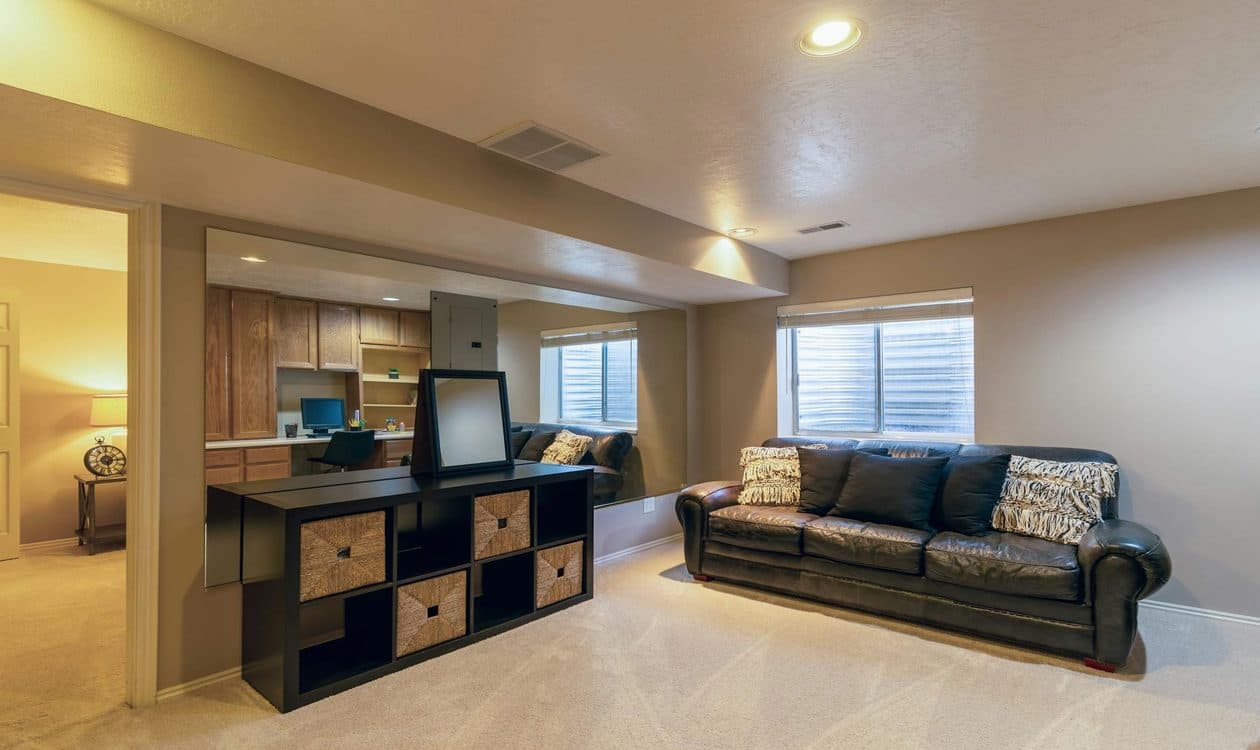
Radon enters from the soil beneath the foundation, so the lowest level of a home typically has the highest radon concentration. If your children sleep, play, or study on the ground floor or in a finished basement, they may be spending their most concentrated time in the area with the most radon.
Schools and Daycares Matter Too
Children spend a significant portion of their day at school or daycare. The EPA recommends that all schools test for radon, but compliance varies. If you are concerned about your child's total radon exposure, consider asking their school or daycare whether they have tested.
6. Protecting Your Children
The good news is that protecting your children from radon is straightforward and affordable. Here is what you can do.
Test your home
This is the single most important step. A professional radon test costs $125 to $250 and takes 48 hours. Until you test, you do not know whether your children are being exposed to elevated radon levels every day.
Mitigate if levels are elevated
If your home tests at or above 4 pCi/L, install a radon reduction system. Given children's increased vulnerability, some families choose to mitigate at levels between 2 and 4 pCi/L as well. A mitigation system costs $1,200 to $2,500 and typically reduces radon by 90% to 99%.
Retest every 2 years
Radon levels can change over time due to foundation settling, home renovations, and changes in soil conditions. Regular retesting ensures your home remains safe as your children grow up.
Ask about schools and daycares
Contact your child's school or daycare and ask whether they have tested for radon. If they have not, encourage them to do so. The EPA provides guidance for radon testing in schools.
A Solvable Problem
Radon is one of the few environmental health risks that is both easy to measure and easy to fix. For the cost of a single family dinner out, you can test your home. And for less than the cost of a new appliance, you can fix a radon problem permanently. Learn the difference between short-term and long-term radon testing to choose the right approach for your family. There are very few things you can do as a parent that provide this level of health protection for this low of an investment.