1. Why Radon in Schools Matters
Most conversations about radon focus on homes. But think about where your children actually spend their time. During the school year, kids are in school buildings for 6 to 8 hours each weekday. For children in before- and after-care programs, that number can stretch to 10 or 11 hours. That is more waking time than they spend at home on weekdays.
The EPA estimates that roughly 1 in 5 schools in the United States has at least one room with radon levels above 4 pCi/L, the federal action level. Applying that estimate to Georgia, with its uranium-bearing granite bedrock in the northern half of the state, suggests that thousands of classrooms across the state could have elevated radon levels that no one has measured.
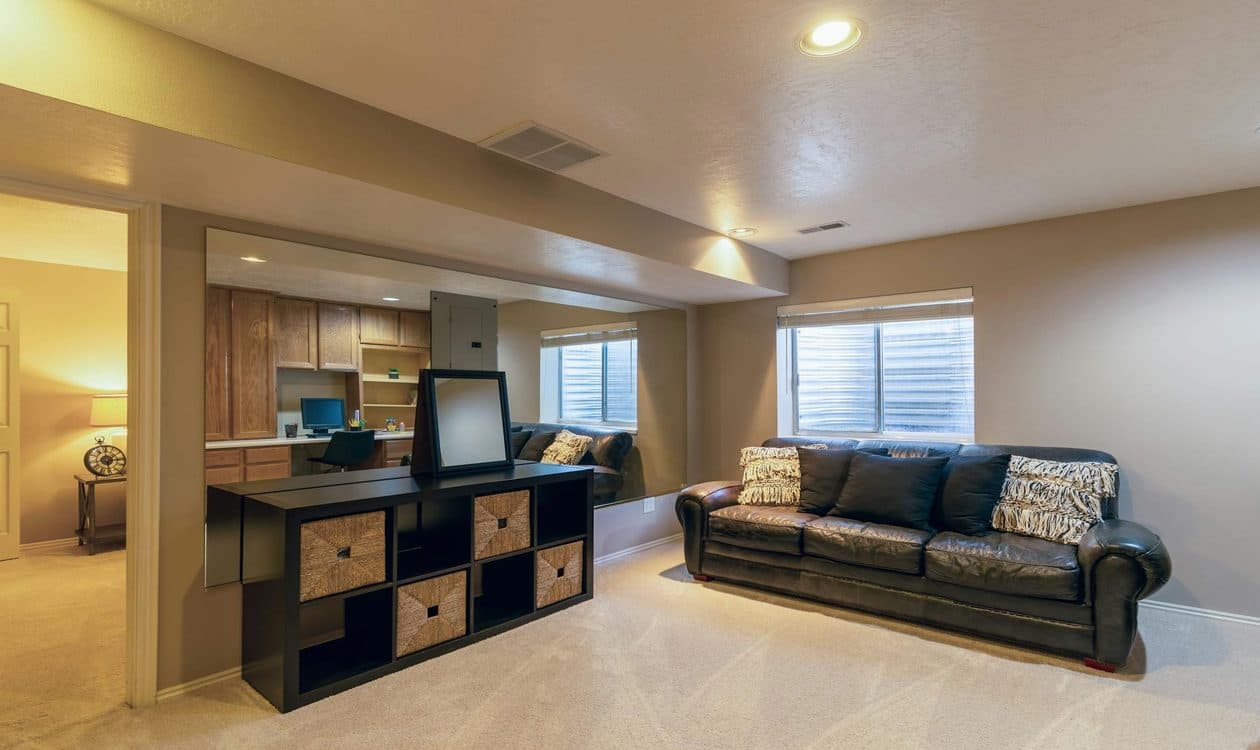
School buildings are particularly susceptible to radon for several reasons. Many are single-story structures with large slab-on-grade footprints, maximizing ground contact. Older schools may have settling foundations with extensive cracking. HVAC systems designed for energy efficiency can create negative pressure that draws soil gas indoors. And many schools have below-grade rooms or partial basements used as classrooms or activity areas.
Unlike homes, where one family is affected, an elevated radon level in a school exposes dozens or hundreds of children and staff members simultaneously. The cumulative public health impact of untested schools is significant.
2. Why Children Are More Vulnerable
Children are not just smaller adults where environmental health risks are concerned. Several biological factors make them more vulnerable to radon exposure than adults.
Developing Lungs
Children's lungs are still growing and forming new cells at a rapid rate. Rapidly dividing cells are more susceptible to DNA damage from radiation, including the alpha particles released by radon decay products. Damage to developing lung tissue can have consequences that take decades to manifest.
Higher Breathing Rate
Children breathe faster than adults relative to their body size. A resting child takes 20 to 30 breaths per minute compared to 12 to 20 for an adult. This means children inhale more radon-contaminated air per pound of body weight per hour than adults in the same room.
More Years of Future Exposure
Radon-related lung cancer typically takes 15 to 25 years to develop after exposure. A child exposed at age 5 has many more decades for potential damage to develop compared to an adult exposed at age 45. Early exposure creates a longer window for health effects.
Closer to the Floor
Younger children spend more time sitting on the floor, crawling (in daycares), and playing in low positions. Radon is denser than air and tends to concentrate at lower levels in a room. Children in floor-level activities may be exposed to higher concentrations than standing adults in the same space.
The National Academy of Sciences has acknowledged that children may face greater risk from radon exposure than adults. While the exact magnitude of increased risk is debated, the biological mechanisms supporting greater vulnerability are well established. Learn more about radon risks for children.
3. Georgia's Testing Requirements (or Lack Thereof)
Georgia does not require radon testing in schools, daycares, or any other public buildings. There is no state law, regulation, or building code provision that mandates radon testing or mitigation in educational facilities. For general information on testing larger buildings, see our commercial radon testing services.
At the federal level, the EPA strongly recommends that all schools be tested for radon, but this is a recommendation, not a requirement. The EPA published guidance for school radon testing in the 1990s and has updated it periodically, but compliance is entirely voluntary.
The Gap in Protection
Georgia requires lead paint testing in childcare facilities, asbestos inspections in schools, and regular health inspections for daycares. But radon, the second leading cause of lung cancer in the United States, has no testing requirement at all. This gap exists despite Georgia having known radon-prone areas, particularly in the northern counties along the Appalachian foothills where granite bedrock produces significant radon.
Some Georgia school districts have voluntarily tested their buildings. A few have even installed mitigation systems where elevated levels were found. But without a mandate, testing is inconsistent, and many districts have never checked a single building.
The situation with daycares is similar. Home-based daycares fall under residential standards (which also have no radon requirement), and commercial daycare centers are subject to health and safety inspections that do not include radon testing. For more on daycare-specific testing, read our guide to radon testing for Georgia daycares.
4. How School Radon Testing Differs
Testing a school for radon is more complex than testing a single-family home. The EPA has specific guidance for school testing that accounts for the unique characteristics of educational buildings.
Room-by-room testing
Unlike a home where one or two test locations may suffice, schools need to be tested room by room on ground-contact floors. A single school building might require 20 to 50 individual tests. Every classroom, office, library, and common area on the ground floor or below grade should be tested.
HVAC considerations
School HVAC systems are typically larger and more complex than residential systems. Many schools shut down their HVAC systems at night, on weekends, and during breaks. Radon can accumulate during these off periods and then be distributed throughout the building when systems restart. Testing should account for these operational patterns.
Multiple foundation types
Many schools have wings or additions built at different times with different foundation types. One section may be slab-on-grade, another may have a partial basement, and a portable classroom may have a raised floor. Each section can have different radon levels and needs to be tested independently.
Occupancy patterns
Schools are occupied for roughly 10 months per year and empty for summer break. Radon levels may differ significantly between occupied and unoccupied periods due to HVAC operation, door and window usage, and ventilation patterns. The EPA recommends testing during the school year when conditions represent actual exposure.
Because of these complexities, school radon testing is typically performed by commercial radon testing professionals rather than using DIY test kits. The cost varies based on the size of the facility, but the testing itself is straightforward and does not disrupt normal school operations.
5. Daycare Facilities and Radon
Daycare facilities present unique radon concerns because they serve the youngest and most vulnerable children, often in settings that are particularly prone to radon accumulation.
Home-Based Daycares
Many home-based daycares operate in basements or lower-level rooms, which are the areas most likely to have elevated radon. The children in these settings are often infants and toddlers who spend time on the floor, closer to where radon concentrations are highest. Home daycare operators should test for radon the same way any homeowner would, focusing on the rooms where children spend time.
Commercial Daycare Centers
Commercial daycares in strip malls, converted houses, or standalone buildings have the same radon risk as any ground-contact structure. Slab-on-grade construction is common in commercial daycare buildings, and the large floor area means extensive ground contact. Many commercial daycare operators are unaware that radon testing is even relevant to their facility.
Children in daycare are typically under age 5. Their lungs are in the earliest stages of development, and they spend significant time on floor mats and carpeted areas. A daycare with elevated radon exposes the most vulnerable population in the most vulnerable way.
What Daycare Operators Should Know
Testing a daycare for radon is simple and inexpensive. A professional test costs $125 to $250 and takes 48 hours. If levels are elevated, mitigation systems for commercial spaces work the same way as residential systems and typically cost $1,000 to $2,500 depending on the building. The cost of testing and even mitigation is minimal compared to the potential health liability of operating a facility with unknown radon levels.
6. What Parents Can Do
Without a state mandate, change has to come from parents who ask questions and advocate for testing. Here are concrete steps you can take.
Ask Your School or Daycare
Start by simply asking whether radon testing has been performed. Contact the school principal, facilities manager, or daycare director. Ask when testing was done, what the results were, and whether any rooms showed levels above 4 pCi/L. Many administrators have never been asked this question and may not know the answer.
Request Testing in Writing
If your school has not been tested, submit a written request to the school administration and the school board asking for radon testing. Reference the EPA's recommendation that all schools be tested. A written request creates a record and is harder to ignore than a verbal conversation. Include a copy of the EPA's school testing guidance.
Organize With Other Parents
One parent asking is a request. Twenty parents asking is a priority. Talk to other parents in your PTA or parent group about radon. Many parents are unaware that schools can have radon issues. Raising awareness often generates enough collective pressure to move a school board to action.
Attend School Board Meetings
If your requests are not getting traction, bring the issue to a public school board meeting. Ask about the district's radon policy during the public comment period. School boards respond to public attention, and even one parent speaking about children's health at a board meeting can accelerate action.
Test Your Own Home
While you work on getting schools tested, make sure your own home has been tested. Your children spend the other half of their day at home, and home radon exposure is something you can control directly and address immediately if levels are elevated. Schedule a professional test if you have not tested recently.