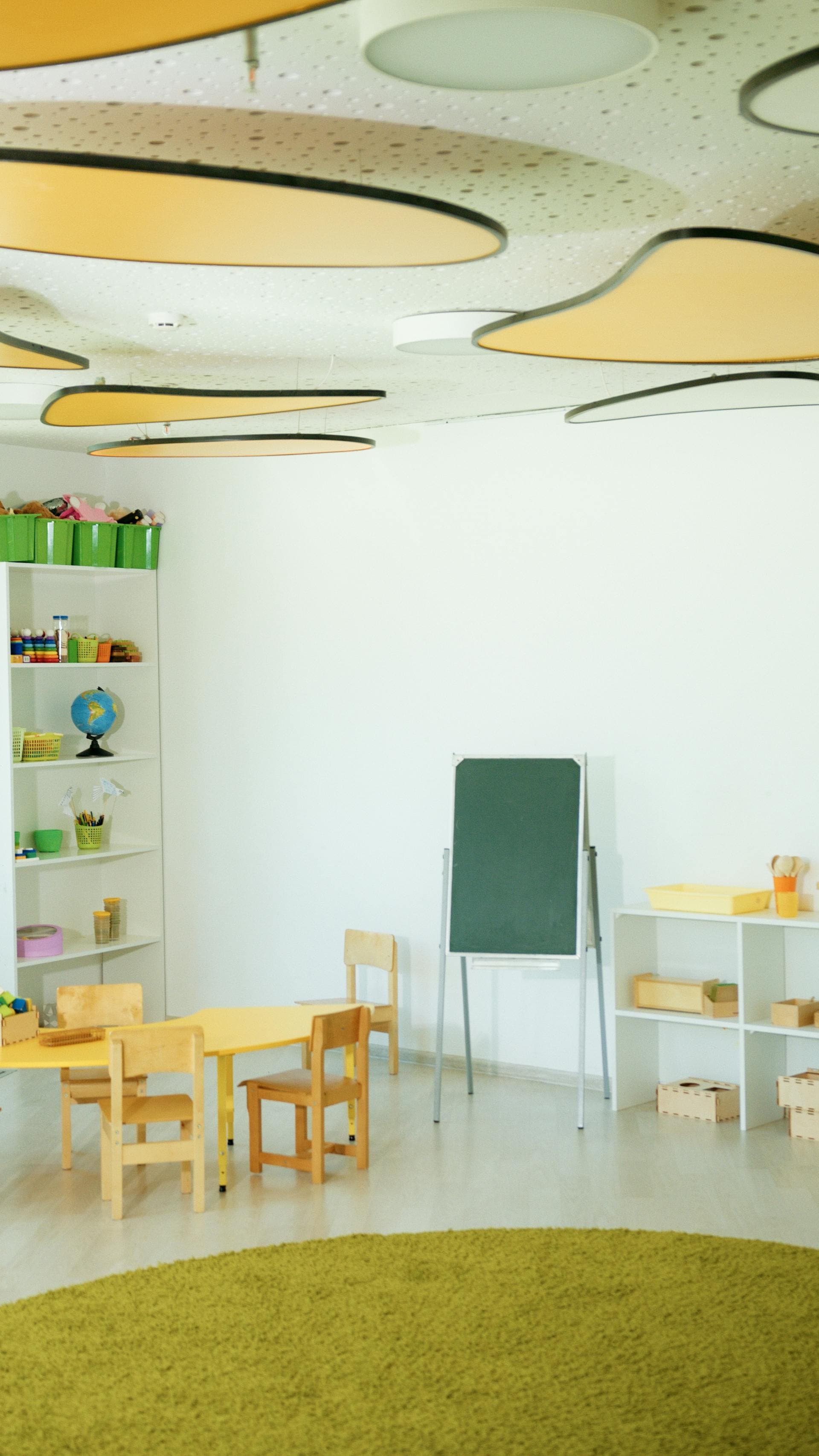
Daycares · Childcare Centers · Preschools · Early Learning
Daycare Radon Testing in Georgia
Children spend long hours in ground-floor play and nap rooms. Parents ask whether the building has been tested. A low-disruption facility test answers the question and produces a report you can hand to any parent.
Daycare radon, plain English
Childcare centers share a radon profile worth paying attention to: a slab in direct contact with the soil, ground-floor and lower-level rooms where children play and nap, and an occupied building where testing has to happen without interrupting the program day. Children are a vulnerable population who spend many hours indoors, which is exactly the kind of long, repeated exposure radon risk is built on.
The sections below cover why testing comes up for childcare facilities, how a defensible test is designed and run in an operating center, what mitigation involves if a building tests high, what drives cost, and the Georgia context: there is no state mandate, but testing is a sound risk-management and trust step.
Why childcare facilities test for radon
Four situations cover almost every daycare radon inquiry. None of them require panic. All of them have a clear answer that ends with a documented test and, if needed, a working mitigation system.
A parent asked
A parent emailed or asked at drop-off whether the building has been tested for radon. Once the question is on the table, a documented test is the clear answer. Telling a parent the facility has never tested rarely lands well, and a recent report ends the conversation in your favor.
Peace of mind and trust
Children spend long hours indoors, often in lower-level play and nap rooms in direct contact with the slab. Many owners test simply because they want to know, and because a clean report is a quiet trust signal that sets a facility apart from the one down the road.
A lease or purchase
You are signing a lease for a childcare space, buying the building, or a landlord is asking what condition the property is in. A documented radon test belongs in the file alongside the other building records, scoped inside the deal timeline.
A reading came back high
Someone ran a hardware-store test and got a number above 4.0 pCi/L, or a prior test flagged the building. A controlled re-test confirms or contradicts the reading under documented conditions, and mitigation follows only if the elevated number holds up.
A Vulnerable Population
Why radon deserves extra attention in childcare buildings
Radon is a naturally occurring soil gas that enters buildings through the slab. The risk it carries is tied to how much you breathe and for how long. In a childcare facility, both factors point the same direction.
Long hours in lower-level rooms
Children in full-time care spend the bulk of their waking day in the building, frequently in ground-floor or lower-level play and nap areas. Those rooms sit closest to the slab, where soil gas concentrations are highest. Long, repeated daily exposure in exactly those spaces is the pattern radon risk is built on.
A clear answer for parents
Parents are paying close attention to the environment their children are in, and radon is a question that comes up. A facility that can produce a recent, documented test report is answering a reasonable question directly instead of leaving it open. That is a quiet but real trust signal.
EPA flags radon as the second leading cause of lung cancer after smoking, and the action level it sets is 4.0 pCi/L. Georgia falls across EPA radon zones, with many counties in elevated-potential zones, so a building testing high is not unusual here. The point of testing is simply to know where a given facility stands.
How testing is designed for an operating childcare center
A daycare test is not just “a canister in the lobby and a number.” The right design covers the rooms children actually use on or near the slab, runs under controlled conditions, and produces a report that holds up to outside review, all without interrupting the program day.
The room list is built with the operator. Two to four days of device exposure, then lab time. Two to three weeks from kickoff to a finished report.
Device placement
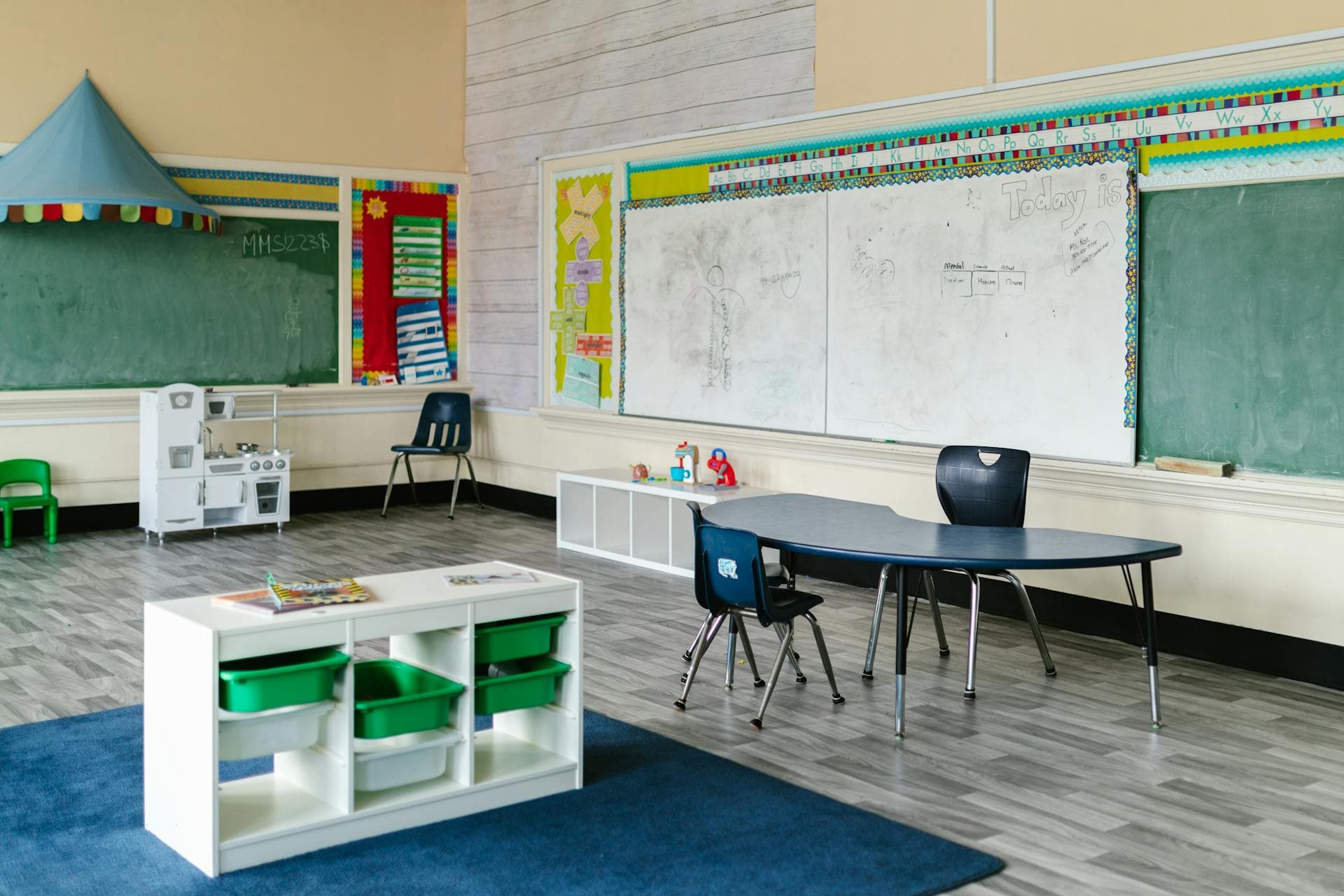
Devices go in the rooms where children actually spend time on or near the slab: ground-floor classrooms, lower-level play areas, and nap rooms get priority. Offices, hallways, and storage on the same level are sampled to round out the picture. Rooms on upper floors are tested when children use them.
Duration and conditions
Short-term tests run 48 to 96 hours with HVAC operating in normal mode and exterior doors and windows kept closed during the test window. The test can run over a weekend or a closure so devices sit undisturbed. Weather and HVAC state are documented. Long-term tests for ongoing monitoring run 90 days or longer.
Minimal disruption to operations
The device is a small disc or canister placed up high, out of reach of children, where it will not be bumped during the day. Staff get a one-page heads-up: what it is, where it sits, and not to move it. There is no equipment running, no noise, and no change to the daily routine while the test is underway.
Reporting
You get a facility report with a room list, device serial numbers, raw data, weather conditions, a plain-language interpretation, and a recommendation. The package is built to hand to a parent, a landlord, an attorney, or a licensing reviewer without follow-up questions.
What mitigation involves
If a facility tests at or above 4.0 pCi/L, the fix is a sub-slab depressurization system: soil gas is pulled from under the slab and vented above the roofline before it can reach the rooms children use. The system is sized to the building and kept quiet and out of sight, and the work is staged around the program day.
After the system is running, the building is re-tested to confirm the level dropped. A typical childcare mitigation runs a couple of weeks from approved scope to verified result.

Sub-slab depressurization
The standard fix for a slab-on-grade childcare building is sub-slab depressurization: one or more suction points draw soil gas from under the slab and vent it above the roofline before it can enter occupied rooms. Communication testing during design determines how many points the slab needs and where they go.
Slab and building type
A converted house, a strip-center suite, and a purpose-built childcare facility all sit on different foundations. Poured slab on a vapor barrier, slab over a crawlspace, or a basement level each change the design. Mitigation is designed around what is actually under the floor, not a one-size template.
Routing around the program day
Risers run from the slab to a fan and out above the roof. In an operating childcare facility that means routing through closets, mechanical chases, or exterior walls, kept clear of the rooms children use. Interior work is scheduled for evenings, weekends, or a planned closure so the program day is not interrupted.
Quiet, sealed systems
Fans are sized to the slab, not oversized. A quiet, low-watt fan is standard for a building full of napping children. Fan housings and exposed riser sections sit outside or in mechanical space, away from classrooms, and slab penetrations are sealed so the system stays out of sight and out of mind.
What drives the cost
A single childcare suite in a strip center and a large standalone center are different jobs. Testing is quoted as a fixed fee after a short call. Mitigation needs a site visit to count suction points, but the variables that shape price are the same every time.
Testing
- Square footage and number of ground-contact roomsHigh impact
- Single suite vs full standalone buildingHigh impact
- Whether upper floors need separate testingMedium
- Short-term vs long-term protocolMedium
- Turnaround requiredMedium
- Testing around the program calendarLow
Mitigation
- Slab area and number of suction pointsHigh impact
- Foundation type (slab, crawlspace, basement)High impact
- Riser routing (interior vs exterior)High impact
- Electrical capacity and panel accessMedium
- After-hours or weekend work to avoid the program dayMedium
- Confirmation re-test after the system is runningLow
The Georgia context: no mandate, but a sound step
Georgia does not have a state law requiring radon testing for daycares or childcare centers. Testing is voluntary. For a Georgia operator, the decision is about risk management and the trust of the families you serve, not statutory compliance.
If a test comes back at or above 4.0 pCi/L, the practical move is to mitigate, re-test to confirm the system is working, and let parents know in writing what was found and what was done. That sequence addresses the concern directly and tends to build trust rather than erode it. If the test comes back clean, the report goes in the building file, ready for the next parent or landlord who asks.
Either way, the documented test is what matters. It is a low-cost, low-disruption step that puts a clear answer in your file before the question ever lands on your desk. Most operators re-test on a multi-year cycle, and after any major HVAC change or renovation, to keep the file current.
Frequently asked questions
Is radon testing required for daycares in Georgia?▾
Why does radon matter more for a childcare facility than other buildings?▾
What is the action level I should care about?▾
Will testing disrupt the children or daily operations?▾
How long does testing take and what do I get?▾
What does mitigation involve if my facility tests high?▾
Can mitigation work be done without closing the facility?▾
A parent ran a cheap test and got a high number. What should I do?▾
Should I disclose the results to parents?▾
How often should a childcare facility re-test?▾
Information on this page is general guidance about radon testing and mitigation for daycares and childcare centers in Georgia. It is not legal, regulatory, or engineering advice. Specific decisions about a facility, lease, transaction, or licensing question should be made with qualified counsel and a site-specific evaluation.
Request a daycare radon quote
Tell us roughly how large the facility is, whether it is a standalone building or a suite, and what is driving the test (a parent question, a lease or purchase, a recent reading, or simple peace of mind). We will reply with a fixed-fee testing quote and a clear next step.
Daycare radon inquiry