Apartments · Condos · BTR · Senior Multifamily
Apartment Radon Mitigation Systems in Georgia
Buildings test high in Georgia. Tenants ask. Buyers ask. We design and install radon mitigation systems for apartment and multifamily buildings, backed by a defensible building test that runs without disrupting residents.
Multifamily radon, plain English
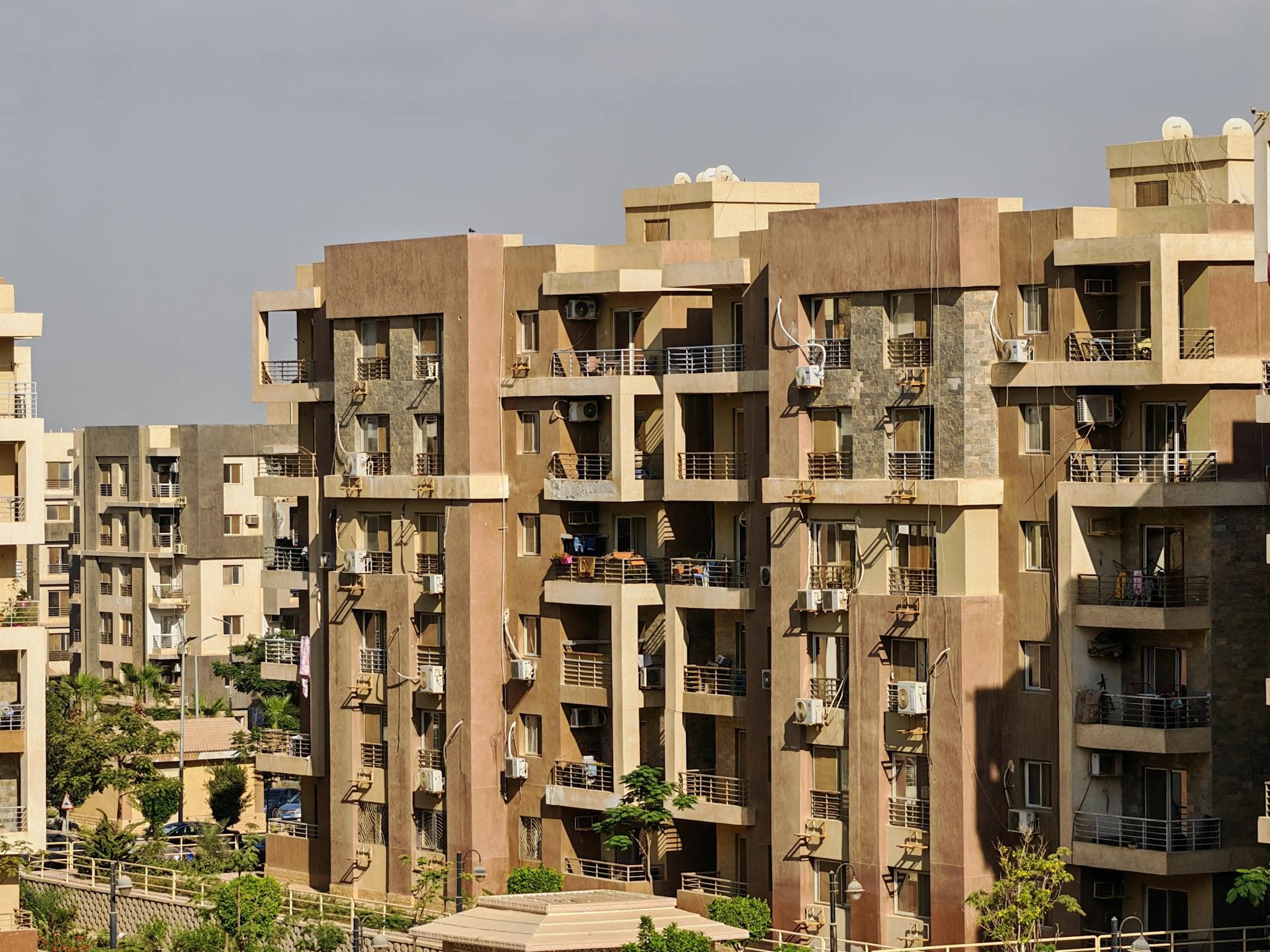
Garden-style apartments, mid-rise and high-rise rentals, condos, build-to-rent communities, and senior-multifamily share a common radon profile: large slab footprint, ground-floor units in direct contact with soil gas, and occupied buildings where testing and mitigation have to happen around residents. A radon mitigation system for apartments has to account for all of that, which is why it is designed at the building level rather than copied from a single-family playbook.
The sections below cover why testing comes up in multifamily, how the loan-financing landscape interacts with radon, how a defensible building test is designed, how mitigation systems are designed and installed in occupied buildings, what property managers and owners get, what drives cost, and how disclosure works under Georgia lease law.
Why multifamily testing comes up
Four situations cover almost every multifamily radon inquiry. None of them require panic. All of them have a defensible answer that ends with a documented test and, if needed, a working mitigation system.
A tenant or HOA asked
A resident wrote in asking about radon, or an HOA board put it on the agenda. Once that happens, the building owner is on notice. A documented test is the defensible response, even if the lease and state law are silent.
Acquisition or refinance
You are buying a property and your environmental consultant added radon to the Phase I user-defined scope, or your lender wants documentation before closing. The test is scoped and executed inside the deal timeline alongside the consultant.
Sale prep or disclosure
Before listing, owners increasingly want a clean radon report in the property package. Buyers ask. Showing it up front shortens negotiations and prevents a surprise reading from a buyer-side test.
A reading came back high
A tenant ran a $20 test from the hardware store and got a number above 4.0 pCi/L. A controlled re-test confirms or contradicts the reading; mitigation follows only if confirmed. A bad short-term test is not a final answer.
Loan-Driven Testing
The HUD, Fannie Mae, and Freddie Mac landscape
Federal multifamily loan programs are the single biggest driver of multifamily radon testing nationally. If an acquisition or refinance is going through HUD/FHA, Fannie Mae, or Freddie Mac, the environmental consultant on the deal almost always includes radon in the scope. Here is the landscape these deals operate under.
HUD MAP Guide (FHA-insured multifamily loans)
Binding. Requires radon testing under HUD's current standards, with mitigation, when needed, following recognized commercial-building standards. Test reports must be signed by a qualified measurement professional under HUD's specific definition.
Fannie Mae and Freddie Mac (March 2025 change)
On March 26, 2025, the Federal Housing Finance Agency rescinded its 2022 directive that had standardized radon testing. The downstream effect:
- Fannie Mae continues to set its own radon testing requirements through its current multifamily guide, with the environmental professional now playing a larger role in whether testing is warranted on a given property.
- Freddie Mac also continues to require radon testing when the consultant determines it is warranted, with the sampling coverage set by its current multifamily standard.
Net effect: testing volume softened post-March 2025, but consultants in higher-radon Georgia counties still recommend it on most deals, and lender internal credit policies often retain it.
In agency-financed deals, the environmental consultant or lender's preferred vendor list typically determines who runs the test. The rest of this page applies to private multifamily property. Owner-driven, tenant-driven, sale-driven, or condo-driven testing where there is no agency loan in the picture.
How testing is designed for occupied apartment buildings
Multifamily testing is not just “a few canisters and a number.” The right design covers the buildings that actually contact soil gas, samples a defensible portion of upper floors, runs under controlled conditions, and produces a report that holds up to outside review.
The unit list is built collaboratively with the property manager. Two to four days of device exposure, then lab time. Two to three weeks from kickoff to report.
Device placement
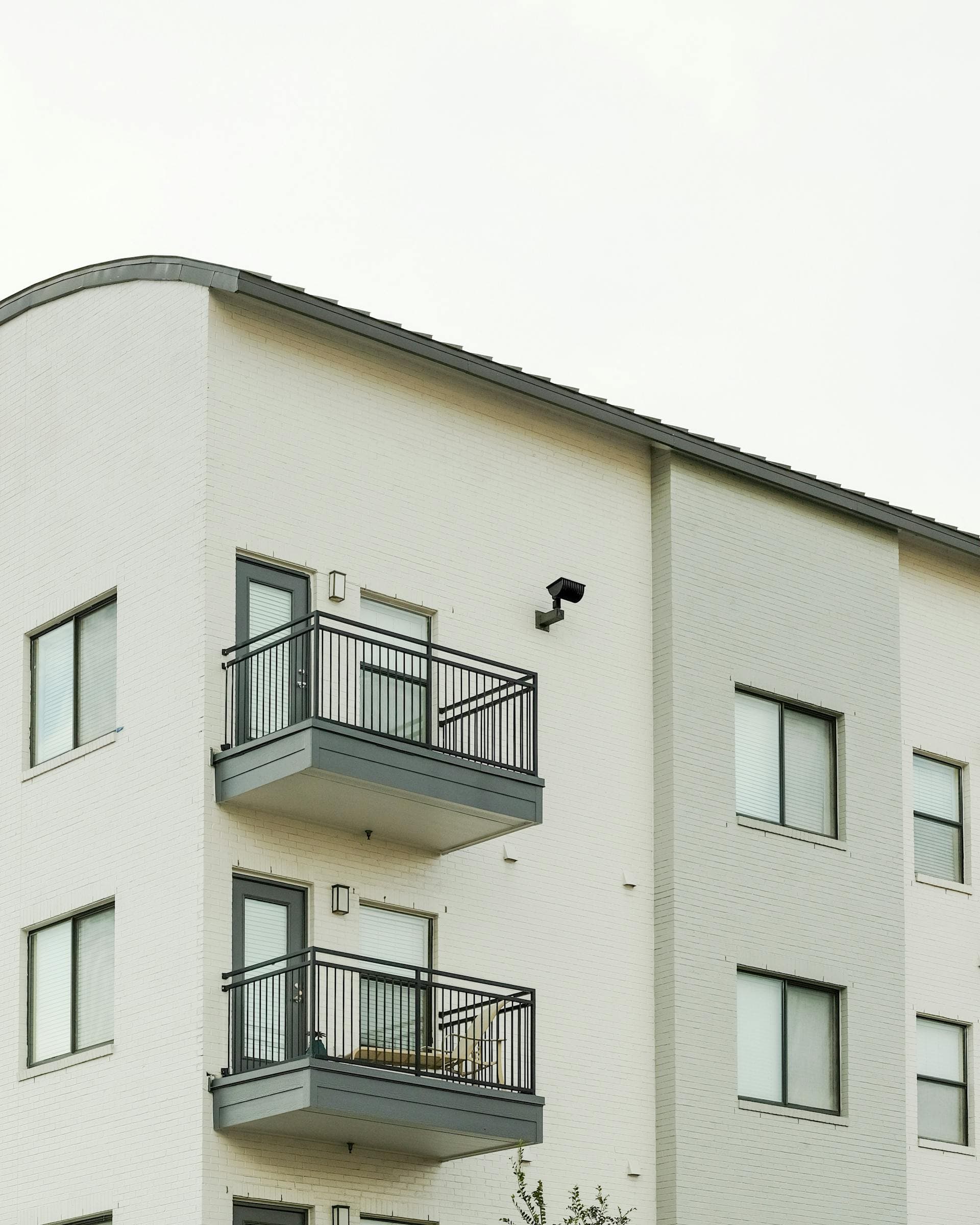
Devices are placed in ground-contact units and a proportional sample of upper floors. Bedrooms, living rooms, and other primary occupied spaces get priority over kitchens, bathrooms, and closets. Common areas like leasing offices, fitness rooms, and lower-level amenity space get sampled when they sit on slab.
Duration and conditions
Short-term tests run 48 to 96 hours with HVAC operating in normal mode. Doors and windows stay closed during the test window. Weather, HVAC state, and any conditions that could shift the reading are documented during the test. Long-term tests for ongoing monitoring run 90 days or longer.
Tenant notification
Residents get a short notice before the test starts: what the device is, where not to disturb it, and a contact in case of questions. A notification template using owner-friendly language comes with the test plan, ready to drop into a standard resident-notice format. Most residents appreciate the heads-up; few have questions.
Reporting
You get a building-level report with a unit list, device serial numbers, raw data, weather conditions, narrative interpretation, and recommendation. The package is built to hand to a buyer, lender, attorney, or HOA board without follow-up questions.
How mitigation systems are designed for occupied buildings
Apartment radon mitigation in Georgia is not the same job as a single-family house with a basement. Slab area is bigger, the design has more variables, and the work has to happen around residents. The right system is sized to the building and quiet enough to be invisible to the people who live there.
Two to six weeks from approved scope to verified post-mitigation result, depending on building count and complexity.
Shared vs per-unit systems
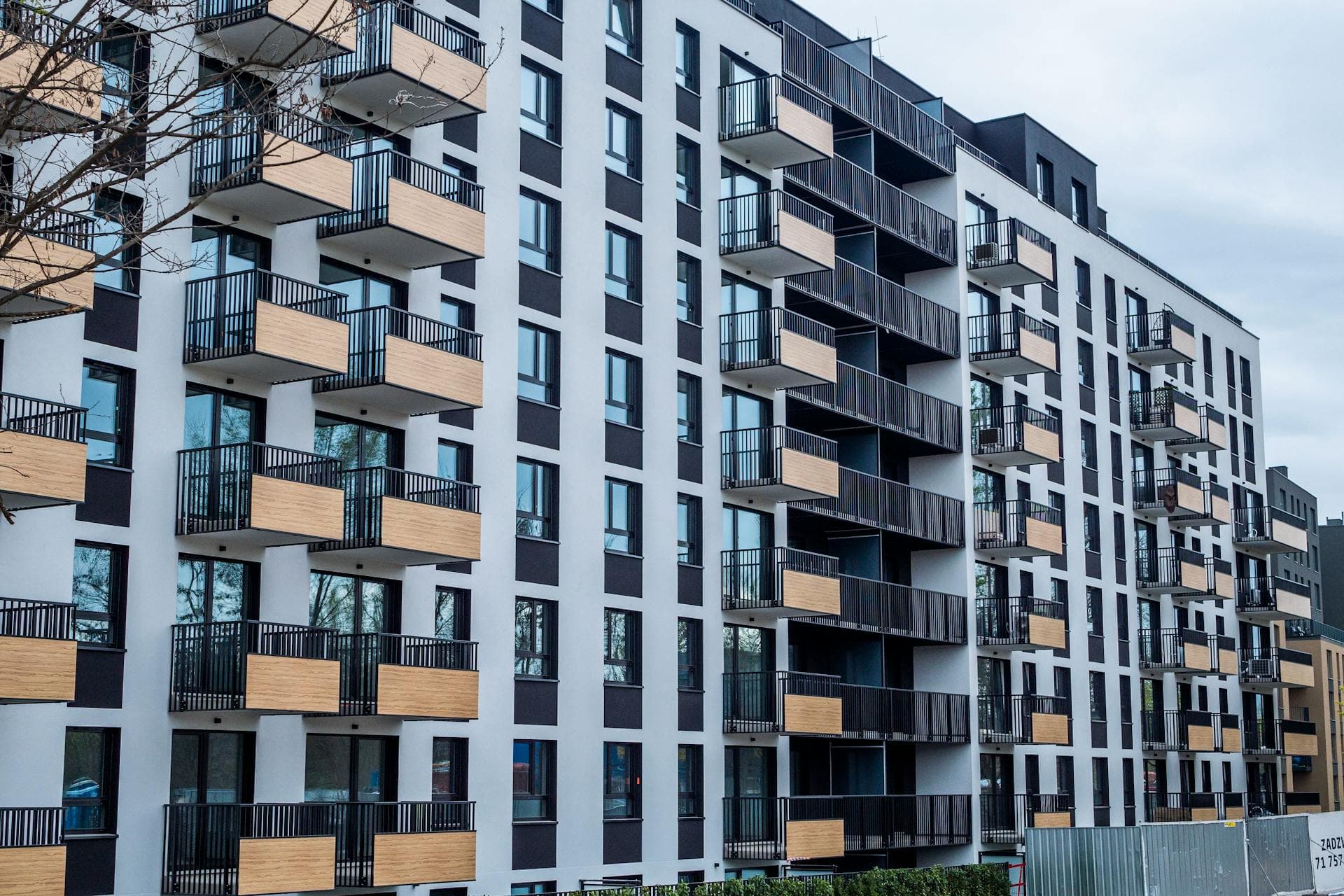
A multi-unit building can be mitigated with one shared system drawing from several suction points under a continuous slab, or with separate smaller systems serving individual buildings or slab sections. Which way to go is not a preference call. Communication testing and slab layout decide it: continuous slabs favor shared systems, while separate foundations, additions, and expansion joints often force per-section systems.
Ground-contact units first
EPA multifamily guidance prioritizes the units that actually touch soil gas: slab-on-grade, basement, and over-crawlspace units. Those are where radon enters and where mitigation is designed to work. Upper floors benefit indirectly because a working system cuts the amount of radon entering the building at all. Design starts with a map of every ground-contact unit, not a single point at one wall.
Multiple suction points
A 200-unit garden-style complex on a slab is not one big house. Sub-slab depressurization for a building that size usually needs several suction points spread across the slab, not a single point at one wall. Communication testing during design dictates where they go.
Slab construction
Poured concrete on a vapor barrier, post-tension slabs, sub-membrane on a crawlspace, and structural footings all change the design. Post-tension slabs have hard limits on where you can core. Mitigation design works around what is actually there.
Riser routing and concealment
Risers go from the slab to a fan and out above the roofline. In occupied multifamily that means routing through chases, exterior walls, or stair towers. Not through finished apartments where possible. Where penetrations are unavoidable, the work is coordinated with on-site maintenance for access and timing.
Fan selection and noise
Fans are sized to the slab and the resistance of the system. Bigger is not better. An oversized fan wastes electricity and runs loud. Quiet, low-watt fans selected for noise sensitivity are standard for occupied buildings, especially when risers run near bedrooms.
What property managers and owners get
A radon mitigation system for apartments is a capital project on an occupied asset, so the deliverables matter as much as the pipe and fan. Every multifamily engagement includes the same four pieces.
A unit-by-unit testing plan
Before any system is designed, you get a written testing plan: which ground-contact units and common areas get devices, what protocol applies, and a post-mitigation re-test plan for the affected units so the system is verified with numbers, not assumptions.
Phased installation
Installs are staged building by building so an entire community is never torn up at once. Work inside occupied areas is scheduled with notice and coordinated with on-site maintenance. Vacant units and turns get used when the schedule allows it.
A documentation package
System locations, suction-point layout, fan specifications, pre- and post-mitigation readings, and a plain-language summary. Built to go in the building file and to hand to a buyer, lender, insurer, or HOA board later without reassembly.
Resident communication materials
Notification templates in owner-friendly language for both the testing window and the installation work, ready to drop into your standard resident-notice format. Residents hear what is happening and why before anyone shows up with a drill.
What drives the cost
A 24-unit triplex cluster and a 280-unit garden complex are very different jobs. Testing is quoted as a fixed fee after a short call. Mitigation needs a site visit to count suction points, but the variables that shape price are the same every time.
Testing
- Number of buildings in the engagementHigh impact
- Number of ground-contact unitsHigh impact
- Whether common areas need separate testingMedium
- Short-term vs long-term protocolMedium
- Turnaround requiredMedium
- Site visits during occupied hoursLow
Mitigation
- Slab area and number of suction pointsHigh impact
- Slab construction (post-tension, vapor barrier, etc.)High impact
- Riser routing (interior vs exterior)High impact
- Number of separate buildings to mitigateHigh impact
- Electrical capacity and panel accessMedium
- After-hours or phased work for occupied buildingsMedium
Disclosure, leases, and what Georgia actually requires
Georgia does not require radon disclosure in residential leases. Four states do (Illinois, Florida partial, Maine, Montana). For Georgia owners, disclosure decisions are about liability management and tenant relationships, not statutory compliance.
If a test comes back at or above 4.0 pCi/L, the practical move is generally to mitigate, re-test to confirm the system is working, and disclose the situation in writing to current and incoming residents: “the building was tested, here is what we found, here is what we did.” That sequence addresses the inquiry directly and is the answer most owners default to once they have read the lease and talked to counsel. Disclosure obligations vary by jurisdiction and lease language; specific situations should be reviewed with counsel.
If the test comes back clean, the report goes in the building file. There is nothing to disclose, but having the documented test on hand is what matters when a future tenant or buyer asks the same question. Most owners re-test on a multi-year cycle to keep the file current.
Frequently asked questions
How does a radon mitigation system for apartments work?▾
Who is responsible for radon mitigation in an apartment building?▾
Is radon testing required for apartments in Georgia?▾
A tenant asked about radon in my building. What now?▾
Do I have to disclose results to my tenants?▾
How many units do I actually have to test?▾
Who pays, landlord or tenant?▾
Will testing disrupt residents?▾
How disruptive is mitigation in an occupied building?▾
My building tested high in one unit. Do I have to mitigate the whole building?▾
A tenant ran a $20 hardware store test and got 7 pCi/L. What do I do?▾
Will mitigation hurt the building cosmetically?▾
Can the cost be passed through to tenants as an operating expense?▾
What happens if I do nothing?▾
Information on this page is general guidance about multifamily radon testing, mitigation, lease law, and the federal multifamily loan landscape. It is not legal, financial, or engineering advice. Specific decisions about a property, lease, transaction, or disclosure obligation should be made with qualified counsel and a site-specific evaluation.
Request a multifamily quote
Tell us how many buildings, rough unit count, and what is driving the test (tenant question, sale prep, condo board, recent reading). We will reply with a fixed-fee testing quote and a clear next step.
Multifamily inquiry