1. How Radon Gets Into Well Water
Radon is produced by the natural decay of uranium in rock and soil. When groundwater flows through rock formations that contain uranium, radon dissolves directly into the water. The deeper the well and the more contact water has with uranium-bearing rock, the higher the radon concentration tends to be.
Municipal water systems rarely have a radon problem because the water goes through treatment and storage before reaching your tap. During that process, radon naturally off-gasses into the atmosphere. Private wells, on the other hand, deliver water directly from the ground into your home with no opportunity for radon to escape.
In North Georgia, the geology is particularly relevant. The Piedmont region and the Blue Ridge mountains sit on granite and gneiss bedrock that can contain elevated levels of uranium. Wells drilled into this rock often produce water with measurable radon concentrations.
2. Health Risks: Ingestion and Inhalation
Radon in water creates two distinct exposure pathways, and most people are surprised to learn which one matters more.
Inhalation Risk (Primary)
When you shower, run the dishwasher, wash clothes, or even run the faucet, radon escapes from the water into your indoor air. A hot shower is especially effective at releasing radon. The EPA estimates that 89% of the cancer risk from waterborne radon comes from breathing it in after it has been released from the water, not from drinking it.
Ingestion Risk (Secondary)
Drinking water containing radon can deliver radiation directly to the lining of your stomach. This increases the risk of stomach cancer. While significant, this risk is much smaller than the inhalation risk. The National Academy of Sciences estimates radon in drinking water causes about 168 cancer deaths per year in the U.S., with the majority from inhalation.
Important to Understand
Even if you never drink your well water, you are still exposed to radon from it every time you use water in your home. Showering, cooking, and washing all release radon into your indoor air. This is why point-of-use drinking filters alone are not an adequate solution.
3. EPA Proposed Limits and the 10,000:1 Ratio
The EPA has proposed, but never finalized, regulations for radon in drinking water. The two proposed levels are:
- 300 pCi/L as the Maximum Contaminant Level (MCL) for community water systems
- 4,000 pCi/L as the Alternative Maximum Contaminant Level (AMCL) for systems with multimedia mitigation programs
For private well owners, there is no enforceable federal standard. But the 4,000 pCi/L level is widely used as a practical action level. Above that threshold, most experts recommend installing a water treatment system.
The key number to understand is the 10,000:1 water-to-air ratio. Research has shown that approximately 10,000 pCi/L of radon in your water contributes about 1 pCi/L to your indoor air. So if your well water tests at 40,000 pCi/L (which is not unusual in granite bedrock areas), that water alone could be adding roughly 4 pCi/L to your indoor air, which is exactly the EPA action level for indoor radon.
This means even if your soil-gas radon levels are low, high radon in well water can push your indoor air above the action level. That is why testing both air and water matters for homes on private wells.
4. Testing Your Well Water for Radon
Testing well water for radon requires a specific sampling procedure. You cannot use a standard home radon test kit (those measure air, not water). Here is what the process looks like:
Get a water test kit from a experienced lab
Order a radon-in-water test kit from a state-experienced laboratory. The kit includes a special vial designed to prevent radon from escaping during transport.
Collect a cold water sample
Run the cold water for several minutes to clear the lines, then fill the vial underwater (submerging it to prevent air contact). Cap it immediately. Timing matters because radon begins to escape as soon as water is exposed to air.
Ship to the lab within 24 hours
Radon has a 3.8-day half-life, so the sample needs to reach the lab quickly. Most labs provide overnight shipping materials. Results typically come back within a week.
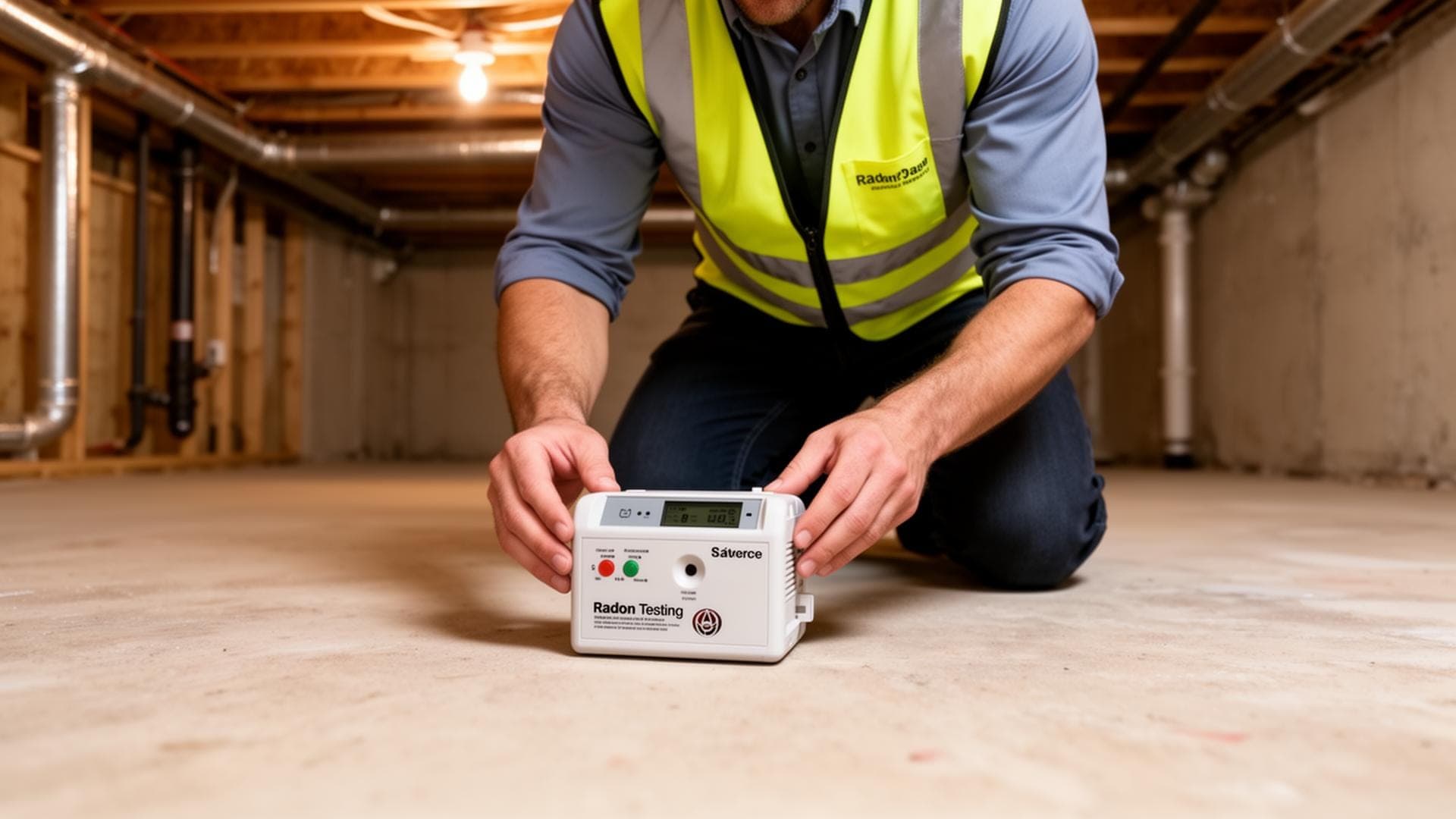
A professional radon testing company can also collect water samples for you. Schedule professional radon testing for both air and water, which ensures proper sampling technique. If you already know your home has elevated radon in the air and you are on a private well, testing the water can help determine how much of your indoor radon is coming from the water supply versus the soil.
5. Treatment Options: GAC vs. Aeration
Two proven technologies can remove radon from well water. Both are installed as whole-house, point-of-entry systems that treat all the water coming into your home.
Granular Activated Carbon (GAC)
- How it works: Water passes through a tank of activated carbon. Radon adsorbs onto the carbon surface.
- Effectiveness: Removes 95% or more of radon. Best for levels under 10,000 pCi/L.
- Cost: $1,500 to $3,000 installed.
- Maintenance: Carbon needs replacement every 3 to 5 years. Used carbon is mildly radioactive and may require special disposal.
- Consideration: The carbon tank accumulates radioactivity over time. It should be stored in a location away from living spaces.
Aeration Systems
- How it works: Water is sprayed or agitated in a chamber, allowing radon to off-gas. The gas is then vented outside.
- Effectiveness: Removes 95 to 99% of radon. Better for very high levels above 10,000 pCi/L.
- Cost: $2,500 to $5,000 installed.
- Maintenance: Periodic cleaning and pump maintenance. No radioactive waste to dispose of.
- Consideration: Requires electricity to run and may need a small holding tank. Slightly more complex installation.
Which Should You Choose?
For most Georgia homes with radon in the 4,000 to 10,000 pCi/L range, GAC systems are cost-effective and reliable. For levels above 10,000 pCi/L, aeration is generally the better choice because it avoids the radioactive waste concern and handles higher concentrations more effectively. A qualified water treatment professional can help you determine the right system for your situation. For more on treatment options, see our radon water well treatment guide.
6. North Georgia and Well Water Radon
Georgia is home to roughly 1.5 million people who rely on private wells for their drinking water. In rural areas of North Georgia, that percentage is significantly higher. Counties like Forsyth, Cherokee, Dawson, Lumpkin, and Hall have large populations on well water, and they also sit on the granite and gneiss bedrock that produces elevated radon.
Studies of well water radon in the Piedmont and Blue Ridge regions have found levels ranging from a few hundred pCi/L to over 100,000 pCi/L. The variation is extreme, even between neighboring wells, because it depends on the specific rock formation the well taps into.
If you live in North Georgia on a private well, testing your water for radon is especially important. Even if you have already tested your indoor air and mitigated the soil-gas pathway, your water could be an ongoing source of radon exposure.
It is worth noting that homes connected to municipal water in Metro Atlanta (Fulton, DeKalb, Gwinnett, Cobb) generally do not need to worry about radon in their water supply. Municipal treatment effectively removes radon before it reaches homes.
7. When Should You Take Action?
Here is a straightforward framework for deciding what to do based on your well water radon test results:
Below 4,000 pCi/L
Your water radon is below the EPA proposed alternative limit. The contribution to indoor air is minimal (less than 0.4 pCi/L). No water treatment is typically needed, but continue to test your indoor air separately.
4,000 to 10,000 pCi/L
Consider treatment, especially if your indoor air radon is also elevated. A GAC system is usually the most cost-effective option in this range. Your water is contributing 0.4 to 1.0 pCi/L to indoor air.
Above 10,000 pCi/L
Treatment is strongly recommended. At this level, your water alone could be adding 1 pCi/L or more to your indoor air. An aeration system is typically the best choice for these concentrations. Combined with soil-gas radon, your total indoor levels could easily exceed the EPA action level.