The short answer
Georgia does not require schools to test for radon, but many districts test anyway because EPA estimates roughly 1 in 5 schools has at least one ground-contact room above 4 pCi/L. School and large-building radon testing follows a third-party consensus protocol, the ANSI/AARST measurement standard, which is built around testing every regularly occupied room in contact with the ground. A district program tests those rooms building by building, with small passive devices that do not interrupt classes, then mitigates and retests any room that reads at or above the action level. Charter and private schools sit on the same soil and benefit from the same approach.
Table of contents
- 1. Why districts test school buildings
- 2. The EPA finding: about 1 in 5 schools
- 3. What Georgia requires (and does not)
- 4. The ANSI/AARST school measurement standard
- 5. How a district testing program is run
- 6. Testing many rooms with minimal disruption
- 7. What happens when a room reads high
- 8. Charter and private schools too
- 9. Frequently asked questions
1. Why districts test school buildings
This guide is written for the people who run school buildings: facilities and operations directors, business administrators, and the boards they answer to. If you are a parent looking for what radon means for your child and how a daycare or school handles it, start with our companion piece on radon in Georgia schools and daycares. This article is about the facilities side: running a testing program across many rooms and many buildings.
Radon is a naturally occurring radioactive gas that seeps up from the soil and collects in the lowest occupied spaces of a building. Children spend the bulk of their day in school, much of it in ground-floor classrooms, so the spaces that matter most are exactly the spaces where radon concentrates. Districts test for a simple reason: it is the only way to know whether the rooms students sit in have a problem, and knowing is the responsible position for a steward of public buildings.
2. The EPA finding: about 1 in 5 schools
The figure that drives most district programs comes from the EPA. Based on its national survey work, EPA estimates that roughly one in five schools has at least one frequently occupied ground-contact room with a short-term radon level above 4 pCi/L. That is an EPA estimate, not a measurement of any one district, and it is the reason EPA recommends every school be tested rather than assumed clear.
The estimate is easy to misread, so it is worth being precise. It does not mean one in five rooms is elevated, and it does not predict any individual school. It means a meaningful share of schools have at least one elevated room somewhere, which is the case for building-wide testing rather than a single sample. You can read EPA guidance on radon in schools through the EPA radon in schools resources.
3. What Georgia requires (and does not)
Georgia does not mandate radon testing in schools. There is no state law that requires a district to test its buildings, no required testing interval, and no state agency that licenses radon professionals in Georgia. A handful of states have passed school radon laws over the years, but Georgia is not one of them, so testing here is a local decision rather than a compliance obligation.
No mandate does not mean no risk. The soil and bedrock under metro Atlanta do not respond to state law. The absence of a Georgia requirement simply puts the decision in the hands of each district, which is why a clear local testing policy is worth having on the record.
Because the state sets no standard, districts that test look to outside authorities for how to do it well: EPA recommendations for what to test and the consensus ANSI/AARST measurement standard for how to test it. Those are third-party reference points a district can point to in a board meeting, not Georgia regulations.
4. The ANSI/AARST school measurement standard
Radon measurement in schools and other large buildings is not a home test kit exercise. It follows a consensus protocol published by ANSI and the American Association of Radon Scientists and Technologists (AARST), the same family of standards used for multifamily and large commercial buildings. This is a third-party measurement standard, not a credential held by any one company, and it is what a defensible school testing program is built around.
The standard governs the parts of testing that determine whether the results can be trusted: which rooms to test, how to place devices, how long to measure, how the building should be operating during the measurement, and how to handle quality control such as duplicate and blank devices. For a district, the value is that the protocol is independent and documented, so the program can be defended on its method rather than on anyone assurance. You can review the published consensus standards through the AARST standards library.
5. How a district testing program is run
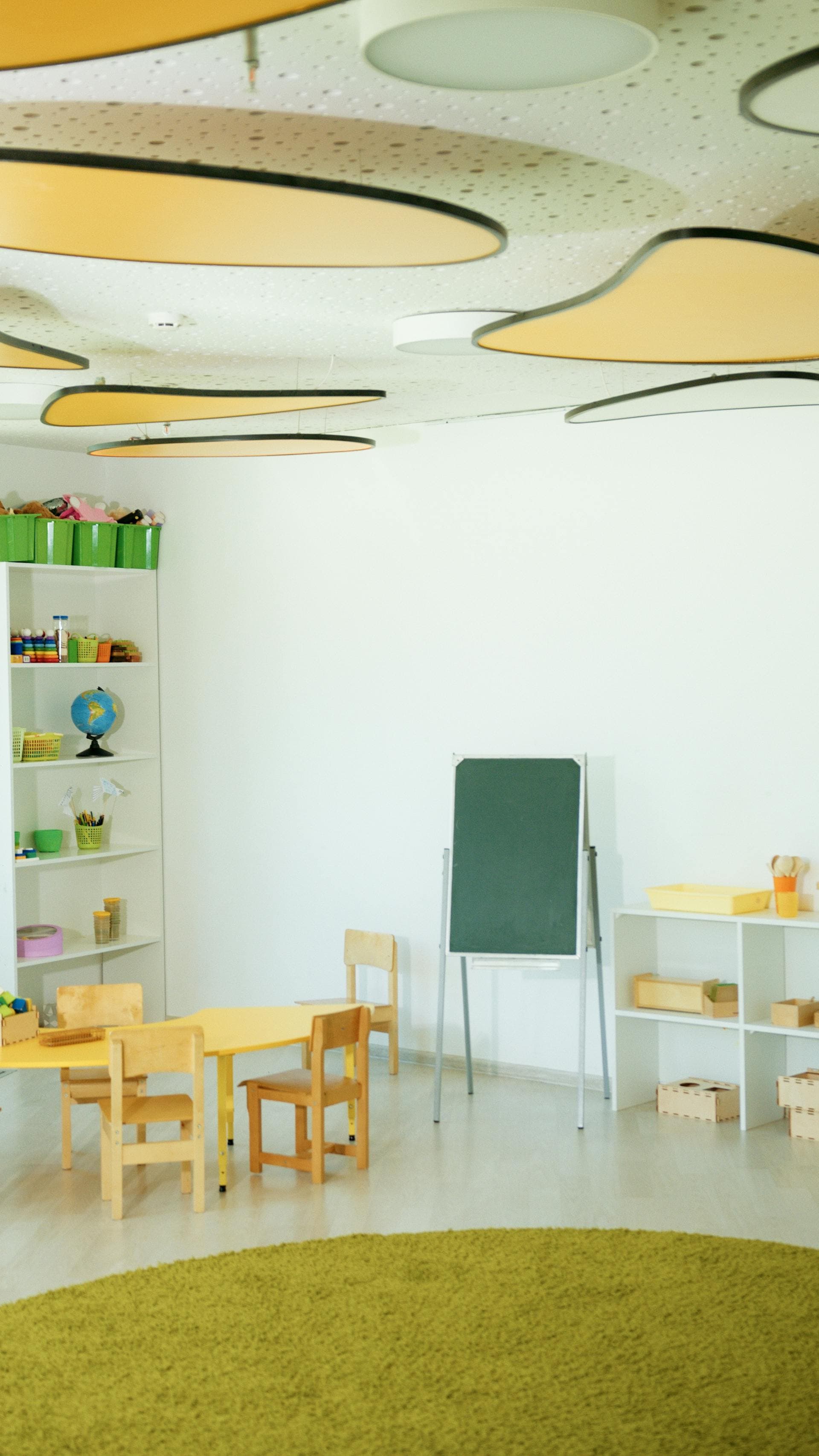
A district program is bigger than a single building, so it starts with planning. The work begins from floor plans and a room inventory, identifying every frequently occupied room that sits on or below grade across each campus. That is the testing universe: classrooms, offices, the library, the gym, the cafeteria, music and art rooms, and any below-grade space that students or staff use regularly.
From there the program follows a repeatable cycle for each building. Devices are placed in the identified rooms, left undisturbed for the measurement period while the building operates normally, then retrieved and sent for analysis. Results come back room by room, the elevated rooms are flagged for follow-up, and the whole record is documented so the district has a clean paper trail for its board and its community. For larger districts, buildings are staged in batches so the program moves across the portfolio in an orderly way.
6. Testing many rooms with minimal disruption
The most common concern administrators raise is disruption, and it is largely unfounded. The measurement devices are small and passive. They sit on a shelf or counter out of reach, make no noise, and require nothing from teachers or students during the measurement. Placement and pickup are brief and can be scheduled before or after hours so a crew moves through the building without interrupting class.
The building needs to be in its normal occupied operating mode during the measurement, with the HVAC running as it usually does. That is why testing is planned around the calendar and the heating season rather than dropped into a long closure, so the result reflects how the building actually runs when students are in it.
For a district, the practical upshot is that an entire campus can be tested during a normal stretch of the school year. There is no need to close a building, relocate classes, or interrupt instruction. The logistics are mostly scheduling and coordination, which is why building-wide testing across many rooms is far more routine than administrators expect going in.
7. What happens when a room reads high
EPA recommends action when a room reads at or above 4 pCi/L. A high result is not a cause for alarm; it is a clear next step. The flagged room is addressed, usually with an active sub-slab depressurization system sized for the space, which draws soil gas from beneath the slab and vents it safely above the roofline before it can enter the room. After the system is installed, the room is retested to confirm it now reads below the action level.
Because radon entry varies room to room, the response is targeted. A district does not mitigate the whole building because one classroom read high; it addresses the rooms that need it and confirms the fix with a retest. The full record of levels found, systems installed, and post-mitigation results becomes part of the district facilities documentation, which is exactly what a community wants to see when it asks how its schools handled radon.
8. Charter and private schools too
Radon does not distinguish between a district building and a charter, parochial, or independent school. The gas comes from the soil under the foundation, so any school with ground-contact rooms carries the same exposure and benefits from the same kind of building-wide testing program. Charter and private schools can run exactly the process described here, scoped to their own buildings.
Leased space deserves extra attention. A school operating in a converted office, church, or retail building may have no record of whether the space was ever tested, and the lease may be silent on who is responsible. For a tenant school, testing the occupied ground-contact rooms is the only way to actually know. For more on the childcare end of this, see our guide to radon testing for Georgia daycares, and our broader commercial radon testing guide.
9. Frequently asked questions
This article is general information for school administrators and facilities staff, not legal or engineering advice. EPA recommendations and ANSI/AARST standards change over time, and Georgia has no school radon mandate as of writing. Confirm current recommendations and the right approach for your buildings with a qualified radon professional before making decisions.