The short answer
Holly Springs sits in the north Georgia foothills, where granite and uranium-bearing bedrock are common. As that rock breaks down underground it releases radon, a colorless, odorless gas that can collect inside homes. Many homes across north Georgia test elevated, and the EPA recommends testing every home regardless of which radon zone it falls in. Testing is simple, a high result is fixable with a mitigation system, and the only way to know your home is to test it.
Table of contents
- 1. Is radon a problem in Holly Springs?
- 2. Why north Georgia geology drives radon
- 3. Why every home should be tested, regardless of zone
- 4. New construction and rapid growth in Cherokee County
- 5. How radon testing works
- 6. How to read your results
- 7. How radon mitigation works
- 8. Holly Springs and the wider Cherokee County area
- 9. Frequently asked questions
1. Is radon a problem in Holly Springs?
Radon is the leading cause of lung cancer among people who do not smoke, and the second leading cause overall, according to the EPA and the Surgeon General. It is a naturally occurring radioactive gas with no color, smell, or taste, so a home can have an elevated level for years without anyone noticing. The only way to detect it is to test.
Holly Springs is a small, fast-growing city in southern Cherokee County, just north of metro Atlanta along the I-575 corridor. It sits in the foothills of the north Georgia mountains, a part of the state where the bedrock and soils are known to produce radon. Elevated indoor radon turns up regularly across north Georgia, which makes it a reasonable concern for any Holly Springs household, whether the home is decades old or newly built.
2. Why north Georgia geology drives radon
Radon comes from uranium, which is present in small amounts throughout the earth's crust and is more concentrated in certain rock types. North Georgia, including Cherokee County, sits on a geology rich in granite and related crystalline rock. Many of these rocks contain trace uranium. As uranium decays underground it produces radium, and radium decays into radon gas.
Once radon forms in the rock and soil, it migrates upward and can enter a home through the ground. The combination of uranium-bearing granite bedrock and the soils that weather from it is exactly why so much of north Georgia produces elevated indoor radon. This is a regional, geologic pattern, not a quirk of one street or one neighborhood. We cover the underlying geology in more depth in our guide to granite bedrock and radon in north Georgia.
A common myth is that granite countertops are the radon source. They are not the meaningful contributor. The radon that matters comes from the granite and soil under and around the foundation, in far greater volume than any countertop could produce.
3. Why every home should be tested, regardless of zone
The EPA publishes a Map of Radon Zones that predicts average radon potential by county. It is a useful planning tool for regulators and builders, but it was never meant to tell you what is happening inside a specific house. The EPA is explicit on this point: it recommends that every home be tested for radon regardless of geographic location or zone designation.
The reason is that radon varies house to house, even between neighbors. Two homes on the same street can read very differently depending on the soil beneath each one, the foundation type, how the home is built, and how it is operated. A county-level average cannot capture that. Across north Georgia, where the granite geology already raises the odds of elevated radon, the practical takeaway is the same for every Holly Springs and Cherokee County home: test it, do not assume.
Do not rely on a neighbor's test result, a builder's assurance, or a zone map to decide whether your home is safe. A low reading next door does not mean your home is low, and a higher-risk zone does not guarantee a high reading. Only a test of your own home answers the question.
4. New construction and rapid growth in Cherokee County
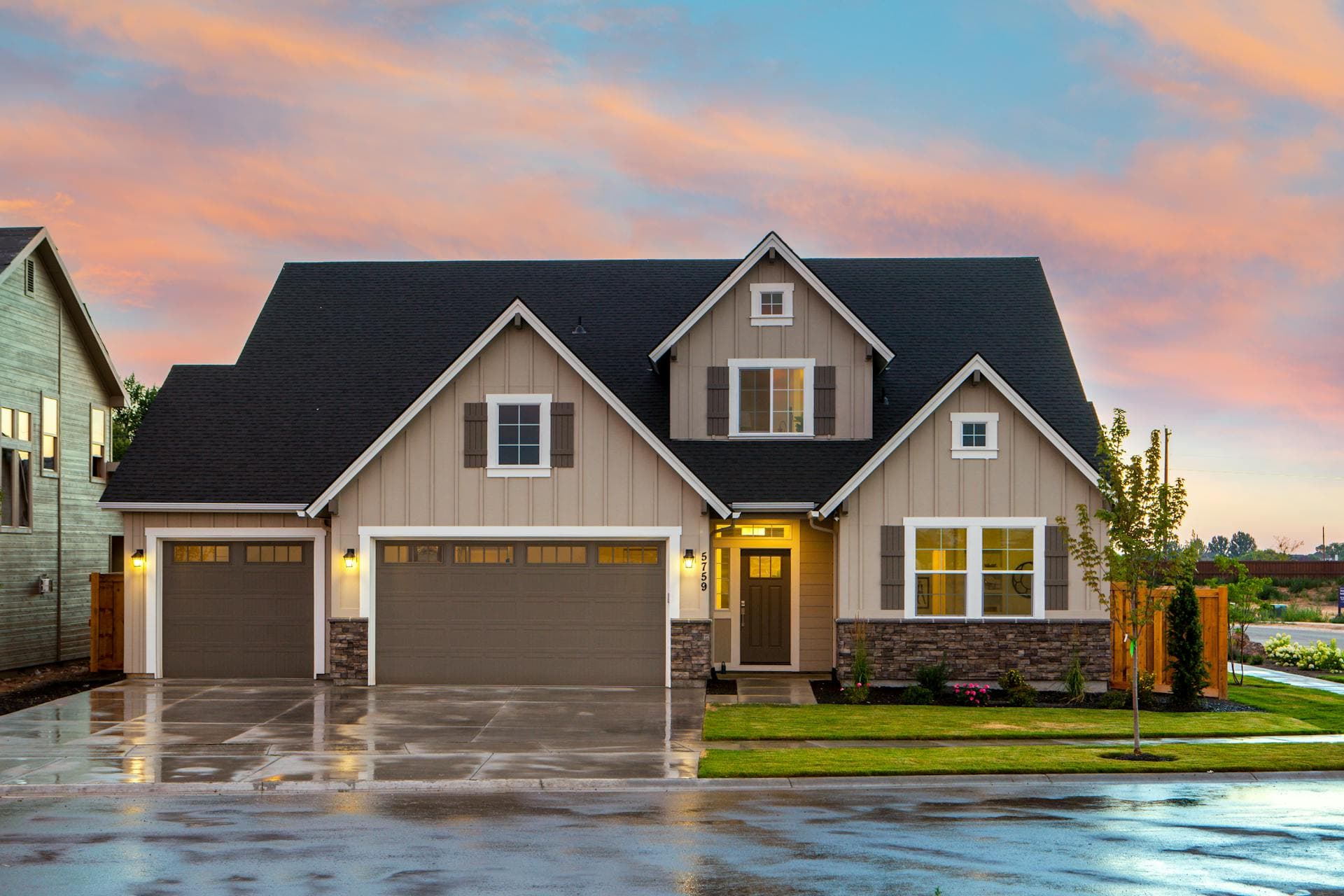
Holly Springs and the surrounding part of Cherokee County have grown quickly, with subdivisions and new homes going up across what used to be open land along the I-575 corridor. That growth is good news for the area, but it does not lower radon risk. A brand-new home built on granite-rich north Georgia soil can test just as high as a house built fifty years ago.
The age of a home tells you little about its radon level. What matters is the soil and rock beneath the foundation and how the foundation interacts with that ground. Many new homes are built with tight, energy-efficient construction, which is excellent for comfort and utility bills but can also hold radon inside once it enters. If you have bought or built a new home in Holly Springs, testing it is just as important as it is for an older home.
5. How radon testing works
Radon testing is straightforward. A measurement device is placed in the lowest lived-in level of the home, away from drafts, exterior doors, and high humidity, for a set period. Short-term tests run a minimum measurement period of a few days, while long-term tests run for months and give a better picture of the year-round average.
You can buy a short-term kit, place it according to the instructions, and mail it to a lab, or you can have a professional perform the test. A professional short-term or continuous monitor test follows established measurement practices, controls for conditions that can skew a reading, and produces a documented report. That report is especially useful in a real estate transaction or when you are deciding whether to mitigate. You can learn more on our radon testing service page.
For closed-house conditions, doors and windows are kept closed except for normal entry and exit during the test, which is how the device captures a representative reading. Winter often produces the highest readings of the year because homes are sealed up and heating systems draw soil gas indoors, so a low result in mild weather does not always tell the full story.
6. How to read your results
Radon is measured in picocuries per liter, written as pCi/L. The EPA recommends taking action to reduce radon at 4.0 pCi/L or higher. It also suggests that homeowners consider reducing radon between 2.0 and 4.0 pCi/L, because radon risk is continuous and there is no level that is completely free of risk.
It helps to think of the action level as the point where action is recommended, not a bright line between safe and dangerous. A home reading just under 4.0 pCi/L still carries some risk, and many homeowners choose to mitigate at lower levels for peace of mind, especially in a home with young children or where a basement is used as living space. If a short-term test comes back high, a follow-up test or a continuous monitor reading confirms the result before you commit to a system. For a sense of how readings vary across the region, see our overview of radon levels by ZIP code in Georgia.
7. How radon mitigation works
If your home tests high, the good news is that radon is fixable. The standard solution for most homes is a sub-slab depressurization system. A vent pipe is sealed into the slab or foundation, and an in-line fan draws radon-laden air from the soil beneath the home and routes it up through the pipe to discharge above the roofline, where it disperses safely. By depressurizing the area under the slab, the system intercepts radon before it can enter the living space.
The right design depends on the foundation. Slab-on-grade homes, basements, and crawl spaces each call for a slightly different approach, and crawl spaces often add a sealed membrane that the system draws from. A typical residential system is usually installed in less than a day. Afterward, a post-mitigation test confirms that levels have dropped, and a well-designed system keeps radon down for the long term with little maintenance beyond keeping the fan running.
8. Holly Springs and the wider Cherokee County area
Holly Springs is part of the larger Cherokee County housing market, which stretches from the suburbs along I-575 up toward the north Georgia mountains. The same granite-rich geology that influences radon in Holly Springs runs through neighboring communities such as Canton, Woodstock, and Ball Ground. If you are weighing a test in Holly Springs, the considerations are the same a few miles in any direction.
Georgia does not have a statewide radon testing law for homes, so the decision is left to each homeowner. Given the regional geology, the sensible default for a Holly Springs or Cherokee County home is to test, learn where your home actually stands, and mitigate if the result calls for it. For a closer look at the neighboring market, see our local guide to radon in Canton, Georgia.
The regional pattern raises the odds of an elevated reading, but it does not decide any single home. A home in a higher-risk area can read low, and a home that seems unlikely can read high. Testing your own home is the only way to replace assumption with an answer.
9. Frequently asked questions
This article is general information for homeowners, not legal, medical, or engineering advice. Radon levels vary from home to home, and EPA guidance and measurement practices change over time. The only way to know your home's radon level is to test it, and a qualified radon professional can advise on testing and mitigation for your specific home.