The short answer
No basement does not mean no radon. Radon comes from the soil, and a slab-on-grade home sits directly on that soil. The gas enters through cracks in the slab, the control joints poured into it, the perimeter gap where the slab meets the wall, and the openings around plumbing and utility penetrations, going straight into the living space. Slab homes routinely test at or above the 4.0 pCi/L action level. The fix is the same proven method used on basement homes: sub-slab depressurization. In metro Atlanta, where slab construction is common and Fulton, Cobb, DeKalb, and Gwinnett are EPA Zone 1, testing a slab home is not optional thinking, it is the only way to know.
Table of contents
- 1. The no-basement, no-radon myth
- 2. What slab-on-grade construction is
- 3. How radon enters a slab home
- 4. Why it goes straight into your living space
- 5. Why slab homes still test high
- 6. How testing a slab home works
- 7. How mitigation works on a slab
- 8. Why metro Atlanta is higher risk
- 9. Frequently asked questions
1. The no-basement, no-radon myth
One of the most common radon misconceptions is that radon is a basement problem. The logic seems reasonable at first: basements are below grade, they are in direct contact with soil, and they are where radon tends to read highest, so a home without a basement should be safe. Unfortunately the conclusion does not follow from the premise.
Radon is a naturally occurring radioactive gas produced as uranium in soil and rock breaks down. Every home that sits on the ground is in contact with that source, whether the lowest level is a finished basement, a crawl space, or a concrete slab poured at ground level. The basement is not what creates the radon. The soil underneath does, and a slab-on-grade home has just as much soil under it as any other home. The only difference is the path the gas takes to get inside.
Radon is also a serious health risk, not a nuisance gas. It is the second leading cause of lung cancer in the United States after smoking, and it is the leading cause among people who have never smoked. That is the reason this myth is worth correcting directly rather than leaving homeowners to assume their slab home is automatically fine.
2. What slab-on-grade construction is
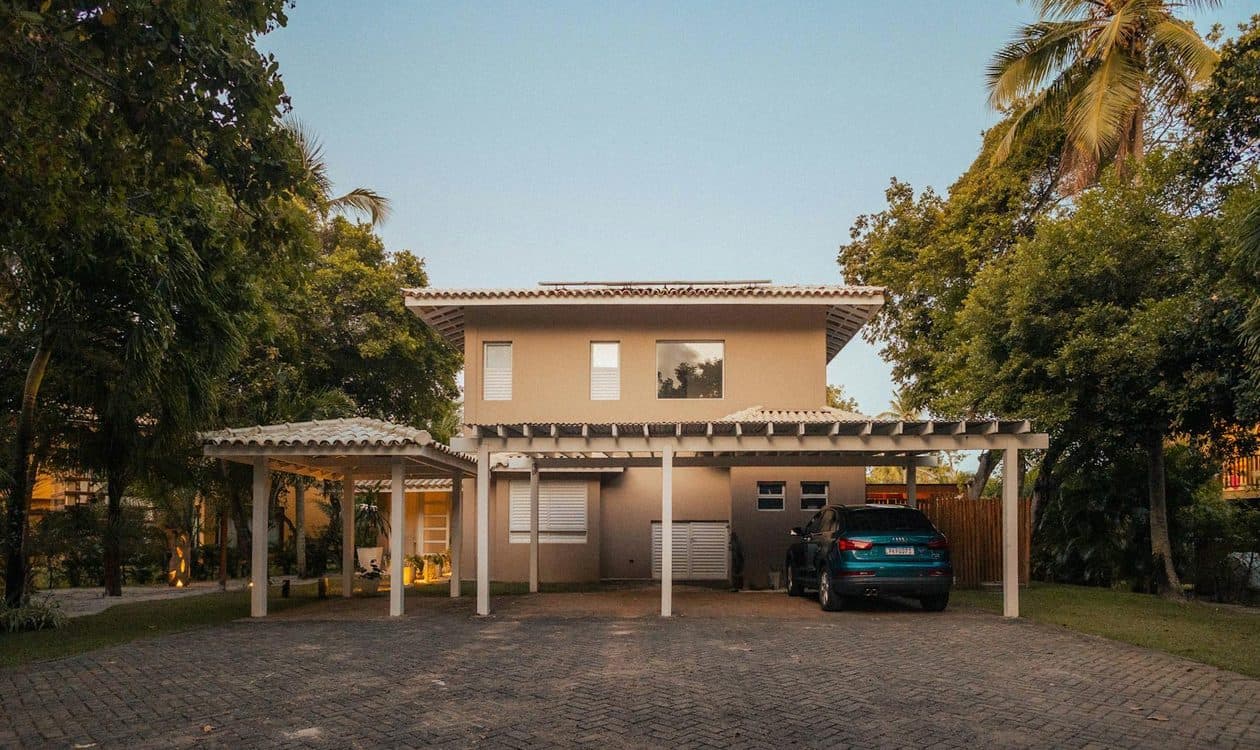
Slab-on-grade means the home is built on a single concrete slab poured directly on the ground, with no basement and no crawl space below the main floor. The slab is the floor of the living space. Plumbing, electrical, and sometimes HVAC lines are run through or under the slab before it is poured, and the finished floors sit on top of the concrete.
This is one of the most common ways homes are built across the South, including much of metro Atlanta, because it is cost-effective and well suited to the climate. Many ranch homes, newer subdivisions, townhomes, and single-story builds in the region are slab-on-grade. That popularity is exactly why the no-basement myth matters here: a huge share of local homes are the very slab homes owners assume are radon-safe.
3. How radon enters a slab home
A concrete slab looks solid, but it is not airtight. Radon finds its way through several openings that exist in essentially every slab:
- Shrinkage cracks. Concrete shrinks as it cures and continues to crack over time as the ground shifts. Even hairline cracks are wide enough for soil gas to pass through.
- Control joints. Slabs are deliberately scored or grooved with control joints so that cracking happens along planned lines instead of randomly. Those joints are intentional gaps that run down into the slab.
- The perimeter gap. Where the slab meets the foundation wall there is a joint that is rarely fully sealed, creating a continuous edge for gas to enter.
- Plumbing and utility penetrations. Every place a pipe, drain, water line, or electrical conduit passes through the slab leaves a gap around it. These openings are a direct channel from the soil to the living space.
For a deeper walk through the physics of soil gas moving into a house, see our guide on how radon enters your home.
4. Why it goes straight into your living space
Radon does not just leak in passively. Homes act like chimneys. Warm air rises and escapes through the upper levels, which lowers the air pressure at the lowest level of the home. That slight negative pressure pulls soil gas up through any opening it can find. This stack effect is at work in slab homes just as it is in basement homes.
Here is the part that makes slab homes worth paying attention to. In a basement home, radon often enters and concentrates in the basement, which is frequently below the main living areas and may be unfinished or less occupied. In a slab home, there is no buffer level. The slab is the floor of your kitchen, bedrooms, and living room, so the radon that comes through it enters the space where you spend your time directly. No basement means no in-between layer, not no radon.

5. Why slab homes still test high
There is a persistent belief that slab homes test lower than basement homes because they have no below-grade space. In practice, slab homes regularly test at or above the 4.0 pCi/L action level, and some test very high. The level a home reaches depends far more on the radon potential of the soil beneath it and how the house draws air than on whether it has a basement.
Two slab homes on the same street can read very differently depending on the bedrock, soil, and cracks under each one. A neighbor's low reading tells you nothing reliable about your home, and a low reading on one foundation type tells you nothing about another. The action level itself is the same for every home: at or above 4.0 pCi/L, the EPA recommends taking action, and levels below that still carry some risk.
Do not skip testing because your home is on a slab or because a neighbor tested low. There is no foundation type that is exempt from radon, and the only way to know your home's level is to measure it.
6. How testing a slab home works
Testing a slab home is no different from testing any other home. A measurement device is placed in the lowest lived-in level, which for a slab home is the main floor, away from drafts, exterior doors, and high humidity. A short-term test runs for a minimum measurement period of a few days under closed-house conditions, while a long-term test measures over months for a more representative average.
Because radon levels fluctuate with weather, season, and how the home is operated, a professional measurement done to recognized protocols gives you a result you can act on with confidence. If you want the full picture of why measurement matters and how to interpret a result, read why radon testing is essential, and see our radon testing service for how we handle it.
7. How mitigation works on a slab
If a slab home tests at or above 4.0 pCi/L, the proven fix is sub-slab depressurization, the same method used to mitigate basement homes. A small suction point is cut through the slab, and a pipe is connected to the space beneath it. An inline fan creates suction under the slab, drawing the soil gas out and venting it through a riser that runs up and discharges above the roofline, where it disperses harmlessly before it can re-enter the home.
The principle is simple: instead of letting the home's stack effect pull radon up through the slab, the system reverses the pressure under the slab so the gas is captured and routed outside. On a slab home the suction point is typically placed in an inconspicuous spot such as a closet, garage, or utility area, and the riser is routed to keep it tidy. Most slab systems are installed in a single day. After installation, a follow-up test confirms the home is below the action level.
For a complete explanation of how the system pulls soil gas from under the slab and why it is the standard approach, read what is sub-slab depressurization, or see our radon mitigation service.
8. Why metro Atlanta is higher risk
Georgia does not have a state radon testing law, which leads some homeowners to assume radon is not a local concern. The geology says otherwise. On the EPA Map of Radon Zones, four metro Atlanta counties, Fulton, Cobb, DeKalb, and Gwinnett, are designated Zone 1, the highest radon-potential category, meaning a predicted indoor average at or above 4.0 pCi/L. The region's granite and uranium-bearing bedrock is what drives those elevated designations.
The EPA zone map predicts averages by county. It does not tell you whether a specific home is elevated, and the EPA advises testing no matter which zone you are in. A Zone 1 county is not a guarantee of high radon, and a lower zone is not a guarantee of safety. The only way to know a home is to test it.
Put the two facts together and the picture is clear. Metro Atlanta sits in some of the highest radon-potential geography in the country, and slab-on-grade is one of the most common ways homes here are built. That combination is exactly why the no-basement myth is worth retiring: a large share of local slab homes are sitting on Zone 1 soil, and the only way to rule out a problem is a test.
9. Frequently asked questions
This article is general information for homeowners, not legal, medical, or engineering advice. Radon levels vary from home to home and over time, and EPA guidance and testing protocols can change. The only way to know your home's radon level is to test it, and a qualified radon professional can advise on testing and mitigation for your specific home.