The short answer
Yes, consumer electronic radon monitors work, but they work for a specific job. They are excellent for ongoing awareness in a home you live in: you can watch levels and trends change with the seasons and with how you use the house. Lab-analyzed charcoal and alpha-track kits, and professional tests, are the standard when you need a documented result for a decision such as buying, selling, or refinancing. The smartest approach for many homeowners is to use both: a monitor for everyday peace of mind, and a lab kit or professional test when the result has to hold up. The EPA action level is 4.0 pCi/L, and radon is the second leading cause of lung cancer in the United States, so acting on results matters.
Table of contents
- 1. How consumer electronic monitors work
- 2. How lab-analyzed test kits work
- 3. Do consumer monitors actually work
- 4. Accuracy: what each is good for
- 5. Cost and speed compared
- 6. Real estate and other decisions
- 7. Using a monitor and a kit together
- 8. How to choose for your situation
- 9. Frequently asked questions
1. How consumer electronic monitors work
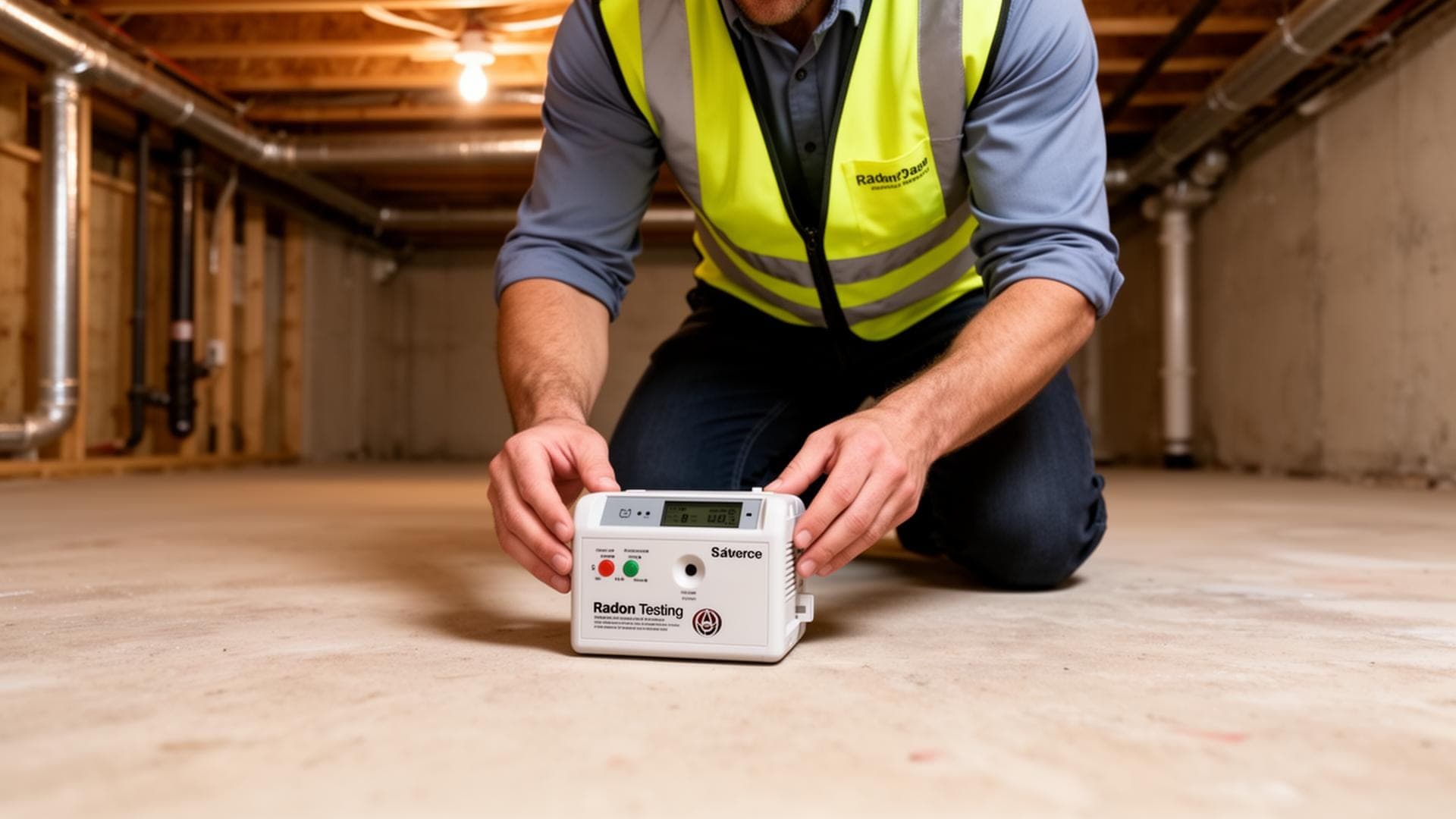
A consumer continuous radon monitor is a small powered device you set on a shelf or plug into the wall. Inside, it samples the air and counts the signals produced as radon and its decay products break down, then translates that into a reading you can see on a display or in an app. Because it runs continuously, it does not just give you one number. It builds a picture over hours, days, and weeks, so you can watch how radon in your home rises and falls.
That continuous picture is the whole point of a monitor. Radon is not steady. It moves with weather, with the seasons, with whether windows are open, and with how your heating and ventilation run. A monitor lets you see those swings in real time rather than capturing a single frozen snapshot. For a deeper look at how these devices function and what features matter, see our guide to electronic radon monitors.
2. How lab-analyzed test kits work
A test kit is a passive device with no electronics and no display. You place it in the home, leave it for a set period, then seal it and mail it to a laboratory. The lab analyzes what the device captured and sends back a measured result. The two most common types are charcoal kits, which absorb radon over a short window of a few days, and alpha-track kits, which record radon exposure over a long period of months.
The defining feature of a kit is that a third-party lab produces the number. You do not read it yourself, and the result comes back as a documented measurement tied to a known method. That is why kits are a familiar choice for situations where someone other than the homeowner needs to trust the result. We break down each kit type and how they differ in our comparison of radon test kit types.
3. Do consumer monitors actually work
This is the question behind all the others, and the honest answer is yes, with a qualifier. A quality consumer monitor genuinely detects radon and reports levels and trends, and that is real, useful information. People who own one tend to test more often, notice seasonal changes, and confirm that a mitigation system is keeping levels down. None of that is possible with a one-time kit that you only run once.
Watch the framing on monitor marketing. Phrases like the most accurate monitor are easy to say and hard to verify. Treat a consumer monitor as a strong tool for ongoing awareness, and lean on a lab kit or professional test when you need a result that someone else has to trust.
The qualifier is about purpose. A consumer monitor is built for living awareness, not for producing an official, documented, third-party result. So when the question is should I act to lower the radon in my home, a monitor is a fine starting point. When the question is what result will a buyer, a lender, or a contract rely on, that is where a lab-analyzed kit or a professional test takes over.
4. Accuracy: what each is good for
It is tempting to ask which option is more accurate, but that framing hides the real difference. Accuracy depends on the specific device, how it is used, and how long it runs, not simply on whether the tool is electronic or passive. A good monitor and a good lab kit can both produce reliable results when used correctly. What separates them is what they are designed to measure and how the result is handled.
A continuous monitor is good at showing change. It captures the rise and fall of radon over time, which is exactly what you want for everyday awareness and for confirming a mitigation system is working. A short-term charcoal kit is good at delivering a single documented snapshot through a lab. A long-term alpha-track kit is good at capturing a true average across months, which smooths out the daily and seasonal swings that a short test can miss. None of these is the best at everything. Each is the best at its own job.
A practical rule: trust a monitor for trends and a lab-analyzed test for documented numbers. If a single reading is going to drive a real decision, confirm it with a method built to produce a defensible result.
5. Cost and speed compared
The cost models are different in a way that matters. A lab-analyzed kit has a low one-time cost: you pay for the kit and its lab analysis, use it, and you are done. A consumer monitor has a higher upfront cost because you are buying a reusable device, but there is no per-test lab fee afterward, so the long-run cost of testing again and again is low. If you only need one number once, a kit is cheaper. If you want to keep an eye on radon for years, a monitor can pay for itself.
Speed tells a similar story. A continuous monitor starts reporting quickly, often within a day, and a useful short-term picture builds over a few days of run time. A lab kit involves a measurement window of a few days followed by mailing and lab analysis, so the documented result lands several days later. An alpha-track kit is the slowest by design, because measuring a true long-term average means leaving it in place for months. Faster is not better or worse here; it is just suited to a different question.
Think of it as buying an answer versus buying a tool. A kit buys you one documented answer cheaply. A monitor buys you an ongoing stream of readings you can return to whenever you want.
6. Real estate and other decisions
For a home purchase, sale, or refinance, the bar is higher than personal awareness. Buyers, agents, and lenders want a documented test using an approved method, often a lab-analyzed kit or a professional continuous radon monitor test performed to protocol, sometimes with controls that guard against tampering during the measurement window. The result needs to come from a process that a third party can rely on, which is exactly what a personal consumer monitor is not designed to provide.
This is not a knock on monitors. It is just the right tool for the right moment. Use a professional test for the transaction, and keep your monitor for the years you live in the home afterward. When you hire someone for a transaction-grade test, it is reasonable to ask whether they hold a recognized credential such as NRPP or NRSB certification, since that signals the work follows established measurement standards. For a closer look at the tradeoffs, see our piece on DIY radon testing versus professional testing.
7. Using a monitor and a kit together
You do not have to choose only one. For many homeowners the strongest approach is to use both, each for what it does well. Start with a lab-analyzed kit or a professional test to establish a reliable baseline number you can trust. Then keep a continuous monitor running so you can see whether levels stay where you expect, watch how they shift through the seasons, and confirm a mitigation system is doing its job over the long term.
Used this way, the two tools cover each other. The kit or professional test gives you a documented anchor. The monitor gives you the day-to-day visibility a single test can never provide. If your monitor ever shows a sustained jump above where your baseline sat, that is your cue to confirm with another solid measurement and decide whether to act.
8. How to choose for your situation
Match the tool to the question you are trying to answer. If you want to keep an eye on radon in a home you live in and catch changes over time, a consumer continuous monitor is a great fit. If you need a single documented result at low cost, a lab-analyzed charcoal kit does the job. If you want the truest picture of your year-round exposure, a long-term alpha-track kit is built for that.
And if a decision rides on the result, a real estate transaction, a mitigation choice, or anything where someone else relies on the number, lean on a professional test or a lab-analyzed kit so the result is documented and defensible. Whatever you choose, the most important step is the one too many homes skip: actually testing. Radon is invisible and odorless, much of metro Atlanta sits in higher-radon areas, and the only way to know your home is to measure it.
9. Frequently asked questions
This article is general information for homeowners, not legal, medical, or engineering advice. Radon device performance, testing methods, and best practices change over time, and individual products vary. Confirm the right approach for your situation, especially for a real estate transaction, with a qualified radon professional before making decisions.