The short answer
A new home can test high for radon because radon comes from the soil under the house, not from its age. Radon-resistant new construction lowers the odds but does not guarantee a reading below 4.0 pCi/L, which is why the EPA recommends testing every new home. The first thing to check is whether your home has a passive radon-resistant rough-in, the under-slab piping and vent stack many builders install. If it does, adding a fan to activate it is usually the cheapest fix. Read your purchase contract and warranty for any radon provision and raise it with the builder in writing. If there is no rough-in, a standard mitigation system reliably brings the level down.
Table of contents
- 1. Why a new home can still test high
- 2. First, do not panic and retest
- 3. Check for a passive rough-in (the cheap fix)
- 4. Activating a passive system with a fan
- 5. Your options with the builder
- 6. Where the warranty fits in
- 7. How mitigation works if there is no rough-in
- 8. A practical action plan
- 9. Frequently asked questions
1. Why a new home can still test high
The most common reaction to a high radon result in a new build is disbelief. Everything is new, sealed, and up to code, so how can there be a problem? The answer is that radon has nothing to do with the age of the house or the quality of the construction. Radon is a gas produced by uranium decaying in the soil and rock beneath the foundation. A brand-new home sits on the same ground as the fifty-year-old house down the street, so it can pull in just as much radon.
In fact, tightly built new homes can sometimes hold radon a little better than drafty old ones, because modern air sealing reduces the natural air exchange that would otherwise dilute it. The takeaway is that newness is not protection. Only a test tells you the level inside your specific home.
Many newer homes are built with radon-resistant new construction features, and that is a genuinely good thing. But those features reduce the risk of a high result, they do not eliminate it. The EPA is explicit that every new home should be tested after move-in regardless of how it was built. If you want the background on these features, our guide to radon in new construction homes walks through them in detail.
2. First, do not panic and retest
Radon is a long-term exposure risk, not an emergency. A single elevated reading is not a reason to move out or lose sleep tonight. The health concern from radon comes from breathing elevated levels over years, so you have time to confirm the result and plan a fix without rushing.
Radon levels move around. They vary day to day, season to season, and with weather, so a short-term test kit captures only a snapshot. A reasonable next step is a confirmation test, ideally a longer measurement or a continuous monitor placed in the lowest lived-in level of the home. If your first result is only slightly above 4.0 pCi/L, a confirmation test is especially worthwhile. If it is well above the action level, you can start lining up a fix while you confirm, since the fix is the same regardless.
Keep your test results and the device details. If you end up dealing with the builder or filing a warranty claim, a documented result from a properly placed test is far more persuasive than a vague recollection of a number.
3. Check for a passive rough-in (the cheap fix)
Before you price anything, find out whether your home already has a passive radon-resistant rough-in. This single question often determines whether your fix is inexpensive or simply standard. A passive rough-in is a set of features the builder installed during construction: a layer of gas-permeable material under the slab, a sealed vapor barrier, and a vent pipe that runs from beneath the slab up through the house and out the roof. It is designed to vent soil gas using natural air movement, with no fan.
To check, look for a capped or labeled vent pipe in the basement, garage, or a utility closet that runs upward, often a three or four inch pipe. Many builders label it as a radon vent. Check your closing documents, the builder's feature list, or the plans, which frequently note radon-resistant construction. If you are not sure, a radon professional can identify a rough-in during a short site visit.
Why this matters so much: the expensive, disruptive part of a mitigation system is creating the suction point under the slab and routing piping discreetly up and out. A passive rough-in means that work is already done. Turning it into a system that reliably lowers radon can be as simple as adding a fan to the existing pipe.
4. Activating a passive system with a fan
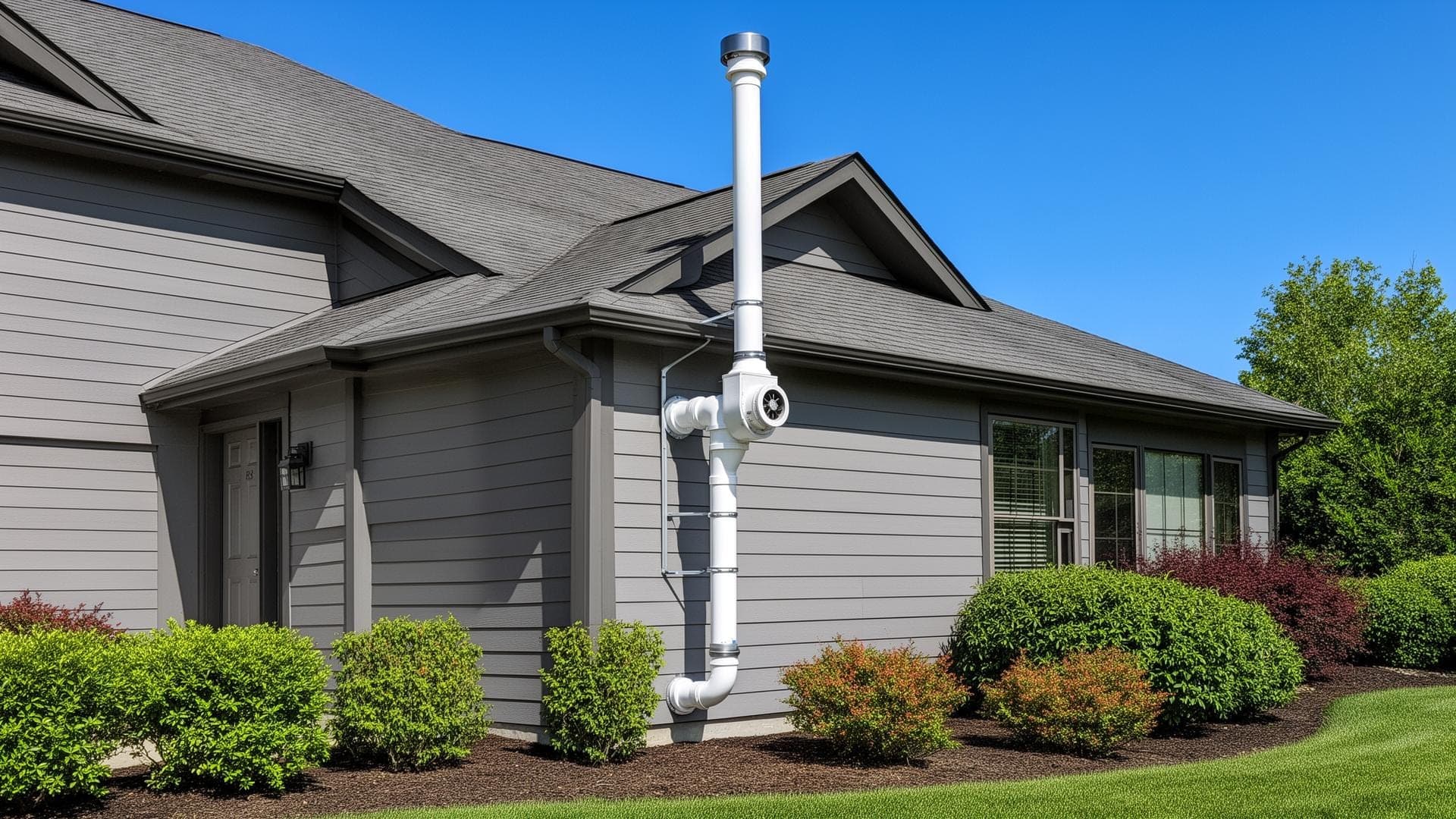
A passive system relies on the stack effect, the natural tendency of warm air to rise and pull air up through the vent pipe. It works, but it is not always strong enough on its own, particularly in colder months or in homes where radon entry is high. That is exactly why the passive pipe is built to accept a fan. When a passive home tests high, the answer is usually activation, not replacement.
Activation means installing an inline radon fan on the existing vent pipe, almost always in the attic or outside the living space, and running the wiring to power it. The fan creates continuous suction under the slab, which is the principle behind sub-slab depressurization, the standard radon fix. A system monitor, usually a simple manometer on the pipe, confirms the fan is moving air. After activation, the home is retested to confirm the level is below 4.0 pCi/L.
Because the piping and roof penetration already exist, activating a passive rough-in is generally the least expensive radon fix available. It is the best-case scenario for a high reading in a new home, and it is why checking for the rough-in is the first thing you should do.
5. Your options with the builder
A high radon result in a recent build naturally raises the question of whether the builder should handle it. The honest answer is that it depends on what you agreed to. Start by reading your purchase contract and any addenda for a radon clause. Some contracts include a radon provision, a commitment to install radon-resistant features, or language about activating a passive system if testing shows it is needed.
Even without an explicit clause, it is worth raising with the builder, in writing, early and politely. Many builders will activate a passive rough-in as a goodwill or warranty gesture, especially when the rough-in was part of how the home was marketed. Frame it factually: here is the test result, here is the rough-in you installed, and here is the request to activate it. Keep a paper trail of the result, the request, and the response.
It helps to separate two things. Whether the builder pays is a contract and relationship question. Whether the home can be fixed is not in doubt. Even if the builder declines, the technical path is the same and the cost, especially with a rough-in present, is manageable. You are not stuck with a high reading either way.
6. Where the warranty fits in
Many newly built homes come with a builder warranty, sometimes a multi-year structural warranty backed by a third party. Whether radon falls under that warranty varies, so read the document rather than assuming. Some warranties specifically address installed systems, and if the builder installed a passive radon system, a defect or underperformance in that system may be a warranty matter.
Practically, the warranty is worth checking for two reasons. First, it may cover activation or correction of a radon-resistant system the builder put in. Second, warranties have claim windows and notice requirements, so finding out where radon stands sooner protects your options. If the language is unclear, ask the builder or the warranty administrator directly and get the answer in writing.
For more on how radon-resistant construction is supposed to work in this region, see our overview of radon-resistant new construction in Georgia.
7. How mitigation works if there is no rough-in
If your new home was built without a passive rough-in, do not worry, this is still a routine fix. A standard radon mitigation system uses sub-slab depressurization. A technician cores a small hole through the slab to create a suction point, seals it, and connects it to a vent pipe that carries soil gas up and out above the roofline. An inline fan provides continuous suction so radon is drawn from under the slab before it can enter the living space.
The system runs quietly and continuously, draws very little power, and includes a monitor that shows it is working. After installation, the home is retested to confirm the level is below 4.0 pCi/L. Installing a full system in a home without a rough-in costs more than activating an existing one because the suction point, piping, and venting all have to be added, but it is a well-established, dependable process. You can read more about what the work involves on our radon mitigation service page.
8. A practical action plan
Put together, the path from a high reading in a new home to a solved problem is short and orderly:
- Confirm the result with a second test, ideally a longer measurement or continuous monitor in the lowest lived-in level.
- Check for a passive radon-resistant rough-in by looking for a labeled vent pipe and reviewing your closing documents and feature list.
- Read your purchase contract and builder warranty for any radon provision, and note the claim windows.
- Raise the result with the builder in writing, asking specifically about activating the rough-in if one exists.
- Activate the passive system with a fan, or install a mitigation system if there is no rough-in, then retest to confirm a level below 4.0 pCi/L.
The reassuring part: of all the surprises a new home can hand you, a high radon reading is one of the most fixable. With a rough-in in place, it is often the cheapest, and the result is a documented, retested home that holds below the action level.
9. Frequently asked questions
This article is general information for homeowners, not legal, financial, or engineering advice. Builder contracts, warranties, and radon results vary by home. Read your own contract and warranty documents and confirm your options with your builder and a qualified radon professional before making decisions. The 4.0 pCi/L action level and the recommendation to test every new home are from the U.S. Environmental Protection Agency.