1. Why Renovations Change Radon Levels
Radon levels in your home are determined by two factors: how much radon enters from the soil, and how quickly it gets diluted or exhausted from the indoor air. Renovations can affect both of these. For a deeper understanding, read about how radon enters your home.
Any work that changes your home's air pressure dynamics, ventilation patterns, or foundation integrity can shift radon levels up or down. This includes obvious projects like digging into the foundation, but also less obvious ones like replacing your HVAC system or adding insulation.
The common thread is that most renovations make homes tighter and more energy-efficient. That is great for your utility bills but can be problematic for indoor air quality. Our residential radon services include post-renovation testing and mitigation. A tighter home exchanges less air with the outdoors, which means radon and other indoor pollutants have fewer opportunities to dissipate.
Many homeowners test for radon when they buy their home and then assume those results remain valid forever. But a significant renovation can change the equation entirely. A home that tested at 2 pCi/L with an unfinished, drafty basement might test at 6 pCi/L after that basement is finished and sealed up.
2. Finishing a Basement (Biggest Risk)
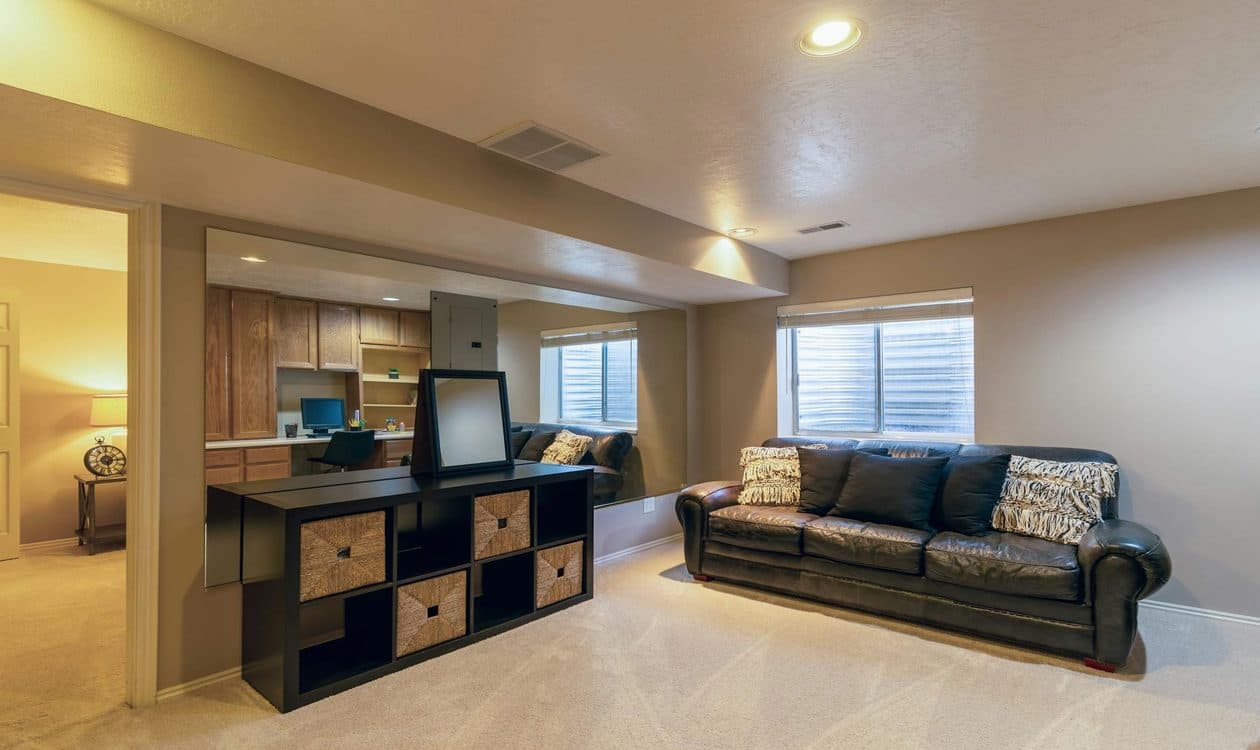
Finishing a basement is the single most common renovation that increases indoor radon levels. The reasons are straightforward.
Enclosed space traps radon
An unfinished basement is often drafty, with air moving in and out through gaps, windows, and the stairwell. Finishing the space with drywall, insulation, and sealed windows creates a much tighter room. Radon that used to drift away now accumulates in the enclosed area.
New floor coverings over cracks
Carpet, laminate, or tile installed over a basement floor can hide cracks and gaps in the concrete. While floor coverings do not seal these cracks (radon still seeps through), they make the cracks invisible and harder to monitor or repair.
Changed air circulation
Adding walls and rooms in the basement alters how air flows through the lowest level of the house. Dead spots can form where radon accumulates without being moved by the HVAC system. Rooms without supply vents may have particularly stagnant air.
Increased occupancy time
A finished basement becomes living space. Family members spend hours there watching TV, working, or sleeping. Even if radon levels stay the same, the increased time spent in the space means more cumulative exposure.
Test Before You Finish
If you are planning a basement renovation, test for radon before the project begins. If levels are already elevated, install a mitigation system before or during the renovation. It is far easier and cheaper to install radon piping during construction than to retrofit it after the walls, ceiling, and floor are finished. The same timing logic applies to mold testing: catching hidden moisture problems before drywall goes up beats finding them after.
3. HVAC System Changes
Replacing or modifying your HVAC system can change radon levels by 30 to 50% in either direction. The effect depends on how the new system changes air pressure and circulation patterns in your home.
Changes That May Increase Radon
- More powerful exhaust fans or range hoods
- Imbalanced ductwork with more returns than supplies in the basement
- Sealed combustion appliances that depressurize the lower level
- Removing or relocating ductwork from basement areas
Changes That May Decrease Radon
- Adding supply vents to basement rooms
- Balanced return and supply air distribution
- Fresh air intake that pressurizes the lower level
- Energy recovery ventilator (ERV) installation
The key factor is air pressure. If your new HVAC system creates more negative pressure in the basement or lowest level, it will draw more soil gas into the home. If it creates positive pressure or neutral pressure, it can actually reduce radon entry. Ask your HVAC contractor about pressure balancing during any system replacement.
Adding a basement bathroom with an exhaust fan is another common trigger. The fan pulls air out of the basement, creating negative pressure that draws soil gas in through the floor. If you add a bathroom in a below-grade space, plan for adequate make-up air.
4. Foundation and Structural Work
Any work that disturbs your home's foundation can change radon entry pathways. Here are the most impactful types of foundation work.
Foundation Crack Repair
Sealing foundation cracks can reduce radon entry, but it depends on the repair method. Epoxy injection seals the crack from inside but may not prevent radon from finding alternative paths. Exterior waterproofing that involves excavation can disturb soil and temporarily increase radon, though the final sealed result may help.
Slab Penetrations
Cutting into the basement slab for new plumbing (bathroom rough-in, floor drains, or sewer line repairs) creates new openings in your foundation. Each penetration is a potential radon entry point. These openings must be sealed with appropriate caulk or foam after the plumbing is installed.
Underpinning or Bench Footing
Lowering a basement floor involves extensive excavation and new concrete work. This significantly changes the relationship between your foundation and the soil, and can either increase or decrease radon depending on how well the new slab and joints are sealed.
Addition on Slab or Crawl Space
Building an addition creates new ground-contact area. If the addition has a slab foundation, the joint between the old and new slabs is a common radon entry point. If it has a crawl space, the exposed soil in the crawl space is an additional radon source that connects to the rest of the home.
5. Renovations That Can Lower Radon
Not every renovation makes radon worse. Some projects can actually reduce radon levels, especially if they improve ventilation or seal foundation entry points.
Crawl Space Encapsulation
Sealing a dirt-floor crawl space with a heavy vapor barrier reduces the exposed soil area that radon can enter through. When combined with proper ventilation, encapsulation can meaningfully reduce radon levels in the home above.
Floor Crack Sealing
If you are replacing flooring and the old concrete is exposed, take the opportunity to seal visible cracks with polyurethane caulk. This will not eliminate radon on its own, but it reduces one category of entry points.
ERV/HRV Installation
Energy recovery ventilators and heat recovery ventilators bring in fresh outdoor air while recovering energy from exhaust air. They increase ventilation without the energy penalty of opening windows, which can dilute indoor radon concentrations.
Radon-Resistant New Construction
If you are building an addition, include radon-resistant features: a gravel layer under the slab, a vapor barrier, sealed slab penetrations, and a passive radon vent pipe that can be activated later if needed. The cost is minimal during construction.
6. When to Retest After Renovations
The EPA recommends retesting for radon after any renovation that changes the structure, foundation, or ventilation of your home. Here is a practical timeline.
Wait 2 Weeks After Completion
Allow the home to settle for at least two weeks after all construction is complete. During active renovation, doors and windows are frequently open, dust and debris affect air flow, and conditions are not representative of normal living. Let the dust settle, literally, before testing.
Test Within 30 Days
Aim to complete a radon test within 30 days of finishing the renovation. This gives your home enough time to reach its new normal air patterns but does not leave you exposed to potentially elevated radon for months without knowing. A professional CRM test costs around $150 and provides results in 48 hours.
Test in the Renovated Area
Place the test in the lowest livable level that was affected by the renovation. If you finished a basement, test there. If you modified the HVAC system, test on the lowest floor that the system serves. If you added a ground-level addition, test in that new space.
Renovations That Require Retesting
- Finishing or remodeling a basement
- Replacing your furnace, heat pump, or central air system
- Adding a bathroom or plumbing below grade
- Foundation repair or waterproofing
- Building an addition with ground contact
- Major insulation or air sealing upgrades
- Installing or removing a whole-house fan
- Converting a crawl space (encapsulation or excavation)