Radon Mitigation Systems for Sandy Springs Homes
Reducing radon levels by up to 99% with the right system for your foundation
Sub-slab depressurization, sub-membrane systems, and high-rise approaches for every Sandy Springs home and condo.
Mitigation System Options for Sandy Springs
Sandy Springs has the highest average radon levels in metro Atlanta at 4.8 pCi/L. Here are the system types we install across the city:
Sub-Slab Depressurization (SSD)
Ideal for: Slab and basement homes
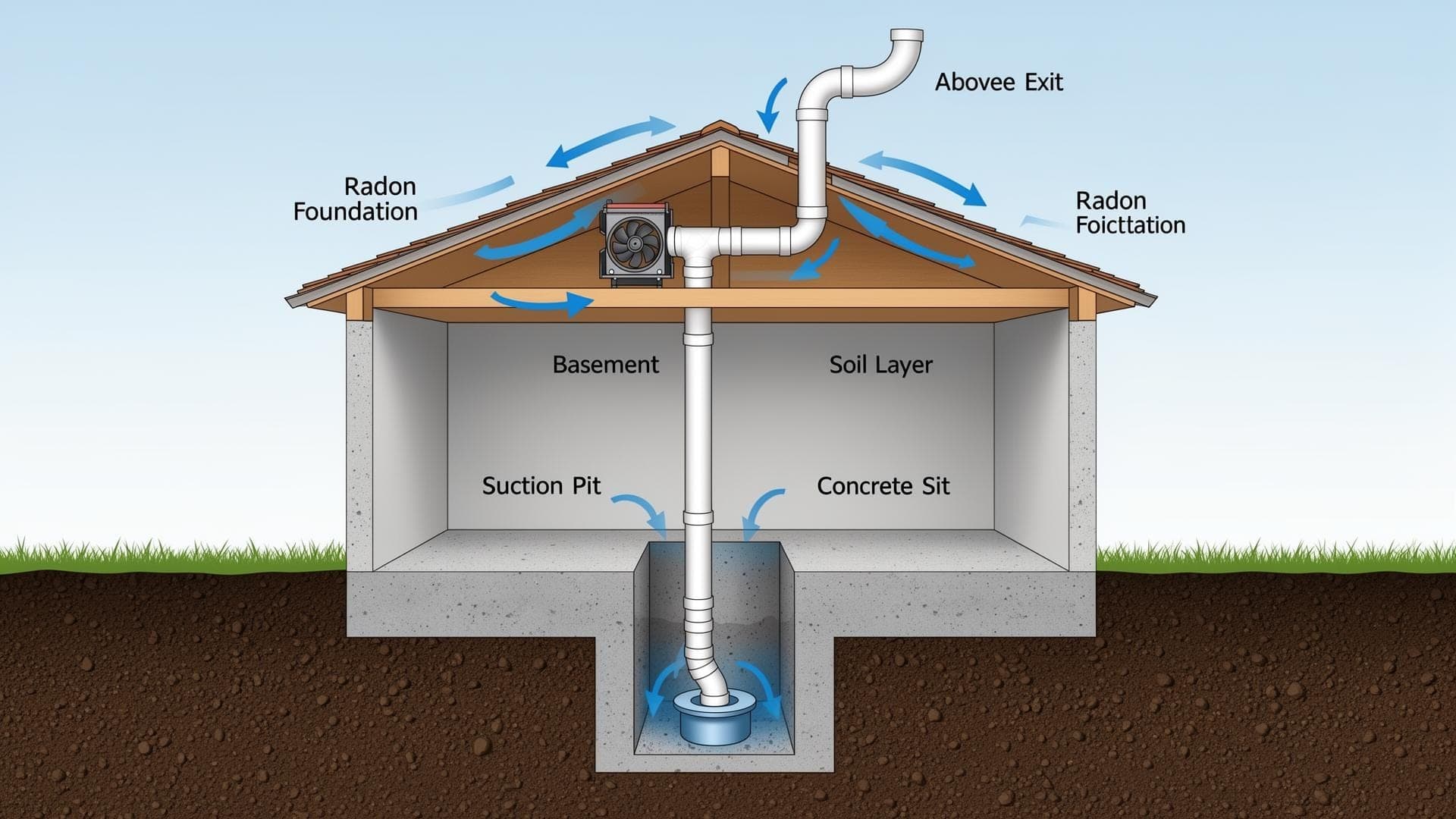
A PVC pipe is installed through the concrete slab or basement floor into the soil below. An inline fan creates continuous negative pressure, drawing radon out before it enters your home. The standard for most Sandy Springs single-family homes, including Mount Vernon, Hammond Springs, and Spalding.
Sub-Membrane Depressurization (SMD)
Ideal for: Crawl space homes
A heavy polyethylene membrane is sealed over the crawl space floor. A pipe and fan system draws radon from beneath the membrane and vents above the roofline. Common in older Sandy Springs homes in pockets of Riverside and the Powers Ferry corridor.
Multi-Point Depressurization
Ideal for: Estates and combination foundations
A custom system combining sub-slab and sub-membrane techniques with multiple suction points. Required for larger Sandy Springs estates along the Chattahoochee and for homes with both slab and crawl sections, common in custom builds near Morgan Falls.
High-Rise / Condo Systems
Ideal for: Perimeter Center high-rise units
Unit-level mitigation approaches for Perimeter Center and Sandy Springs high-rise condos. Options include slab sealing, HVAC pressure balancing, and, where the building allows, connection to common-area mitigation. Feasibility varies significantly by building.
System Components
Every radon mitigation system includes these core components:
Suction Point
A 4-5 inch hole cored through the slab or a pipe inserted beneath the membrane. This is where radon gas is captured.
PVC Vent Pipe
3-4 inch PVC routed from suction point to above the roofline. Can run through interior walls, garage, or along the exterior.
Radon Fan
Continuously running inline fan rated for radon use. Mounted in attic, garage, or exterior near the roofline. Typically 60-90 watts.
Manometer
U-tube pressure gauge on the pipe. Visual confirmation the system is creating proper suction. Check monthly.
Sealant/Caulk
Polyurethane caulk seals major foundation cracks, gaps around pipes, and sump pit covers for maximum depressurization.
Exhaust Point
Vent pipe terminates above the roofline, at least 10 feet from windows, and 12 inches above the roof surface.
System Selection Guide for Sandy Springs
Which system fits your Sandy Springs home?
| Home Type | Foundation | Recommended | Notes |
|---|---|---|---|
| Established basement home in Mount Vernon, Hammond Springs, or Spalding | Basement (finished or unfinished) | Sub-Slab Depressurization (SSD) | Single suction point typically sufficient for homes under 2,500 sq ft. Larger homes may need two. Aesthetic routing important for Mount Vernon and Spalding communities. |
| Chattahoochee riverfront or hillside home | Basement or walk-out | SSD with extended pipe run | Morgan Falls, Riverside, and Brandon Hall homes often sit on slopes requiring careful pipe routing. Elevation changes affect fan selection and exhaust placement. |
| Larger estate or custom home | Combination (slab + crawl) | Multi-point System | Homes 4,000+ sq ft often have mixed foundations. Two or three suction points ensure pressure field extends across the entire footprint. |
| Perimeter Center condo or high-rise unit | Building slab / garage above | Unit-level options, feasibility varies | Depends on building cooperation, HOA approval, and building construction. We assess feasibility during initial site visit and only recommend installation if it will meaningfully reduce levels. |
Sandy Springs Mitigation Systems FAQs
What is the best radon mitigation system for Sandy Springs homes?
For most Sandy Springs single-family homes, sub-slab depressurization (SSD) is the best option. It is highly effective (up to 99% reduction), installs in a single day, and works on both slab and basement foundations. For older homes with crawl spaces, sub-membrane depressurization is the standard. For high-rise condos, options depend heavily on the building.
How does a radon mitigation system work?
All active radon mitigation systems work on the same principle: a continuously running fan creates negative pressure beneath your foundation, intercepting radon gas before it enters your home. The gas is drawn through a PVC pipe and exhausted above the roofline where it disperses into outdoor air harmlessly.
How long does installation take in Sandy Springs?
Most single-system installations (SSD or SMD) are completed in 4 to 8 hours, a single day. Multi-point systems for combination foundations or very large homes may take 1 to 2 days. You can stay in your home during installation.
Will the pipe be visible on my home?
The vent pipe is the most visible component. It can be routed through interior walls (least visible), through the garage (common in Sandy Springs), or along an exterior wall. For Mount Vernon, Spalding, and other neighborhoods with HOA guidelines, we route on the least visible side of the home and can paint the pipe to match your exterior.
How loud is a radon fan?
Modern radon fans are designed for quiet operation. Most produce a low hum similar to a bathroom exhaust fan. Attic-mounted fans are virtually inaudible from inside the living space. Exterior-mounted fans produce slight noise near the installation point only.
How do I know if my Sandy Springs mitigation system is working?
Every system includes a manometer (U-tube pressure gauge) on the vent pipe. The liquid levels should be uneven when the fan is running, indicating active suction. Check this monthly. We also perform a post-installation test to verify levels have dropped below 4.0 pCi/L, typically below 2.0 pCi/L.
Why does Sandy Springs often need larger systems?
The combination of high baseline radon levels (average 4.8 pCi/L) and often-larger homes means Sandy Springs systems sometimes need multiple suction points to achieve adequate reduction. Homes over 2,500 sq ft of slab area often benefit from two suction points. Homes over 4,000 sq ft often need two or three. Our site assessment determines optimal configuration.
How long do radon mitigation systems last?
The PVC pipe and structural components last indefinitely. The radon fan typically lasts 5 to 10 years before needing replacement ($300-$600 installed). There are no filters to change or moving parts other than the fan motor. The system runs 24/7 with minimal maintenance.
Get Your Sandy Springs Mitigation Quote
Free assessment and custom system design for your Sandy Springs home.
More Sandy Springs Radon Information
Sandy Springs Overview
Full overview of radon in Sandy Springs
Sandy Springs Testing
Test before you mitigate
Alpharetta Mitigation
Compare system options in Alpharetta
Atlanta Mitigation
System options in Atlanta proper
Dunwoody Radon
Services in neighboring Dunwoody
Roswell Mitigation Cost
Pricing in neighboring Roswell
Radon Safety Resources
Expert insights and guides to keep you informed
Radon Levels Chart: What Every Reading Means, From 0.4 to 20+ pCi/L
A radon levels chart from 0.4 to 20+ pCi/L. What each reading means, the EPA lifetime lung cancer risk at every level for smokers and never-smokers, the WHO reference level, and exactly what to do next at your number.
Read more about Radon Levels Chart: What Every Reading Means, From 0.4 to 20+ pCi/L →
Radon in Holly Springs, Georgia: A Cherokee County Homeowner Guide
A local guide for Holly Springs and Cherokee County homeowners. Why north-Georgia granite geology produces elevated indoor radon in many homes, why every home should be tested regardless of zone, and how testing and mitigation work.
Read more about Radon in Holly Springs, Georgia: A Cherokee County Homeowner Guide →
Radon in Athens, Georgia: An Athens-Clarke County Homeowner Guide
A local guide for Athens and Athens-Clarke County homeowners, landlords, and renters. Why north-Georgia geology produces elevated indoor radon in many homes, why every home and rental should be tested regardless of zone, and how testing and mitigation work.
Read more about Radon in Athens, Georgia: An Athens-Clarke County Homeowner Guide →