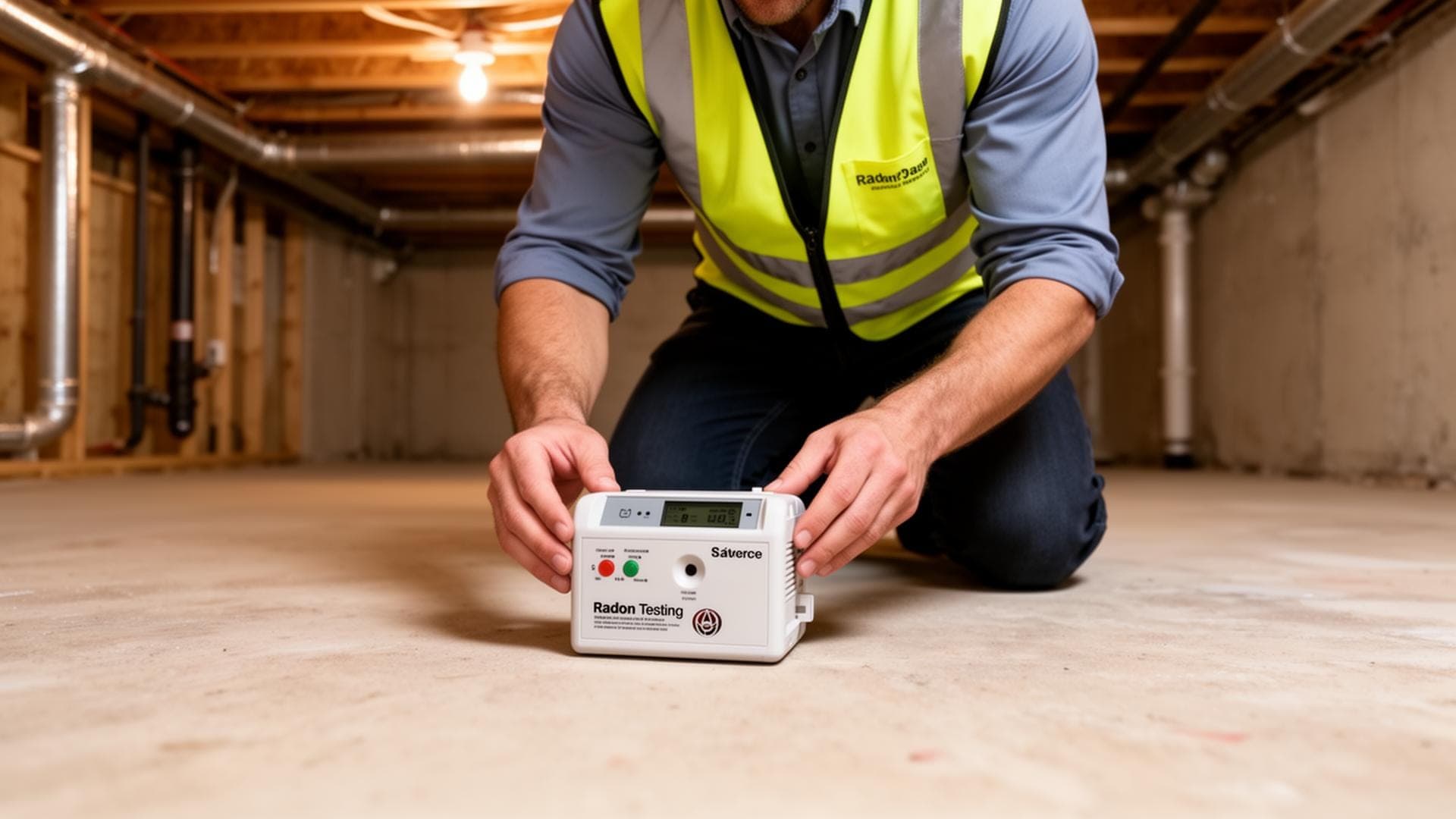
1. Unmitigated vs. Mitigated: The Real Impact
Let us start with the bottom line: radon itself does not directly lower your home's appraised value. Appraisers do not deduct a set dollar amount for elevated radon. But in practice, unmitigated radon can cost you significantly more than the price of installing a mitigation system.
Here is how it typically plays out. A buyer orders a radon test during their inspection period. Results come back at 6 pCi/L, above the EPA action level. The buyer now has leverage. They may request a price reduction of $5,000 to $15,000, ask you to install a system plus provide a credit for "the inconvenience," or simply walk away from the deal.
Compare that to the proactive approach: you test your home for radon before listing, find the elevated level, and install a radon reduction system for $1,200 to $2,500. Now you can show buyers the test results, the mitigation system, and the post-mitigation results proving the problem is solved. Most buyers see a mitigated home as equal to (or better than) a home that was never tested. For a complete overview of radon in Georgia transactions, see our radon and real estate guide.
Unmitigated: The Costly Scenario
- Buyer discovers elevated radon during inspection
- Buyer requests $5,000 to $15,000 price reduction
- You lose negotiating position
- Deal may fall through entirely
- Relisting carries stigma of previous failed deal
Mitigated: The Smart Scenario
- You install system for $1,200 to $2,500
- Post-mitigation test shows levels below 2 pCi/L
- Documentation included in listing disclosures
- Buyer sees solved problem, not a risk
- Home sells at full market value
2. How Buyers React to Radon
Understanding buyer psychology around radon helps you prepare for the conversation. Most buyers fall into one of three categories:
The Informed Buyer (about 30%)
These buyers understand radon, know it is common, and know it is fixable. They will appreciate a mitigated system and may even see it as a selling point. They are unlikely to negotiate aggressively over radon if a system is already in place.
The Concerned but Reasonable Buyer (about 50%)
These buyers have heard of radon and are worried, but they are open to solutions. They may ask for mitigation or a credit. Having a system already installed converts them from concerned to confident. Documentation and post-mitigation test results go a long way with this group.
The Fearful Buyer (about 20%)
These buyers see "radon" and immediately want to run. For this group, having a mitigation system already installed is critical. It reframes the conversation from "this house has a radon problem" to "this house had radon, and it is already been fixed." Some may still walk, but most will stay if they see concrete proof the issue is resolved.
The pattern is clear: in all three scenarios, having mitigation already in place produces the best outcome. About 80% of deals proceed normally when a mitigation system is installed and documented. For detailed pricing, see our 2026 mitigation cost guide. Have questions? See our full radon FAQ.
3. Georgia Disclosure Requirements
Georgia law requires sellers to complete a Seller's Property Disclosure Statement. This form asks about known material defects and conditions of the property. While radon is not called out as a specific line item on Georgia's disclosure form, the general disclosure obligation applies.
Here is what that means practically:
- If you have never tested: You have nothing to disclose regarding radon. However, the buyer will likely test during their inspection period.
- If you tested and levels were low: You can voluntarily share this information. It reassures buyers and strengthens your position.
- If you tested and levels were high: Most real estate attorneys advise disclosing known radon results. Concealing known test results could create legal liability if the buyer later discovers elevated radon.
- If you tested, found high radon, and mitigated: Disclose everything. This is actually a strong position because you can show the problem was identified and solved with documentation to prove it.
A Note on Disclosure
Some sellers are tempted to avoid testing so they "do not have anything to disclose." While technically you cannot disclose what you do not know, this approach carries risks. If the buyer tests and finds elevated radon during their inspection period, you are now in a reactive position with no leverage. Pre-listing testing is almost always the smarter strategy.
4. The Case for Pre-Listing Testing
Pre-listing radon testing costs $150 to $300 for a professional test. That small investment can save you thousands and prevent deal-killing surprises. Here is why it makes sense:
If Levels Are Low
You have documentation showing your home is safe. Include the test results in your listing packet. Buyers and their agents see this as a sign of a transparent, well-maintained home. It removes one potential objection from the negotiation.
If Levels Are High
You can mitigate on your own timeline, at your own pace, before the listing goes live. You choose the contractor, control the cost, and present buyers with a solved problem. This is far better than scrambling to fix it during a 10-day inspection period with a nervous buyer watching.
Think of pre-listing radon testing the same way you think of a pre-listing home inspection. It lets you find and fix problems on your terms rather than the buyer's terms. The cost is minimal, and the potential savings are significant.
5. Mitigation vs. Price Reduction
When a buyer discovers elevated radon, you typically have three options. Let us compare them:
Option 1: Accept a Price Reduction ($5,000 to $15,000)
Buyers often request credits far exceeding the actual cost of mitigation. They factor in the "hassle," the perceived risk, and their own nervousness. A $10,000 credit for a $2,000 problem is common because buyers hold the leverage at this point. You also have no guarantee they will actually install a system with the credit money.
Option 2: Install Mitigation During Contract ($1,200 to $2,500)
This is better than a price reduction because you control the cost. But you are now rushing to install a system during the inspection period, which limits your options. The buyer may still request additional credits for "inconvenience." And the rushed timeline adds stress to an already stressful process.
Option 3: Mitigate Before Listing ($1,200 to $2,500)
The best option. You pay the same $1,200 to $2,500 for mitigation but avoid the $5,000 to $15,000 price reduction. You choose your contractor, control the timeline, and present the buyer with a solved problem. The math is simple: spend $2,000 now to avoid losing $10,000 later.
6. Turning Radon Into a Selling Point
This might sound counterintuitive, but a home with a documented, functioning radon mitigation system can actually be more attractive to buyers than a home that has never been tested. Here is why:
- Certainty beats uncertainty. A buyer looking at an untested home has to wonder: "What if the radon is high?" With a mitigated home, there is no wondering. The answer is documented.
- It shows proactive maintenance. Sellers who test and mitigate radon signal that they take their home's health seriously. Buyers often interpret this as a sign that other maintenance has been handled well too.
- The system adds value. A radon mitigation system is a permanent improvement. It runs continuously and protects the home 24/7. Buyers who understand radon see this as a feature, not a flaw.
- It eliminates a negotiation point. In competitive markets, removing potential objections makes your listing stronger. Radon is one less thing buyers can use to negotiate your price down.
How to Present It
Include radon test results and mitigation documentation in your listing disclosure package. Your agent can mention the system in the listing description or during showings. Some sellers even include the radon monitor reading in their listing photos to show current levels are well below the EPA action level. For more seller strategies, see our pre-listing mitigation guide.
7. The Appraiser and Lender Perspective
A common concern sellers have is whether radon will affect the appraisal. In most cases, a radon mitigation system has no negative impact on the appraised value and can be viewed as a home improvement.
Appraisers evaluate homes based on comparable sales, condition, and features. A functioning radon system is treated similarly to other home systems like a sump pump or whole-house water filter. It is a feature of the home, not a deficiency.
On the lending side, most conventional and FHA loans do not require radon testing. However, some lenders in high-radon areas may request it. VA loans also do not require radon testing, though the VA recommends it. If testing is required and levels are elevated, having a mitigation system already in place satisfies the lender's concerns and keeps the loan process moving.
The key takeaway: a mitigation system does not reduce your home's appraised value. In fact, unresolved radon issues are more likely to create problems with lending than a properly installed system.