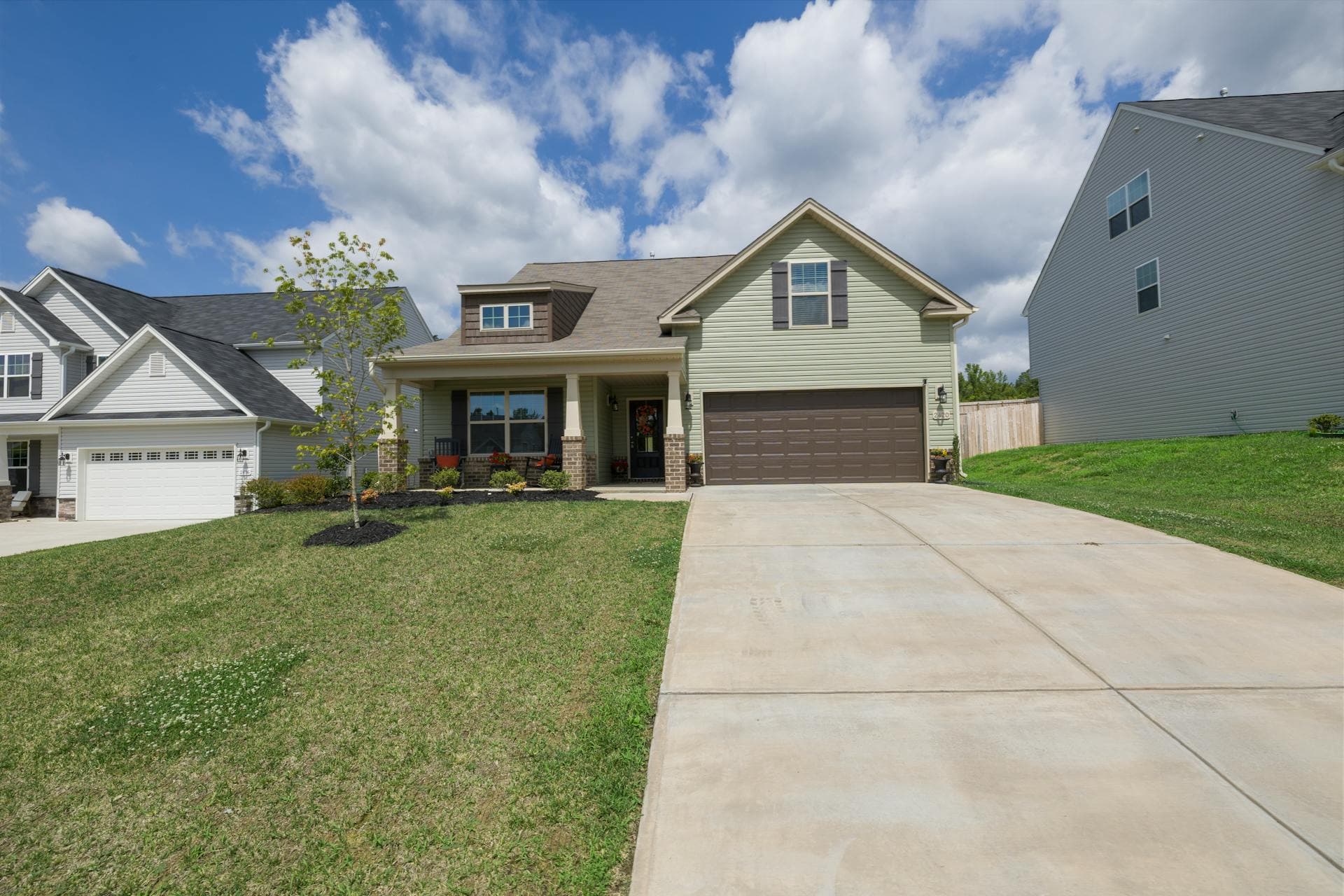
Slab Foundation Radon in Alpharetta
Most Alpharetta homes built after 2000 are slab-on-grade. $1,000 to $1,800 for mitigation.
Sub-slab depressurization is the standard solution. Installed in one day with up to 99% radon reduction.
How Radon Enters Slab-on-Grade Homes
A concrete slab may look solid, but radon gas finds its way in. The granite bedrock beneath Alpharetta continuously produces radon, and your home's negative pressure pulls it upward through any available pathway.
Cracks in the Slab
Even hairline cracks in a concrete slab allow radon gas to enter. Concrete naturally develops micro-cracks as it cures, and settling over time creates additional pathways. These cracks are often invisible but enough for gas migration.
Construction Joints
Where the slab meets the foundation walls, there is a natural seam called a cold joint. This gap is a primary radon entry point in slab-on-grade homes, including newer Alpharetta subdivisions.
Utility Penetrations
Plumbing pipes, electrical conduits, and HVAC lines that pass through the slab create openings. Even sealed penetrations can develop gaps over time as caulking deteriorates or materials shift.
Pressure Differential
Your home acts like a gentle vacuum relative to the soil beneath it. Heating, wind, and the stack effect create negative pressure that draws soil gas (including radon) upward through any available pathway in the slab.
Sub-Slab Depressurization: How It Works
Sub-slab depressurization (SSD) is the gold standard for radon mitigation in slab homes. Here's the installation process:
Site Assessment
We inspect your slab foundation, identify the best suction point location, and plan the pipe routing. For homes under 2,500 sq ft, a single suction point is usually sufficient. Larger homes may need two or more.
Core Through the Slab
A 4-5 inch hole is cored through the concrete slab using a core drill. Material beneath the slab is excavated to create a suction pit (roughly the size of a 5-gallon bucket) that allows airflow beneath the slab.
Install PVC Pipe and Fan
A 3-4 inch PVC pipe is sealed into the cored hole and routed through the home to above the roofline. An inline radon fan is installed in the pipe run (typically in the attic or on an exterior wall). The fan runs continuously.
Seal and Verify
Major cracks, joints, and penetrations in the slab are sealed. The fan creates a pressure field beneath the slab that redirects radon to the vent pipe before it enters your home. A post-installation test verifies levels are below 4.0 pCi/L.
Slab Homes Across Alpharetta
Slab-on-grade is the dominant foundation type in Alpharetta's post-2000 construction. Here's what we see across different areas:
Windward
Primarily slab-on-grade construction across multiple phases. Standard sub-slab depressurization works well for the typical 2,500-5,000 sq ft homes here.
Webb Bridge
Newer subdivisions with slab foundations. Consistent gravel sub-base in most builds, which improves suction field communication.
North Point / Kimball Bridge
Mix of slab homes in various developments. Some older sections may have thinner sub-slab gravel that requires additional suction points.
Avalon Area
Townhomes and single-family slab construction. Townhomes may have shared wall considerations for pipe routing.
Haynes Bridge
Residential corridor with a mix of home sizes. Many homes in the 2,000-3,500 sq ft range with standard slab construction.
Cogburn Road Area
Newer and mid-age slab homes. Good sub-slab conditions for depressurization in most builds.
How Many Suction Points Does Your Home Need?
Larger slab footprints may need multiple suction points to create adequate depressurization across the entire foundation.
| Home Size (Slab Area) | Typical Points | Notes |
|---|---|---|
| Under 2,000 sq ft | 1 suction point | Standard for smaller slab homes and townhomes |
| 2,000 - 3,000 sq ft | 1-2 suction points | Single point often sufficient if slab is well-connected |
| 3,000 - 4,500 sq ft | 2 suction points | Common for Alpharetta homes in this range |
| 4,500 - 6,000+ sq ft | 2-3 suction points | Larger estates may need pressure field testing to determine |
Actual suction point requirements depend on sub-slab conditions, soil type, and gravel layer quality. A pressure field diagnostic test confirms coverage after the first point is installed.
Foundation Type Comparison
How slab mitigation compares to other foundation types in cost and complexity:
| Foundation | Cost | Method | Install Time |
|---|---|---|---|
| Slab-on-Grade (most Alpharetta homes) | $1,000 - $1,800 | Sub-Slab Depressurization (SSD) | 4-6 hours |
| Basement | $1,100 - $2,200 | Sub-Slab Depressurization (SSD) | 4-8 hours |
| Crawl Space | $1,800 - $3,500 | Sub-Membrane Depressurization (SMD) | 6-10 hours |
| Combination | $2,500 - $4,500 | Multi-Point System | 8-12 hours |
Slab advantage: Slab-on-grade homes are the most straightforward and affordable to mitigate. No membrane installation is needed (unlike crawl spaces), and the sub-slab gravel layer in most newer Alpharetta homes provides good air communication for effective depressurization.
Already Have RRNC Prep?
Some newer Alpharetta slab homes include radon-resistant new construction (RRNC) features: a passive vent pipe through the slab, gravel layer, and sometimes a pre-wired junction box. If your home has these features, activating the system with a fan costs just $300 to $500, far less than a full retrofit.
If You Have RRNC Prep
- Add a fan to the existing passive pipe: $300-$500
- Installation takes 1-2 hours
- No coring through the slab needed
If You Don't Have RRNC
- Full SSD retrofit: $1,000-$1,800
- Installation takes 4-6 hours
- Core through slab and install complete system
Not sure if your home has RRNC? Contact us for a free assessment. We can inspect your home and determine the best approach.
Slab Foundation Radon FAQs
How does radon get through a concrete slab?
Concrete is porous at the microscopic level, and radon gas molecules are small enough to pass through intact concrete over time. More significantly, radon enters through cracks, cold joints (where slab meets walls), utility penetrations, and any gap in the slab. Your home's internal pressure pulls soil gas upward through these pathways.
What is sub-slab depressurization?
Sub-slab depressurization (SSD) is the most common and effective radon mitigation method for slab foundations. A hole is cored through the slab, a PVC pipe is routed to above the roofline, and an inline fan creates suction beneath the slab. This redirects radon-laden soil gas up the pipe and safely vents it above the roof, before it can enter your home. SSD reduces radon levels by up to 99%.
How much does slab radon mitigation cost in Alpharetta?
Slab-on-grade radon mitigation in Alpharetta typically costs $1,000 to $1,800. The final price depends on home size (larger homes may need multiple suction points), pipe routing path, and accessibility. This is the most affordable foundation type to mitigate because it does not require membrane installation.
How long does slab mitigation take to install?
A standard single-point sub-slab depressurization system is installed in 4 to 6 hours. Multi-point systems for larger homes take 6 to 8 hours. The system begins working immediately after installation. A post-installation verification test is conducted after at least 24 hours of system operation.
Do newer slab homes have less radon?
No. The age of the home does not determine radon levels. New slab homes in Alpharetta sit on the same Piedmont granite as older homes, and the granite is the source of radon. Modern energy-efficient construction can actually result in higher indoor radon levels because tighter building envelopes reduce natural air exchange.
Can I seal the slab cracks instead of installing a mitigation system?
Sealing alone is not an effective radon reduction strategy. While sealing is part of a complete mitigation system, it cannot reduce radon levels sufficiently on its own. Radon passes through intact concrete and finds pathways that are impossible to seal completely. Active depressurization is the only reliable method for reducing radon in slab homes.
Does my home need multiple suction points?
It depends on the home's size and slab characteristics. Most Alpharetta homes under 3,000 sq ft do well with a single suction point. Homes between 3,000 and 4,500 sq ft often need two points. Homes over 4,500 sq ft typically need two to three points. A diagnostic pressure field test after the first point is installed helps determine if additional points are needed.
Will the mitigation system be visible?
The interior impact is minimal. The PVC pipe is typically routed through a closet, utility room, or along an interior wall. The exterior pipe runs along the side of the house to above the roofline. In Alpharetta HOA communities, we route pipes on the least visible side and paint them to match the exterior. The fan is usually in the attic or on the exterior pipe run.
Protect Your Alpharetta Slab Home
Most slab homes can be tested and mitigated within a week. Get started with a free assessment today.
More Alpharetta Radon Information
Crawl Space Radon
Mitigation for crawl space foundations
Mitigation Systems
Compare all system types for Alpharetta homes
Mitigation Cost
Full pricing guide by foundation type
New Construction
RRNC for new slab homes
Radon Testing
Test your home before mitigation
Radon Levels
Alpharetta averages 4.9 pCi/L
Radon Safety Resources
Expert insights and guides to keep you informed
Radon Levels Chart: What Every Reading Means, From 0.4 to 20+ pCi/L
A radon levels chart from 0.4 to 20+ pCi/L. What each reading means, the EPA lifetime lung cancer risk at every level for smokers and never-smokers, the WHO reference level, and exactly what to do next at your number.
Read more about Radon Levels Chart: What Every Reading Means, From 0.4 to 20+ pCi/L →
Radon in Holly Springs, Georgia: A Cherokee County Homeowner Guide
A local guide for Holly Springs and Cherokee County homeowners. Why north-Georgia granite geology produces elevated indoor radon in many homes, why every home should be tested regardless of zone, and how testing and mitigation work.
Read more about Radon in Holly Springs, Georgia: A Cherokee County Homeowner Guide →
Radon in Athens, Georgia: An Athens-Clarke County Homeowner Guide
A local guide for Athens and Athens-Clarke County homeowners, landlords, and renters. Why north-Georgia geology produces elevated indoor radon in many homes, why every home and rental should be tested regardless of zone, and how testing and mitigation work.
Read more about Radon in Athens, Georgia: An Athens-Clarke County Homeowner Guide →