1. Why Community Buildings Need Radon Testing
Radon does not only affect homes. Any building with a foundation in contact with the ground can have elevated radon levels. Churches, community centers, libraries, daycare facilities, and nonprofit office buildings are all susceptible.
These buildings present unique concerns because they serve vulnerable populations. Church nurseries and Sunday school classrooms often occupy lower-level or basement rooms where radon concentrations are highest. Children are especially susceptible to radiation exposure because their cells are dividing rapidly and their lungs are still developing.
Community buildings also host regular events where people spend significant time. A weekly two-hour service plus additional activities can add up to meaningful cumulative exposure over years of attendance. Staff and volunteers who work in the building daily face even greater exposure. Seniors in fellowship halls face particular risk; learn more about radon risks for older adults.
2. Radon Risk Factors in Community Buildings
Several characteristics common to churches and community buildings can contribute to elevated radon levels.
Large Foundation Footprints
A larger foundation in contact with soil means more potential entry points for radon. Churches and community buildings often have significantly larger footprints than homes, with more slab joints, penetrations, and potential cracks.
Below-Grade Rooms
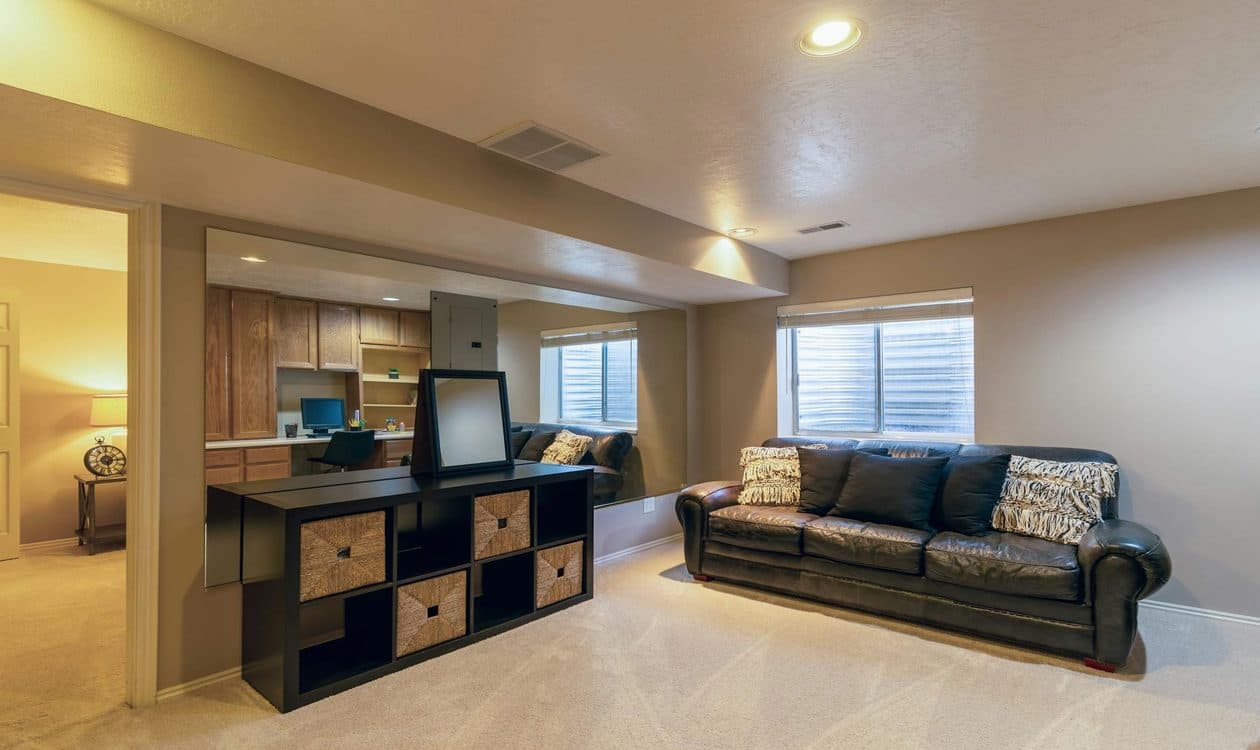
Many churches have fellowship halls, classrooms, storage areas, and offices at or below ground level. These rooms have direct contact with soil on one or more walls, significantly increasing radon exposure compared to rooms above grade.
Intermittent HVAC Operation
Many community buildings operate HVAC systems only during occupied hours. When the building sits vacant and the HVAC is off, radon can accumulate to high levels. When occupants arrive and the HVAC starts, it initially distributes this concentrated radon throughout the building.
Older Construction
Many churches and community buildings are older structures that were built before radon awareness. They may have significant foundation cracks, unsealed penetrations, and no vapor barrier beneath the slab, all of which allow radon to enter freely.
3. How to Test a Church or Community Building
Testing a commercial or community building is more complex than testing a home because of the larger footprint and multiple rooms. The EPA recommends the following approach for commercial building testing. Our commercial radon testing services cover churches and community buildings.
Place test devices in every ground-contact room that is regularly occupied. The general guideline is one test per 2,000 square feet of ground-contact floor area. For a church with a 10,000-square-foot ground floor, that means a minimum of five test locations.
Test locations should include all regularly used rooms at or below grade level: sanctuary (if ground floor), fellowship hall, classrooms, offices, nursery, and any other space where people spend time. Do not test hallways, closets, or mechanical rooms, as these are not regularly occupied spaces.
Professional testing using continuous radon monitors is strongly recommended for commercial buildings. The hourly data helps identify patterns related to HVAC operation, occupancy, and building pressurization that affect radon levels at different times.
Testing During Normal Operations
Test the building during its normal operating conditions, including the typical HVAC schedule. If the HVAC only runs during occupied hours, the test should capture both occupied and unoccupied periods to give a complete picture of radon levels at different times.
4. Mitigation Options for Larger Buildings
The same mitigation principles that work in homes apply to larger buildings, but the systems need to be scaled up accordingly.
Sub-slab depressurization remains the most effective approach, but a large building typically requires multiple suction points rather than one. Each suction point covers approximately 1,500 to 2,500 square feet, depending on sub-slab conditions. A 10,000-square-foot building might need four to seven suction points.
Larger, more powerful fans may be needed to maintain adequate negative pressure across the larger sub-slab area. In some cases, multiple fan systems operating independently are preferred over a single large system, as this provides redundancy.
For buildings with complex HVAC systems, the radon mitigation design must account for the pressure dynamics created by large air handling units. A professional assessment is essential to ensure the mitigation system works with, rather than against, the building's mechanical systems.
Commercial mitigation costs range from $2,000 to $5,000 for small community buildings to $5,000 to $15,000 for larger churches and multi-use facilities. While higher than residential costs, the per-person protection benefit is significant given the number of people who use the building. For more on commercial building considerations, see our guide on radon in office buildings.
5. Duty of Care and Liability
Building owners and operators have a general duty of care to provide a reasonably safe environment for occupants. While most jurisdictions do not specifically require radon testing in commercial or community buildings, the duty of care principle means that knowing about a potential hazard and failing to investigate creates liability.
For churches and nonprofits, this duty falls on the governing board, trustees, or property committee. Being proactive about radon testing demonstrates responsible stewardship and protects both the organization and the people it serves.
The cost of testing is minimal compared to the potential liability. Testing a large community building might cost $500 to $1,500 for professional assessment. If results are low, you have documentation showing the building is safe. If results are elevated, you can take action before anyone is harmed.
Document Everything
Keep records of all radon testing, results, and any mitigation work. This documentation shows due diligence in protecting building occupants. If results are below 4 pCi/L, document that and plan for retesting in two years. If mitigation is installed, keep maintenance records and annual test results.
6. Creating a Radon Action Plan
Every church and community building should have a simple radon action plan. Here is a practical framework.
Step 1: Test
Hire a professional to conduct radon testing in all ground-level occupied rooms. Budget $500 to $1,500 depending on building size. This is a one-time cost that gives you critical information about building safety.
Step 2: Evaluate Results
If all rooms are below 4 pCi/L, document the results and plan to retest in two years. If any rooms are at or above 4 pCi/L, proceed to mitigation planning. If children regularly occupy rooms above 4 pCi/L, consider interim measures like temporary relocation.
Step 3: Mitigate if Needed
Get professional quotes for commercial mitigation. Budget $2,000 to $15,000 depending on building size and complexity. Many contractors offer payment plans for nonprofits. Some radon organizations offer grants or discounted services for churches and community buildings.
Step 4: Monitor Ongoing
After mitigation, test annually to verify the system continues to work. Check the system manometer monthly. Include radon system checks in the building's regular maintenance schedule. Budget $100 to $300 per year for testing and maintenance.