The short answer
Home radon detectors come in two families. Lab-analyzed kits (charcoal or alpha-track) are cheap and accurate for a one-time check, but you mail them in and wait for a result. Continuous electronic monitors cost more up front and give you ongoing readings, a display or app, and a long-term average you can watch over time. For everyday awareness, a good continuous monitor is the most useful choice for most homeowners. For a real estate transaction, skip the consumer device and use a test performed by a professional. Whatever you choose, act on a long-term average against the EPA action level of 4.0 pCi/L, and check current specs and reviews before buying a specific model.
Table of contents
- 1. Why you need a radon detector at all
- 2. The two families of home detectors
- 3. Lab-analyzed kits: charcoal and alpha-track
- 4. Continuous electronic monitors
- 5. The features that actually matter
- 6. The consumer-brand landscape
- 7. When a home detector is enough
- 8. When to use a lab kit or hire a professional
- 9. Frequently asked questions
1. Why you need a radon detector at all
Radon is a colorless, odorless radioactive gas that seeps up from the soil and collects inside homes. You cannot see it, smell it, or taste it, which is exactly why it is dangerous: a home can sit at an unhealthy level for years with no warning sign. Radon is the second leading cause of lung cancer in the United States, behind only smoking, and the only way to know your home is to measure it.
The reference point for every decision in this article is the EPA action level of 4.0 pCi/L (picocuries per liter). If your home's long-term average is at or above 4.0 pCi/L, the EPA recommends fixing it. A detector is simply the tool that tells you where you stand against that number, so the right detector is the one that gives you a reading you can trust and act on.
2. The two families of home detectors
Almost every home radon detector falls into one of two categories, and understanding the split makes the whole market easy to navigate.
The first family is lab-analyzed passive kits. You buy an inexpensive device, leave it in place for the recommended period, then mail it to a lab that reads it and sends you a number. Charcoal canisters and alpha-track detectors both work this way. They are cheap, simple, and accurate for a snapshot, but you do not get a live reading and you have to wait for the lab.
The second family is continuous electronic monitors. These are powered devices that sample the air on their own and show you results on a screen or in a phone app. There is nothing to mail. They cost more up front, but they keep working, so you can watch a long-term average build and see how radon moves with the seasons and with how you live in the house. For a side-by-side breakdown of the underlying technologies, see our deeper guides on radon test kit types compared and electronic radon monitors.
3. Lab-analyzed kits: charcoal and alpha-track
Charcoal kits use activated carbon that adsorbs radon while the device is exposed. They are short-term tools, usually run for a few days, which makes them a fast and affordable way to get a first snapshot. Because the exposure window is short, the result reflects whatever conditions happened during those days, so weather and how the house was operated can move the number.
Alpha-track kits use a small plastic film that records the marks left by radon decay over time. They are built for longer exposure, often weeks to months, which gives a result that is closer to a true long-term average and less sensitive to a single bad weather window. The trade-off is patience: you wait longer for the measurement, and then longer still for the lab.
Lab fees are sometimes bundled into the kit price and sometimes charged separately when you mail the device in. Check what is included before you buy so the analysis cost is not a surprise.
The bottom line on kits: they are the most affordable way to get an accurate reading, and an alpha-track kit run for a long period is a genuinely good measurement. The limitation is that they are one-and-done. When the test ends, your visibility ends too.
4. Continuous electronic monitors
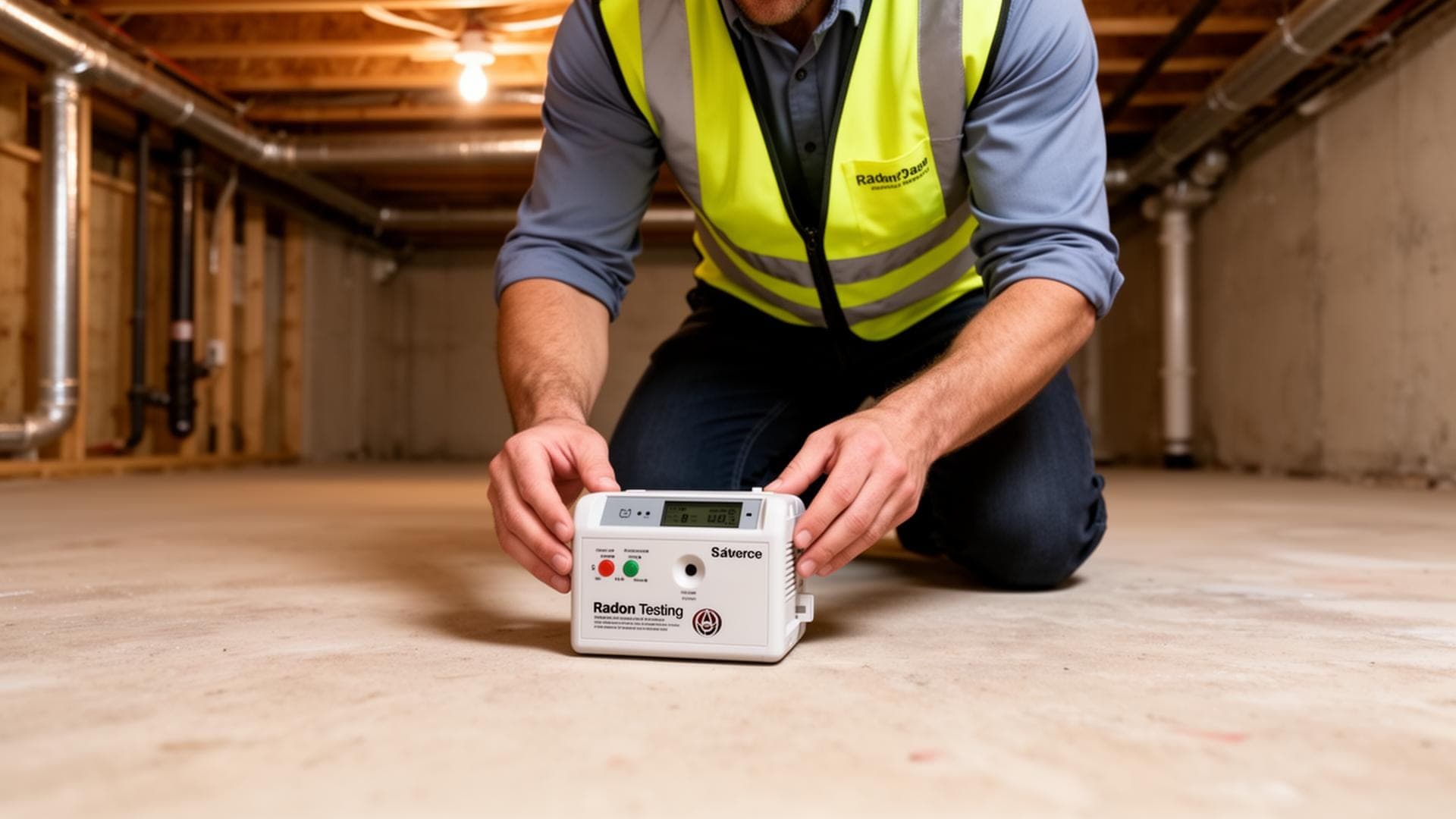
A continuous electronic monitor is a small powered device that measures radon on its own and reports the result directly to you. Instead of mailing anything to a lab, you read the number off a display or pull it up in an app. Many models also track temperature, humidity, and other air-quality readings alongside radon.
The real advantage is time. Because the monitor never stops, it builds a long-term average and shows you how radon rises and falls. Radon is not a steady number: it climbs in winter when homes are sealed up, shifts with barometric pressure, and changes with how you run the house. A continuous monitor captures that movement, so the figure you act on reflects weeks or months rather than a single short window.
There is usually a short settling-in period when you first set up an electronic monitor, after which short-term readings start to stabilize and the long-term average becomes the number that matters. If you want a device you check once and forget, a monitor is the more satisfying choice. If you just need a single answer, a kit may be all you need.
5. The features that actually matter
Marketing for radon monitors can bury the few features that genuinely change the value of the device. Here is what to weigh.
Continuous readings and long-term averaging. This is the headline benefit of an electronic monitor. A device that keeps a rolling long-term average is far more useful than one that only shows the last few hours, because you should act on the long-term number, not a momentary spike.
Display versus app. Some monitors show the reading on the unit itself, some only in a phone app, and some do both. An on-device display is convenient if you do not want to open an app; an app adds history, charts, and notifications. Pick the workflow you will actually use.
Calibration and accuracy. Look for a manufacturer that is clear about accuracy and whether and how the device is calibrated or recalibrated over time. A monitor that drifts and is never checked slowly becomes less trustworthy, so vendor transparency on this point is worth a lot.
Speed to a usable reading. Some monitors stabilize their short-term readout faster than others. This matters less than the long-term average, but it does affect how quickly you get an early sense of where your home stands.
Features and specifications change from model to model and year to year. Use this list to decide what you care about, then check current product pages and recent independent reviews for the exact specs of any model you are considering.
6. The consumer-brand landscape
A handful of brands show up repeatedly when homeowners shop for radon monitors. We are describing the landscape here, not endorsing a specific product, and we are deliberately not quoting prices or model specs because those move constantly.
Airthings is widely known for consumer and pro indoor-air monitors that include radon, typically with app-based tracking and, on some models, an on-device display. Ecosense, maker of the RadonEye line, is known for continuous radon monitors that emphasize getting to a usable reading relatively quickly. Corentium, a name associated with Airthings, is also recognized for portable battery-powered radon monitors.
Treat brand reputation as a starting filter, not a final answer. Within any brand the lineup changes, features differ between models, and a model that was the value pick last year may have been replaced. Before you buy, read current reviews and the manufacturer's present-day spec page for the specific model.
7. When a home detector is enough
For most everyday situations, a good home detector is exactly the right tool. If you simply want to know whether your home has a radon problem, keep an eye on levels over time, or confirm that a mitigation system is holding levels down, a consumer device does the job well.
A continuous monitor is especially well suited to long-term peace of mind. It lets you watch the seasonal swing, catch a system that has stopped working, and make decisions on a real long-term average. A lab-analyzed alpha-track kit is a strong low-cost alternative when you want one solid measurement and do not need ongoing monitoring.
8. When to use a lab kit or hire a professional
There are situations where a personal monitor is not the right tool. The clearest is a real estate transaction. When a home is being bought or sold, buyers, sellers, and lenders generally want a test performed by a professional following a recognized measurement protocol, often with anti-interference controls and documentation, rather than a reading off a homeowner's device. If radon comes up in a deal, plan on professional testing.
A professional test is also the right move when a high reading triggers a real decision, such as designing a mitigation system, or when you want a defensible, documented result. When you hire a company, look for technicians who follow recognized measurement protocols, and it is reasonable to look for NRPP or NRSB certification when choosing a radon company. A trained, insured professional brings calibrated equipment and a documented method that a consumer device is not built to replace.
A simple rule of thumb: use a home detector for your own awareness and ongoing monitoring, and use professional testing whenever a transaction, a lender, or a mitigation decision is on the line.
EraseRadon performs professional radon testing across metro Atlanta. If you want a documented result rather than a homeowner reading, our radon testing service is a good place to start, and you can learn more about why radon testing is essential.
9. Frequently asked questions
This article is general information for homeowners, not product, medical, or engineering advice. Radon detector models, features, prices, and availability change over time, and the brands mentioned are described for context rather than endorsed. Check current specifications and independent reviews before buying a specific model, and act on a long-term average against the EPA action level of 4.0 pCi/L.